Skip navigation

The science and technology of Bioethanol production from starch or sugar is  well-established. Brazil leads the world in Bioethanol production with a capacity of 16,500 million liters/yr followed by US with a capacity of 16,230 million liters/yr.India produces merely 300 million liters/yr as the fifth largest producer in the world.US consumes about 873 MM gallons of oil/day of which about 58% is imported. The US forecast for 2025 import of oil is 870MMgal/day and the President wants to replace imported oil from the Middle East by 75% -100MMgal/day. (Ref: Environmental Protection Agency,Cincinnati,Ohio).

Currently bulk of the Bioethanol is produced in centralized plants. This is because an economical plant requires a production rate of 40-55 MMgal /day. Transportation of raw materials to long distance is uneconomical. Countries like India can substantially increase their sugar production and encourage small-scale distilleries for the sole purpose of replacing imported oil. Large scale Bioetehanol production involves fermentation of molasses; a byproduct of sugar industry.Bioethanol can also be produced directly from cane sugar juice or from starch such as Corn or Tapioca.

Molasses is diluted with water and inoculated by addition of yeast and other nutrients. The fermentation takes about 24 to 30 hours till the fermented broth has an alcohol content of 7.5 to 9.5% by volume. The fermented wash is then distilled in a separate distillation column. This alcohol which is 95-96% is known as rectified spirit. The rectified spirit is further passed though a Molecular sieve to remove moisture and to concentrate alcohol to 99.8% by volume. A spent wash of about 8 lits are generated per liters of Bioethanol.The spent wash will have a BOD (biological oxygen demand) value of  45,000ppm.This can be subject to Anaerobic digestion to generate ‘Bio  gas’ with about 55% Methane value and the liquid BOD will be reduced to less than 5000ppm. This Biogas can be used to generate power for the process. This process is economical for a production of Bioethanol 40-55MMgal/day.

But in countries like India the sugar cane molasses are available in smaller quantities and the sugar plants are scattered. Small scale distillery can adopt ‘Per-evaporation’ method to concentrate ‘Bioethanol’.The advantage with ‘Perevaporation’ is the process is not limited by thermodynamic vapor-liquid equilibrium. The distilled alcohol with 96% alcohol can be separated by Perevaportion into streams containing Bioethanol 99+% and alcohol depleted water.Perevaporation is a membrane separation process and it serves as an alternative to distillation and molecular sieve and saves energy. The membrane process can be suitably designed for alcohol enrichment as well as dehydration and easily adoptable for smaller production of Bioethanol.

Such process allows production of dehydrated Bioethanol which are suitable to use as a fuel in cars as a Gasoline blend without any engine modification. Production of Bioethanol from cane sugar molasses is cheaper than from corn starch. Countries like India should promote Bioethanol as an alternative fuel to gasoline and cut their oil imports.
The World Bank development indicators 2008 shows that the wealthiest 20% of the world accounts for 76.6% of total private consumption. The poorest fifth just 1.5%.The report further states,

“Today’s consumption is undermining the environmental resource base. It is exacerbating inequalities. And the dynamics of the consumption-poverty-inequality-environment nexus are accelerating. If the trends continue without change — not redistributing from high-income to low-income consumers, not shifting from polluting to cleaner goods and production technologies, not promoting goods that empower poor producers, not shifting priority from consumption for conspicuous display to meeting basic needs — today’s problems of consumption and human development will worsen. The real issue is not consumption itself but its patterns and effects. Inequalities in consumption are stark. Globally, the 20% of the world’s people in the highest-income countries account for 86% of total private consumption expenditures — the poorest 20% a minuscule 1.3%. More specifically, the richest fifth:

  • Consume 45% of all meat and fish, the poorest fifth 5%
  • Consume 58% of total energy, the poorest fifth less than 4%
  • Have 74% of all telephone lines, the poorest fifth 1.5%
  • Consume 84% of all paper, the poorest fifth 1.1%
  • Own 87% of the world’s vehicle fleet, the poorest fifth less than 1%
  • Runaway growth in consumption in the past 50 years is putting strains on the environment never before seen.”

Clearly the above consumption pattern indicates the amount of waste generated worldwide,especially in developed countries. Unfortunately bulk of the waste are not recycled thus creating enormous amount of strain on natural resources. A typical municipal solid waste consists of food, paper, plastic, metal, glass and garden waste etc.For example the amount of MSW collected in Metropolitan Melbourne for the year 2006-2007 was 1.315,119 Mt costing about a$163 million in service cost. Though Government of Victoria follows the policy of reuse, recycle and recover; only 567,117 Mt was recycled and reprocessed.

There are several methods to process waste and such process depends on the quantity , type of waste and the recovery of products. Gasification and Anaerobic digestion to generate syngas are two common methods of converting waste to energy. However a large volume of complex municipal, industrial and biological wastes require  different methods of processing. ‘Desperate problems require desperate solutions’. One such solution is by Plasma Gasification and Vitrification. It  has clear advantages over existing method of incineration.

Plasma is called fourth state of matter after solid, liquid and gas and it is an abundant form of matter in the universe. When the MSW is heated to a high temperature up to 5000C using Plasma torch, it decomposes into syngas  and verified mass. In Plasma gasification, MSW is subject to high temperature  pyrolysis in the absence of air decomposing matter into its elemental state.Vitrification  is a  process in which semi-liquid waste is mixed with glass converting them into a stable glass form. Even radioactive liquids and sludge are converted into vitrified glass. It is similar to Plasma welding electrodes where an Argon gas is heated into a plasma torch of high temperature up to 5000C.This plasma can treat a range of waste materials such as radioactive, biological, MSW, biosolids  from sewage treatment plants and industrial wastes.  The process is highly efficient.The process can be selectively used to generate syngas with high proportion of Hydrogen  by carefully selecting the feedstock and process parameters.

Bulk of the MSW is now sent to landfill. Such landfills generate methane gas over a time and also leach toxic chemicals and material into the soil. Plasma gasification has distinct advantages over other conventional methods of waste-to energy technologies, especially when the volume is large and the waste has highly toxic materials and metals.

World is busy developing alternative to Fossil fuel to cut anthropic Greenhouse gas  to avoid global warming. In fact all forms of alternative energy sources except nuclear energy are ‘solar energy’ from the sun, in one form or another. Sun has supplied energy from the time earth was born. It has conducted   ‘photosynthesis’ by supplying light energy and converting atmospheric carbon dioxide and water into glucose for plants, animals and human beings. The excess carbon from the ‘Carbon cycle’ has become fossil fuels under the earth over a time. The fossil fuel is the result of sun’s energy or solar energy. We unearthed fossil fuels and burnt them to extract energy to run our power plants or run our cars. In fact fossil fuel is also a form of  ‘Biofuel’ and technically there is no difference between them except fossil fuel formation takes millions of years.Fossil fuel is nothing but a source of Hydrogen with carbon backbone.

All forms of alternative energy sources we are currently trying to develop such as PV solar, solar concentrators, solar thermal, geothermal energy, wind energy and bioenergy etc, originate from solar energy. The word alternative energy is a misnomer because all these energy are fundamentally solar energy in one form or another.

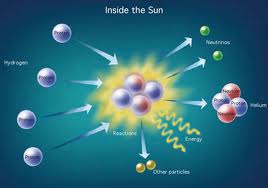
Solar energy is a radiation of Nuclear fusion  of Hydrogen taking place in the sun. Two Isotopes of Hydrogen called Deuterium (with one proton and one neutron) combine to form a Helium 3 atom and Neutron with release of large energy. Deuterium is non-radioactive and can be extracted from seawater. But this process could not be duplicated commercially for Electricity generation. It is the safest and cleanest form of energy.

In other words, all forms of energy including solar energy come from Hydrogen. That is why Hydrogen has become a potential fuel source in the future. However, developing a commercial technology for the production and usage of hydrogen at a rate cheaper than fossil fuels with zero greenhouse emission has been elusive so far. Generation of Hydrogen from water by Photo electrolysis using a direct sunlight using a Photo catalyst is a promising technology. But duplicating Nature to generate large amount of energy using tiny amount of Hydrogen atom seems to be a distance dream. Nature knows the best. We human beings can use small energy generation technologies such as solar and wind to meet our small energy needs. “There is enough to meets everybody’s need but not everybody’s greed”,Gandhi said.

Exponential growth of population and industries has forced us to look for large power generation and fuel usage at the cost of serious environmental degradation and future generations. Only smarter and cleaner technologies will help sustain the future. Politicians and policy makers  should understand various technologies and their implications than advocating short-sighted and popular energy policies.

Hydrogen has been accepted as a source of clean energy for many reasons. Hydrogen can eliminate anthropic Greenhouse Gas  into the atmosphere and stop global warming. It has high energy content than any other fossil fuels we are currently using, making it an efficient fuel. The combustion product of Hydrogen is only water which is   recyclable. Many people, Governments  and institutions around the world are trying develop  cheaper methods of generating Hydrogen from various sources both renewable as well as non-renewable. The non-renewable sources are supposed to facilitate a smooth transition from fossil fuel economy to Hydrogen economy.

However, all attempts to generate Hydrogen at a cost lower than the projected cost of $ 2.50 per kg by DOE has not been successful, even though many recent technologies are promising. Meanwhile massive investments are made on Renewable Energy including wind, solar and biological all over the world. Generating Hydrogen from water using Solid Polymer Membrane Electrolyzer is a known technology using renewable energy sources. One can easily deploy such systems for commercial applications even though it is now expensive.

Many people and institutions are also claiming ‘free energy’ sources with or without generating Hydrogen. In some cases researches are claiming an abnormal production of Hydrogen using ‘Cold plasma’ or ‘Plasma electrolysis’ of water, as much as 800% more than the theoretical values. Some companies claim low energy consumption using photo- catalyst to generate Hydrogen  using direct sunlight and water. Hydrogen generation using renewable sources is a distinct possibility to cut the cost of Hydrogen in the long run. However, the world is in hurry to develop a cheap and sustainable method of Hydrogen generation without any greenhouse gas emissions.

One US based company is claiming to have invented a new Hydrogen atom which has not been reported before in the literature. According to the inventor, this new atom of Hydrogen is called ‘Hydrino’.He has presented a detailed theory called ‘Grand Unified Theory’   that predicts catalysts that allow energy to be extracted from lower energy state of Hydrogen atom. They have demonstrated the process using a proto type in the laboratory and their claims have been validated by an independent Laboratory after conducting trial runs and analyzing the results using spectrum analysis and other techniques.

The process involves a generation of Hydrogen by using electrolysis of water. The resulting Hydrogen is then reacted with a proprietary solid catalyst developed by the company. According to the company,

“Since certain proprietary catalysts cause the hydrogen atoms to transition to lower-energy states by allowing their electrons to fall to smaller radii around the nucleus with a release of energy that is intermediate between chemical and nuclear energies, the primary application is as a new primary energy source. Specifically, energy is released as the electrons of hydrogen atoms are induced by a catalyst to transition to lower-energy levels (i.e. drop to lower base orbits around each atom’s nucleus). The lower-energy atomic hydrogen product called “hydrino” reacts with another reactant supplied to the reaction cell to form a hydride ion bound to the other reactant to constitute a novel proprietary compound. Alternatively, two hydrinos react to form a very stable hydrogen-type molecule called molecular hydrino. Thus, rather than pollutants, the byproducts may have significant advanced technology applications based on their stability characteristics. For example, hydrino hydride ions having extraordinary binding energies may stabilize a cation (positively charged ion of a battery) in an extraordinarily high-oxidation state as the basis of a high-voltage battery. Further, significant applications exist for the corresponding molecular hydrino wherein the excited vibration-rotational levels could be the basis of a UV laser that could significantly advance photolithography and line-of-sight telecommunications. A plasma-producing cell based on the extraordinarily energetic Process has also been developed that may have commercial applications in chemical plasma processing and as a light source.”

The company claims that an average generating capacity of a system will be 1000kw, with installed cost at $1000/kw with fuel cost at less than $0.001/kw with zero greenhouse emission.The solid catalyst is regenerated and recycled. The cost of Hydrogen from electrolysis becomes insignificant due to generation  of large excess thermal energy, to generate power.

The above claims are too attractive to ignore and it could be a game changer in the energy industry. The output energy is more than the theoretical values calculated,  thus violating the Law of Thermodynamics. This excess energy is attributed to the presence of ‘Hydrino’. However, one has to be open to new ideas because science is ever-changing and even well-established theories and concepts are challenged as Science evolves with new discoveries and inventions.


Stanley Meyer, a freelance inventor from USA demonstrated a car that ran on water, according to an Equinox programme that was televised in 1995. Stane Meyer’s dune buggy ran 100 miles from 1 gallon of water. He claimed that water would be the fuel that could revolutionize the auto industry in America. However, his tragic death in 1998 brought the issue to a closure.  Many people and institutions are still trying to replicate his invention at least partly and claiming success.  He received a   number of patents based on his inventions. He worked nearly 30 years on his invention before he began to work on a book titled, “With the Lord, there is a purpose” describing his “faith walk” with the Lord to fulfill end-time Prophecy.  He continued with his speaking engagements throughout the world.  However, such ‘free energy’ devices are still not getting the approval of the larger scientific community as well as Government agencies for some reasons or other. According to Stanley Meyer, “the law of Physics establishes a proven function based on ‘Pre-set’ conditions…change any of the conditions and the Law no longer applies….A new law emerges in the consciousness of physics. Why? Because atoms possess intelligence—-Performing ‘what if’ logic function under different ‘preset’ conditions.” His claims were based on scientific principles and explanations.  Based on his invention, many of ‘Electrolyzing devices’ appeared in the market.  They supply Do It Yourself  kits that can be fitted into a car to cut Gasoline consumptions; but they do not entirely  substitute Gasoline like Stanley Meyer demonstrated. There are still missing pieces of information or claims. He was able to show and claim “Hydrogen fracturing process to disassociate water molecules by way of voltage simulation, ionization of combustible gases by electron ejection and then preventing the water formation during thermal ignition releasing a thermal explosive energy beyond ‘normal gas burns’ levels under control state… and such an atomic energy process is environmentally safe”.   He did not use ‘Heavy water’ called ‘Deuterium’ but normal water and controlled state and shown that the covalent bond of water can be broken using an electronic circuit using water as dielectric medium of a capacitor.  It uses a high voltage but a low current and the process is instantaneous.  It differs from the ‘Faraday’s law of electrolysis’ in a conventional sense. The scientific community seems to be a little more understanding with an open mind in recent times to such ‘free energy’ concepts and devices than in the past.  ‘Resonance electrolysis’ has been reported by few institutions and people as an alternative to ‘conventional water electrolysis’ to cut energy consumption. Decomposition of water into its molecules requires high temperature above 3000°C using a process known as ‘pyrolyis’ and a technique to separate the decomposed molecules from reunion for water formation.  Prof. Mizuna of Hokkaido University of Japan and his coworkers demonstrated ‘Plasma Electrolysis’ by an experiment which showed an evolution of anomalous amount of Hydrogen and oxygen sometimes as much as 80 times more than normal Faraday’s electrolysis of gas generation. Though such reaction requires a very high temperature they could not successfully measure the reaction temperatures during the experiments. They used a Platinum anode and Tungsten cathode and a provision to separate Hydrogen and oxygen gases. They concluded at the end of the experiment that the input voltage and the current efficiency were critical parameters.  On increasing the Voltage to several thousands, they said the current efficiency can exceed unity.  The anomalous release of gases indicates that the electrolysis is not a normal electrolysis but beyond that. (Ref:Mizuno, T., T. Akimoto, and T. Ohmori. Confirmation of anomalous hydrogen generation by plasma electrolysis. in 4th Meeting of Japan CF Research Society. 2003. Iwate, Japan: Iwate University) In all these experiments the gases coming out of the system are not at high temperature but at normal room temperature.  The chemistry of water molecule decomposition and plasma pyrolysis is not fully understood.  After all ‘Cold fusion’ seems to be plausible under certain conditions and it may be a panacea for the world’s energy problems.  When our energy requirement exceeds a limit due to a population explosion and industrialization then finding a solution becomes a daunting task. Mohandas Gandhi said: “There is enough for everybody’s need but not for everybody’s greed. Be the change what you wish to see in the world”.

Bioethanol has successfully substituted Gasoline as a fuel for cars both in the form of blends with Gasoline or individually as an Anhydrous Ethanol. This  successful demonstration by Brazil opens up new generation of cars called flex-fuel cars that allow usage of various blends of Ethanol and Gasoline.Bioethanol can also be used to generate Hydrogen on site by steam reformation so that even Fuel cell cars such as Honda FCX can be felled by Bioethanol.This makes Bioethanol unique as an alternative fuel for transportation. It also facilitates on site electricity generation using Fuel cell, replacing diesel engines.

Substitution of Gasoline by  Bioethanol has several advantages over other alternative fuels. The biggest advantage with Bioethanol is, it is renewable and it allows reduction of greenhouse gases from the atmosphere and will be eligible for Carbon credit. It can be produced by both developing  as well as developed countries using  locally available agriculture produces such as cane sugar, corn, tapioca, sorghum etc. Hydrogen generated from Bioethanol is also free from Sulfur compounds normally associated with natural gas, making it an ideal fuel for Fuel cell application in cars, as well as for power generation using SOFC (solid oxide Fuel cell) or PAFC (Phosphoric acid Fuel cell).The resulting high purity Hydrogen 99.99% can be used as fuel for all type of transportation including Fuel cell Buses, scooters and even boats.

The stoichiometric reaction of steam reformation in presence of catalyst can be represented by the following chemical reaction:

C2H5OH + 3 H2O———- 6H2 + 2 CO2

The Ethanol and water mixture is preheated and the vaporized mixture is fed into a catalytic reactor. The resulting Hydrogen is contaminated with carbon monoxide. This gas mixture is separated using membrane such as Palladium to get Hydrogen with less than 50ppm CO as contaminant. Such purity is acceptable by Fuel cell such as SOFC as well as PAFC.In future a small micro-reactor for on-board reformation may be possible making Fuel cell cars with onboard liquid fuel storage.

Commercial reformers consumes about 0.88 lits of Biothanol of 96% purity to generate 1 Nm3 of Hydrogen with 60% conversion. This translates to $ 5.90 per Kg of Hydrogen. Fuel cell cars offer a mileage of 240 from 1 kg Hydrogen costing only $5.90. For on site power generation 1 kg Hydrogen generates as much as 15Kw electricity and 20Kw heat .Onsite Hydrogen generation with steam reformation also facilitates using SOFC and PAFC for high temperature power generation applications. They are ideal for CHP (combined heat and power) applications for 24×7 operations like hospitals, hotels and super markets. These fuel cells are silent in operation without any emissions except water vapor.

Governments should encourage Bioethanol production and distribution for both transportation and power generation. There is a fear that Ethanol could be diverted for potable purposes illegally depriving Governments of potential reveneues.But this can be solved by denaturing Bioethanol and making it unsuitable for potable purposes. Denaturants such Pyridine has no effect on steam reformation and number of denaturants are available. Such policies will allow the transition from fossil fuels to Hydrogen or Bioethanol.This is a simple and straight forward step any Government can take irrespective of the size or type of nation. But it requires political will, determination and leadership. Developing countries need not wait for big greenhouse emitters such as US, China and India to make a decision on their Carbon emissions but start introducing Bioethanol as fuel locally.

We live in a technological world where fuel and power play a critical role in shaping our lives and building our nations. The growth of a nation is measured in terms of fuel and power usage; yet there are many challenges and uncertainties in fuel supply and power generation technologies in recent past due to environmental implications. Fossil fuels accelerated our industrial growth and the civilization . But diminishing supply of oil and gas, global warming, nuclear disasters, social upheavals in the Arabian countries, financial problems, and high cost of renewable energy have created an uncertainty in the energy supply of the future. The future cost of energy is likely to increase many folds yet nobody knows for certain what will be the costs of energy for the next decade or what will be the fuel for our cars.  Renewable energy sources like solar and wind seem to be getting popular among people but lack of concrete Government plans and financial incentives for renewable, are sending mixed signals for investors. Recently number of solar industries in Germany are facing bankruptcy due to withdrawal of Government subsidies. Wind energy in India has got a setback due to withdrawal of Government financial support. Renewable industries are at their infant stages of  growth both technologically and financially. These industries will face a natural death in the absence of Government supports and incentives.

Individuals, small businesses and industries are unable to plan their future due to above uncertinities.In a globalised world such problem have to be tackled jointly and collectively. But that too looks unlikely due to ideological, political and social differences between countries. In the absence of any clear path forward, a common man is left with no alternative but find solutions for himself. Individuals can form small groups to produce their own fuel and generate their own power. There has never been a right moment in our history for such ventures. It can be easily done by people from rural areas especially in farming communities. They can set an example and rest of the country can follow. This will also help preventing mass migration from rural areas to cities, especially in China and India. They neglect their farms and migrate to cities to work in electronic industries for a better life.

The farming communities can form  groups and generate their own ‘Biogas’ or ‘Bioethanol’  from a common facility to fuel their cars and power their homes without any Government incentives and political interefernces.Making ‘Bioethanol’ from cane sugar molasses, beet sugar, corn, tapioca or sorghum on a small or medium scale is a  straight forward method. Fermentation and distillation is a well-known technology. It is controlled by Government excise departments for revenue purpose but Government can certainly allow farms or people to make their own ‘Bioethanol’ for their cars. Farms can generate their own Biogas’ from manure, agriculture wastes,  food waste, and waste water treatment facilities and generate their own power and supply biogas for heating and cooking for their communities.

Governments should allow people to make their own choices and decisions instead of controlling everything especially when they are unable to solve a problem. Countries like India should encourage farming communities in groups to set up their own ‘Bioethanol’ and ‘Biogas’ plants and allow import of  flex-fuel cars for Ethanol blends of various proportions. Alcohol has been a a’taboo’in many countries for several years but with current uncertainties with supply of  fuel and power, Government  can certainly remove such ‘taboo’ by highlighting the value of ‘Bioethanol as a source of fuel.Goevernments  can forgo their excise revenue by allowing people to make their own fuel. Alternatively they should offer incentives and subsidies for renewable energy developments. They cannot refuse both and still hope to continue in power because people will sooner or later  throw them out of power. After all Government are elected by people to address their problems.

Synthesis of Ammonia is one of the  remarkable achievements of Chemical engineering in forties .It is a precursor for Urea, the fertilizer  that  brought about ‘Green revolution’ in agriculture industry and helped to achieve record food production all over the world. It was a milestone in modern chemistry to synthesis a molecule containing I atom of Nitrogen and 3 atoms of Hydrogen, represented by NH3 called Ammonia. The HeberBosch process for the production of Ammonia is a well established mature, commercial technology.

The process uses a Hydrocarbon source such as Naphtha or Natural gas as the feed stock to generate a synthesis gas composed of Hydrogen and Carbondioxide.The gas mixture is separated into carbon dioxide and Hydrogen using PSA (pressure swing adsorption ) technology. The resulting Hydrogen is used to combine with Nitrogen to synthesize Ammonia.

The chemical reaction can be represented by the following equation.

N2 + 3H2 ———- 2 NH3

The above reaction takes place at a pressure of 100-200 bars and temperature of 300-500C in presence of  catalysts. It is an exothermic (heat releasing) reaction and the catalyst bed is cooled and maintained at 400C to be efficient.But this process of Hydrogen generation using Hydrocarbon emits greenhouse gases. Alternatively, Hydrogen can be generated using different methods using renewable energy sources using water electrolysis. Such process may be used in the future for this application.

Nitrogen is derived from atmospheric air. The air we breathe has about 79% of Nitrogen and 21% Oxygen. But these two gases can be separated by liquefying the air by cryogenic process and distilling them into two fractions. Alternatively, they can separated using pressure swing adsorption or membrane separation process, utilizing their density differences. In either way, Nitrogen can be separated from atmospheric air. By combining the above Hydrogen and Nitrogen, it is possible to synthesis Ammonia on a commercial-scale.

The ammonia can be easily split into Hydrogen and Nitrogen by passing Ammonia through a bed of Nickel catalyst at 200-400C as and when required to generate on site Hydrogen. This Hydrogen can be used for power generation or to run our cars using PEM Fuelcell.As we have seen previously, we are now looking for various sources of Hydrogen, and Ammonia is one of the promising sources for couple of reasons. The process and technology of Ammonia production, transportation and usage is well documented and has been practiced for few decades. It does not emit  greenhouse gases.Liquified Ammonia has been widely used in air-conditioning and refrigeration systems. Ammonia can be easily metered into any system directly from the cylinder.

It is easier to use Ammonia directly into a convention internal combustion engines in place of Gasoline and this technology has already been practiced in 1880. Ammonia is pungent and any leakage can be easily identified. The advantage of using Ammonia as a fuel in cars, it does not emit any smoke  but only water vapour.It can be admixed with Gasoline or used as 100% anhydrous Ammonia. It also helps in reduction of NO2 emission, especially is diesel engines.

Ammonia has a great potential as a source of future fuel provided the sources of Hydrogen comes from water using renewable technologies or by photo electrolysis using direct sunlight.

One of the wonders of Mother Nature is her ability to sustain life on earth with sun light, water and Carbon dioxide from the atmosphere producing food. No toxic chemicals, no polluting gas emissions and no noise. We can only admire the majesty and power of Nature with our  fragile knowledge of science and try to duplicate Nature to satisfy our growing energy needs. Nature produces Carbohydrates C6H12O6 using sun’s light, Carbon dioxide from atmosphere and water by a chemical reaction as shown below:

6H2O + 6 CO2  ———–   C6H12O6 + 6O2

The same Carbon dioxide from the atmosphere is now threatening the globe with warming. Can’t we grow more trees so that all the carbon dioxide emissions from our power plants and cars can be converted into more carbohydrates? It sounds very simple and logical but is it feasible? The carbon dioxide in the atmosphere before industrialization was about 280ppm but it has now increased to 392ppm which is almost double. It has grown roughly 2.2% exponentially in the last decade. It is the highest in the past 800 years and likely higher than in the past 20 million years. (Ref: Wikipedia). Couple of things happened during this period. The industrial and population growth increased rapidly building up carbon dioxide level in the atmosphere and at the same time displacing tropical and rain forests with people and industries; it resulted in the buildup of greenhouse gases to a level, which scientists say are unsustainable. We don’t have enough forest to absorb so much of carbon dioxide.

Alternatively, scientists are now trying to interfere with Nature’s photosynthesis process using micro algae called chlamydomonas reinhardtii that will support the production of Hydrogen instead of Oxygen in a normal photosynthesis reaction. This was based on the discovery that if an algae growing culture medium is deprived of Sulfur, it will generate Hydrogen instead of Oxygen. They also found out that such an algae can thrive in a Carbon source such as Carbon dioxide or even in  Acetic acid medium. They tested the process using a pilot Photo bioreactor and concluded that the cost of producing Hydrogen by this route will be about $ 42/kg.The cost is high compared to the target cost of Hydrogen by DEO  (Department of Energy,USA) at $2.80/kg which is fifteen times lower. However scientists are still working to cut the cost.

Meanwhile scientists are also working on Hydrogen production using Photoelectrolysis.The water electrolysis using Direct current is a known process but the cost of energy in this process is still high. The high cost is due to several stages involved. In the first stage, one has to generate power using PV cells. In the second stage the PV generated electricity will be used to split water electrolyticlly.But scientists are now trying to substitute both the above steps with a single step of utilizing direct sun light to split water into Hydrogen and Oxygen.Thie requires a catalyst known as Photocatalyst which will use light energy instead of electrical energy to split water into elements. Using TIO2 (Titanium dioxide coated electrode) and ultraviolet rays of the sun they believe that a 20m2 PV solar panel can generate about 5m3 of Hydrogen ad 2.5m3 of Oxygen in 24 hours, equal to a power generation capacity of 15kwhrs or roughly about  2.01 gallons of Gasoline from 4 liters of pure water.

Scientists are now  hoping that light energy, more precisely ultraviolet rays from the sun will come to the rescue of human beings in solving one of the greatest  energy crisis  in the history of mankind. At last we can hope to see some ‘light’ at the end of the tunnel.

 Photovoltaic (PV) power is becoming popular worldwide as an alternative to grid power for various reasons. It gives an energy independence and freedom, it helps reduce greenhouse gas emission and combat global warming, it helps people taking advantage of various Government subsidies and incentives, and it also generates some revenue by selling surplus power back to the grid. At the end of the period you own the system and claim depreciation and some tax benefits. All these compelling factors may motivate people to opt for PV solar power. But you should also do some math and make a cost benefit analysis to choose a right system for you.

When there is a good sunshine day after day and throughout the year, PV solar is good proposition and can be really rewarding. Unfortunately that is not the reality. There may be many cloudy, rainy and fogging days in a year and your PV solar capacity may be overestimated or underestimated. You know the real data only after one or two years of life experience. It is a long-term financial and ethical decision one has to make and the decision should be absolutely right. You can make such a decision by carefully examining all the factors, not just by looking at the first cost but looking at operating and maintenance costs and all the costs and benefits associated with them.

Storage batteries are inevitable in PV solar systems, especially for grid independent systems. Even with grid connected PV solar system the design and installation of a correct battery bank, controllers and rectifier are important issues. In this article we will discuss about grid independent system because many developing countries in Africa and Asia do not have 24×7 uninterrupted grid power supplies. Many people living in islands have to manage their own power by using diesel generators. This is the stark reality.

Let us assume that you design a system assuming a daily average power consumption of 25,000 kwhrs/day, which is suitable even for a medium size family in US. We made an optimum design study between two  systems; first  containing PV solar,battery,controller for grid independent power supply; and second  system with PV solar, battery, water Electrolyzer,Hydrogen storage  and PEM Fuel cell and a rectifier for grid independent system,  based on the same power consumption of 25,000kwhrs/day. You can clearly see the difference between the two systems by the following data.This financial analysis was made assuming there is no Government subsidies and incentives.

Grid independent system with battery storage for 25,000kwhrs/day power:

Total NPV (net present value):$ 342,926

Levelized cost of energy: $2.94/kwhrs

Operating cost/yr: $22,764

Grid independent system with Hydrogen storage for 25,000kwhrs/day power:

Total NPV (net present value): $ 169,325

Levelized cost of energy : $ 1.452/kwhrs

Operating cost/yr: 8,330

The number of batteries required in the first case is 17 numbers. In the second case, number of batteries required is only 2.Obviously,  the levelized cost of power using  PV Hydrogen (storage) is less than 50% of the power generated using PV battery (storage) for the same energy consumption of 25,000kwhrs/day. The operating cost is only one-third for PV Hydrogen system compared to battery system. Batteries are indispensable in any renewable energy system but reducing their  numbers to the lowest level is important, when the life of the system varies from 25 years to 40 years. The numbers and the cost of batteries and their maintenance cost  will make all the difference.