



Skip navigation

Category Archives: Clean energy

Dirty coal is still a popular choice for power generation around the world, irrespective of the status of the country, whether industrially advanced or backward. The abundant availability and cheap cost, makes coal more attractive from investor’s point of view; they care less for the environment, while Governments turn a blind eye to all the emissions and pollutions. It is a question of survival for millions of people who work in coal mines and industries. It is one of the toughest challenges many Government are facing. Take for example India; about 65% of power generation still comes from coal. The import of coal increases year after year and there is no immediate solution in sight. Indian coal is a low-grade coal with very high ash content. Each coal-fired power plant generates a huge amount of fly ash and they stockpile them; supposed to be used in the production of Portland cement. It is a big business.

China and Indonesia too uses coal as a major fuel for power generation. But they have come out with an innovative and pragmatic method of using coal. They use coal-water-slurry (CWS), a finely pulverized high  grade coal (calorific value 5100-6100Kcal/kg) in water. They use some chemical additives that make the slurry a homogeneous fluid, similar to a Hydrocarbon such as Heavy fuel oil (HFO).The advantage with CWS is it can be easily pumped and injected into a furnace or boiler using ceramic nozzles, obviously to avoid erosion due the abrasive nature of coal, just like firing diesel or heavy oil. According to the literature, 1.8 -2.2 tons of CWS is equal to 1 ton of Heavy fuel oil (HFO) and it costs about the same. It cost only US$ 62 million to retrofit an existing coal-fired power plant with CWS system and the yearly savings are estimated at US$ 41 mil per year, an attractive rerun on investment.

The beautiful aspect of this method is it generates Hydrogen rich Syngas according to the following chemical reaction.

2C + O2+2 H2O ——– 2H2+2 CO2 when the mixture is subject to Gasification instead of mere Combustion.

The combustion efficiency is about 96-99% and the boiler efficiency of more than 90%. It generates less Sulfur dioxide and Nitrogen oxide emissions and good for the environment compared to conventional coal-fired power plants. It is a good technology that needs the attention of Governments especially India, China and Indonesisa.Even coal rich countries like US, Australia should focus on this technology apart from their persuasion such as carbon sequestration.

In fact this will open new avenues for India and China to switch over to Hydrogen economy without making large investments. The coal water slurry fluid has a property similar to a Hydrocarbon as shown below.

Density 65-70% ,Viscosity -1000Cp, Size d< 50 microns, Ash content <7, Sulfur<0.5%. It is easy to handle a liquid than solid coal. pulverized coal is pneumatically conveyed and fired in rotary cement kilns for so many years. There is nothing new about it. Similarly coal water slurry can be a game changer for  the power industry,  if it is combined with Gasification and combined cycle;  it will lead  into Hydrogen based power generation industry using Fuel cell such as Molten Carbonate Fuel cell (MCFC). I believe there is a clear opportunity for the Governments and private industries  to seriously look into CWS technology which I believe, is a ‘precursor’ for Hydrogen economy of the future.

Renewable Hydrogen is the key that can offer us energy independence in the twenty-first century. Fossil fuel usage will still continue for some more time because the world has already invested massively on fossil fuel infrastructures. The stacks are too high for them to switch over to renewable over night. It is the Mother Nature who provided us coal, oil and gas all these years using her manufacturing process under the earth over millions of years. But we human beings exceeded her tolerance limit by emitting greenhouse emission by our rapid growth in population and industrialisation.We failed to discover an alternate fuel in time and continued with an age-old technology with all its inefficiencies. Inefficiencies breed pollution. We were keen to use the heat of combustion by burning a fossil fuel to generate electricity or drive our cars, but paid no attention to the gases released during such combustion. We learnt Thermodynamics and the relationship between heat and work, but failed to understand the consequences of gases of combustion and its impact on our environment.

There are two issues involved in burning a fossil fuel to generate electricity. The heat of combustion is an exothermic reaction and we get a certain amount of heat. Then we convert this heat energy into electrical energy and the overall efficiency of such conversion is about thirty-five percent. Only thirty-five percent of the heat input energy becomes electrical energy and the remaining sixty-five percent heat along with gases of combustion are released into atmosphere. Of course part of this heat is recovered in a commercial plant, but the bulk of heat is released into the atmosphere as greenhouse gases. We failed to understand the potential of Hydrogen even though we used Hydrocarbon for several decades. We even discovered Urea, the fertilizer that caused ‘green revolution’ in agriculture, using the same Hydrogen present in the Hydrocarbon feedstock. It is time for us to make best use of a fossil fuel to its most potential when we burn each kilogram of fuel. We should burn coal not just with air but also with steam so that we can generate Hydrogen rich gas that can run a gas turbine in a combined cycle or run our cars on roads. Such a conversion will lead to a substantial increase in energy efficiency as well as in greenhouse gas emission reduction. Governments in industrialized countries should make it a mandatory to convert all their power plants to syngas generation as described above. They should also discourage new plants using fossil fuels with punitive power tariffs and encourage renewable energy projects with higher tariffs. Governments can also impose similar tariffs for transportation depending upon the fuel used such as fossil fuel or Hydrogen.

Governments should encourage renewable energy projects such as solar and wind   to generate Hydrogen from water as centralized power plants and distribute DC (direct current) by rural electrification. If the country side is electrified using this system then, agriculture, business and industries can thrive in rural areas. Direct current (DC) distribution net work can be installed in rural areas and encourage people to use energy-efficient appliances such as Direct current air-conditioners with energy star ratings and tariffs. Governments can bring about these changes by adopting a ‘carrot and stick ‘policy to encourage renewable and discourage fossil fuels.

Solar energy is the key from which all other forms of energy emanate such as wind, geothermal and ocean thermal energy conversion system.  It is of paramount importance to increase the efficiency of renewable systems and improve energy efficiencies of appliances we use. It is simpler to use LED bulbs using a Direct current generated by Renewable Hydrogen. It is once again the Mother Nature that can come to the rescue of human beings through solar, wind and water to generate clean energy for the twenty-first century.

Energy generation and distribution is no longer a business or revenue issue but a moral and ethical issue for Governments. It is only people who can bring about such sweeping changes by electing the right Government who can care for the environment. The future generation will judge us only based on what kind of environment we leave them behind.

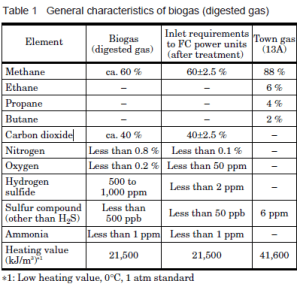
We have discussed about the formation of fossil fuel as part of carbon cycle. It takes several million years before the carbon from the plants and animals turn into fossil fuels due to chemical reactions under higher pressure and temperature. The fossil fuels include solid coal, liquid oil and gaseous Hydrocarbons such as crude oil and natural gas. The natural gas forms the top layer due to its lightness. Natural gas is also the result of anaerobic reaction by microorganism in the absence of air converting organic matter under the earth into a gas. The gas during exploration comes with great pressure to be transported across several kilometers. We are actually duplicating this process to generate Biogas from our food and agriculture wastes and other organic matters. The end product is a mixture of methane and carbon dioxide. During oil and gas exploration we get methane and carbon dioxide and other gases such as Hydrogen sulfide depending upon the location of the oil field. That is why Sulfur  and other products such as Mercaptans are present in crude oil and natural gas. When these fossil fuels are burnt the gaseous combustion  products contain sulfur dioxide and oxide of nitrogen along with oxides of carbon.  Air is normally used for combustion which is a mixture of Nitrogen and oxygen in the ration of 71:21,therefore, the combustion products invariably consist of oxides of nitrogen.

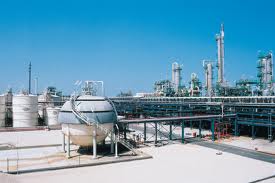
We are so addicted to oil and we are even trying to convert  natural gas into oil, similar to gasoline using GTL (gas to oil) process. However all these combustion processes can be reacted with steam to form synthesis gas, a precursor for liquid Hydrocarbon. It is quite obvious that water in the form of steam is a key part in future energy mixes because that is how one can introduce a Hydrogen molecule in the reaction process. Hydrogen in the form of water is the key. Even if we can successfully steam reform natural gas to get Hydrogen we still have problems deal thing with traces of sulfur and Mercaptans, potential poison for  catalyst in PEM (Proton exchange membrane) Fuelcells.The idea  is to generate Hydrogen using a carbonaceous source such as fossil fuel for simple reasons. It is abundantly available but it emits greenhouse gases; but when you introduce Hydrogen into the mix then there is a good possibility of reducing greenhouse emission, even though we still use fossil fuels. Secondly, we are cautious to handle pure Hydrogen due to its explosive nature and the best available option is to mix Hydrogen with combustion products of fossil fuels. The result is the formation of Syngas.

Syngas is an important intermediary that will lead us to the Hydrogen economy of the futue.The syngas can be generated by various methods as long as we have an organic source and water (steam) source. In fact all food and agriculture waste can be converted into syngas either using a biological process or by gasification process. Both will lead to formation of  Methane or syngas.

Syngas is a mixture of hydrogen with carbon dioxide formed in the following sequences, starting with carbon ,air and  steam.

2C + O2——– 2 CO

2CO + 2H2O———2H2 +2 CO2

The carbon source can be any organic source such as coal, coke, wood etc.As you can see in the reaction, the quantity of carbon source is equally important to generate Hydrogen. One can say that Syngas is a match maker between fossil economy of the past and Hydrogen economy of the future. It is a very important chemical reaction that will change the future energy scene in the world.

That is why many counties like US and Australia and in Europe who have much coal deposits are now trying to generate Hydrogen from coal. Once coal is converted into a gas such as syngas then they are one step closer to separate Hydrogen from syngas.Number of companies and research  organizations  around the world are trying to develop  an efficient and economical method of generating Hydrogen from coal. They have to find suitable conditions to generate higher yield of Hydrogen from syngas and then find an efficient system to separate Hydrogen from carbon dioxide. As I have mentioned earlier, the purity of Hydrogen is important especially when we use coal as the basic material because it has number of impurities to be  removed  before converting into a syngas.

As we can see, all energy roads are now leading to Hydrogen as the final clean fuel of the future. When the demand for Hydrogen increase, the demand for water too will   increase because it is the direct source of Hydrogen. Energy and water are two side of the same coin as I have mentioned earlier in the past.

We have been using fossil fuels like diesel, petrol and natural gas for power generation and transportation from the time of industrial revolution. The basic fuel and the combustion technology are practically the same with efficiencies less than 40%. In fact we have become very complacent with both the fuel and the combustion technology and there were no major research and development on both the above issues. In fact we became completely dependent on these two issues and there was no real breakthrough either in substituting the fossil fuel or in the combustion technology. The basic reason behind this situation can be attributed to the discovery of electromagnetism, which opened the way for electricity generation as well as transportation. In both these industries, the key part is the motor which provided a rotary motion. This rotary motion generates electricity in turbines and such motion is created by combustion of a fuel, which is invariably a fossil fuel. We have carried on this for few decades before the emission of greenhouse started rising abnormally and became an issue.

We are now at cross roads wondering what the future holds for the world. Is it possible to carry on the business as usual or look for an alternative source of energy? We started looking at various sources of energy as an alternative. Any alternative energy source should meet two critical parameters namely the lower or no carbon emission and sustainability. Low carbon can be achieved by few methods. The immediate option is to maximize the energy efficiency of existing systems so that for the given input of fuel the output is much higher than what we have achieved all these years. But this increase in efficiency should be real to achieve the emission levels of greenhouse suggested by the UN panel on climate change.

The second option will be to switch over to different fuels with less carbon emission e.g., coal-fired power plants switching over to gas-fired power plants using combined cycle. Retrofitting organic Rankin cycle as a bottoming for steam turbines to squeeze out some extra energy. Decentralizing the power plants in a phased manner in favor of distributed energy systems where gas, instead of electricity, can be supplied to each industry, to generate their own power using CHP process. All these measures can help reduce the emission level but our dependency on fossil fuel will still continue.

W can look at a completely different fuel source and new technology for power generation and transportation. If we look at carefully there are not many alternative fuel sources except Hydrogen that could meet these limits. We are also trying to develop bio fuels. But biofuels are also organic chemicals with carbon backbone which will generate greenhouse emission. Moreover bio fuel sources such as palm oil, corn are also food sources. There is an indiscriminate deforestation and plantation of palm trees in tropical countries like Malaysia, Indonesia and PNG. The focus is now shifting to carbon based organic compounds like biofuel and biogas. This will create a situation where food crops will be substituted with energy crops creating food shortage.But the carbon dioxide level in the atmosphere may not be reduced drastically by these methods.

We need to develop an energy source which does not emit any carbon emission and at the same time we should be able to use existing technology to the possible extent. Only Hydrogen can meet these requirements. In the current situation it is impossible to substitute fossil fuels in a short span of time. We can cut fossil fuels by blending with Hydrogen to the most extent possible so that we can meet two goals. We can cut the carbon emission and at the same time we can deploy Hydrogen as a blended fuel with fossil fuel and not, pure Hydrogen. Since Hydrogen is a very light gas and readily forms an explosive mixture with oxygen, this opens up a new opportunity to develop Hydrogen assisted combustion process in power generation as well as in transportation. It will be easier to handle a mixture of natural gas and Hydrogen for combustion in Gas turbine, or spark ignited reciprocating engines, as well as, gasoline combustion engines in cars. This will also gives us an opportunity to develop advanced and competitive systems like Fuel cell as an alternative technology for combustion process in due course of time.

The hydrogen assisted combustion technology is much easier, faster and economical and at the same time cut the greenhouse emission to an accepted level. But the source of such Hydrogen cannot be natural gas but only renewable sources. The renewable technologies such as solar, wind, geothermal, OTEC (ocean thermal energy conversion) should generate renewable Hydrogen. This is the key for sustainability as well as for greenhouse gas mitigation. These two benefits are too attractive to ignore and it is time we move from total fossil fuel to Hydrogen blended fossil fuel. The blended fuel along with the energy efficiency measures suggested above should go hand in hand, so that we may get over this turbulent period of financial crisis and global warming.

It is also possible that Hydrogen assisted combustion be adopted for coal-fired power plants by simply firing coal slurry, finely powdered coal blended with water and conveyed pneumatically for firing boilers and also for gasification process to generate syngas for IGCC (Integrated gasification and combined cycle) applications. Syngas production will be critical in the near future for a smoother transition from fossil economy to Hydrogen economy irrespective of the route we adopt.

In a Regenerative fuel cell the results of redox reaction between Hydrogen and Oxygen, are power and water; the above reaction can be reversed in the same electrochemical process to regenerate hydrogen and oxygen. Such a system is called ‘regenerative fuel cell’. It is a perfect example of a closed circuit system. In ancient Hindu mythology there were citations that claim water came from fire and fire came from water. Two gaseous elements Hydrogen and oxygen reacts violently rather explosively resulting in cool water. Perhaps Hindu mythology terms this reaction as fire which results in water. Similarly by passing a direct current into water, it splits water into oxygen and regenerates Hydrogen, which is a symbolic representation of Fire. Many would have watched a number of ‘you tube videos footings’ on water gas. The water gas or Brown’s gas is a mixture of Hydrogen and oxygen along with un-dissociated water molecules liberated during the process of electrolysis. It can be lit into a flame similar to Oxy-acetylene flame and can be used even to cut metal plates. That is the power of brown’s gas, which I call Oxy-Hydrogen gas. This torch is commercially marketed for metal cuttings applications. But production of pure Hydrogen completely free from Oxygen is a matter of great commercial importance.

Hydrogen is one of the lightest gases and it has a strong bondage with noble metals like Platinum and Palladium. Platinum  catalyst with carbon as a carrier has a wider industrial applications such as hydrogenation in fine chemicals and pharmaceuticals. The author has experience in such applications in bulk drug manufacturing such as Ephedrine and Paracetamol. In a PEM (Proton exchange membrane fuel cell) MEA (membrane electrode assembly) is the heart. The Platinum catalyst coated on the surface of the ‘Nafion’ membrane reacts with gaseous Hydrogen gas. It strips the electron from hydrogen atom while the polymer membrane allows only proton to pass through. The expelled electron flows around the circuit. Flow of electron is nothing but current or electricity. The proton crosses the membrane and reacts with incoming Oxygen through cathode forming water. It is an exothermic reaction and generates heat similar to any combustion reaction, that has to be dissipated.In larger installation we can use this waste heat for a typical CHP (combined heat and power applications) such as power and steam or chilled water or for space cooling. Fuel cell (based on Hydrogen fuel) operates quietly with absolutely no emission except water, and of course, there is no smoke. It is an ideal power source for 24×7 applications such as hospitals, call centers, departmental stores and continues process industries.

In the reverse process of a Fuel cell, the electrochemical device becomes an Electrolyzer splitting water into Hydrogen and oxygen. The electrolyzer works the same way as Fuel cell except in reverse direction; feed is de-ionized water and the products are Hydrogen and Oxygen. In bipolar alkaline electrolyzer, a catalyst such as potash lye is added where in solid polymer electrolyzers platinum acts as a catalyst like a Fuelcell. The generated Hydrogen comes under pressure obviating the use of an extra compressor. The Hydrogen is stored in cylinders for further usage.

As I mentioned in my previous articles the power required to split water into Hydrogen and Oxygen is more than the power generated from the resulting Hydrogen by a Fuelcell.That means an input of excess energy is necessary for a regenerative fuel cell to run successfully .Where this energy will come from depends on the cost benefit analysis to be made. Surplus Hydro power is ideal for such regenerative fuel cell applications. But we can also use various other renewable energy sources such as wind, solar, geothermal, OTEC depending upon the site and applications. The biggest advantage with regenerative fuel cell is there is no other input except the excess power to be supplied. When renewable energy is deployed on large commercial scales then regenerative fuel cell will become a clean solution of the future. I have no doubt in my mind that this will become a commercial reality. Of course the top policy makers should understand the potential and make a right decision and encourage more business and industries to deploy such systems. The energy costing model cannot be based on fossil fuel model because fossil fuel is not renewable. This is the crux of the problem.

In our future articles we will present case studies of various clean energy systems that are already in commercial operation. I also welcome articles from clean energy professionals with life project experience and problems they face. I welcome comments and feedback from business, industries and people.

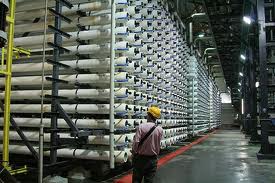
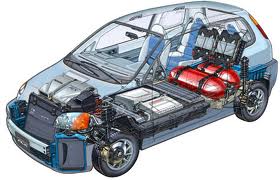
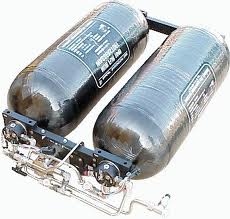
Hydrogen is the cleanest source of energy that can power your homes and fuel your cars. It can potentially substitute diesel and petrol or coal and clean up our environment. Hydrogen has been manufactured industrially for the past several decades and transported across thousand of kilometers by pipelines in Europe. The science and technology of Hydrogen is well known but its application to generate power and fuel a car is relatively new. The gasoline internal combustion engines that drive our gasoline cars can be modified to suit Hydrogen fuel. But the physical and chemical properties of Hydrogen gas created a necessity to alter existing gasoline engines for commercialization. But such conversion has been painfully slow for couple of reasons. There is a stiff resistance from gasoline cars to switch over to Hydrogen because they have a well established infrastructure to manufacture gasoline cars and to supply gasoline through well established distribution network. But Hydrogen cars lack both of them. Even if the cars can be modified for Hydrogen, there are no sales or distribution network for the fuel Hydrogen, similar to Gasoline. Even consumers need to be educated that Hydrogen is safe, environmentally friendly and we need not depend on import of oil and so on. It is a blessing in disguise that Hydrogen can be generated by each home, business and industries for their captive use from their tap water. Recently Hydrogen fuelled scooters have been introduced in the market. There are number of advertisements in the media too; that you can fit a Hydrogen generator at your car that will reduce your gasoline bills substantially and also cut your emissions.But these Electrolyzers can generate only water gas and not a pure Hydrogen. Yet such simple devices can help reduce your petrol bills to an extend .If things are so simple why are we still struggling with high crude oil prices and increasing electricity bills? Let us examine this in detail. Water (H2O) can be split into Hydrogen (H2) and Oxygen (O2) by simply passing an electric current through water using a battery. The water disassociate as follows: 2    H2o———   2 H2+ )2 Stochiometrically, it means 36 lits of water will generate 4 Kgs of Hydrogen and 32 kgs of Oygygen.The current PEM (Proton exchange membrane) Fuel cell car (Honda FCX clarity) can drive 100 miles with just 0.105 kgs of Hydrogen from 5000 psi Hydrogen tank. Similarly 4kgs of hydrogen can generate about 100 kws of electricity using PEM Fuel cell, based on a conservative estimate; but 4Kgs of gasoline can generate only 15 kW electricity. The gasoline engine offers only 100km mileage from 13 kgs (16lits) of gasoline. In other words, 0.105 kgs of Hydrogen at 5000 psi gives the same mileage as 16 lits of Gasoline.  This is the amazing power of water, yet to be unleashed! The tap water is suitable to generate Hydrogen by adding a little amount of potash lye to improve the electrical conductivity. An Alkaline water electrolyzer can be attached to the water tank to generate required amount of Hydrogen based on the above calculation. The resulting Hydrogen has to be compressed to a required level. The power consumption to electrolyze water will be about 75-80 kwhrs per Kg of Hydrogen generated at 5000 psi.Therefore 4Kgs of Hydrogen will need a power of 300kwhrs costing about $30 for a total mileage of 3800 miles. You will need a small reverse osmosis unit to be attached to your water tap so that the water is de-ionized so that there is no precipitation in the Electrolyzer or reduction in the efficiency of electrolysis. Recently, Suzuki Bargeman introduced Hydrogen Fuel cell scooter which claims to offer a mileage of 200km from 12 lits Hydrogen (carbon composite material) tank at an higher pressure of 10,000psi.The future of Hydrogen car is very promising and finally the world can hope to get rid of smoke and noise from our roads and cities.

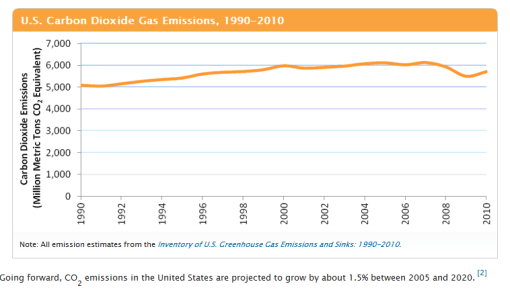
Globe is warming at an unprecedented rate since industrial revolution due to the effect of greenhouse gases in the atmosphere; according to a panel of scientists in IPCC (Intergovernmental Panel on Climate Change).Thousands of scientists from 30 countries formed IPCC under United Nation to study the problem of global warming and reported to the world. IPCC published a detailed report and it gave an apocalyptic scenario about global warming. They warned that the carbon dioxide level in the atmospheres has increased from 316ppm in 1959 (13% higher than preindustrial level) to current level of 380ppm in 2005, which is 35% above preindustrial level. This dramatic increase in the level of CO2 is due to the human activities. The major contributing gases are Carbon dioxide, Methane, Oxides of Nitrogen, CFC (Chlorofluorocarbons) and Ozone present in the atmosphere. Bulk of the emissions is from power plants and automobiles using fossil fuels. Other process industries like cement plants are also major contributors of greenhouse gases. The enhanced effect of global warming is due to the absorption of invisible infrared radiation coming from the warm surface of the earth. On an average, sun’s light reaches the earth at the rate of 343W/m2 and about 30% of this value is reflected and about 70% is absorbed. The amount of invisible infrared radiation absorbed depends on the concentration of greenhouse gases present in the atmosphere.

According to IPCC their findings on global warming are unequivocal, and if the world does not act now, then, we will be facing dire consequences in the near future. Doubling CO2 emission will increase the global temperature from 2-4.5C. But many skeptics say the IPCC report is apocryphal and they have their own theories to support their skepticism. Many climate models proposed by various international institutions projects an average temperature rise  of 3.4C above  year 2000 level if we do nothing and carry on the “business as usual”. The consequences of global warming are far-reaching. An increase of 3C rise in temperature will result in sea level rise up to 4 to 6 mts in the next few thousand years.

About 10% of the world population lives in less than 10 mts above sea level and majority of population lives within 10km of sea level. We have already witnessed few islands in pacific (example, Bougainvillea, Sulawesi) inundated with seawater. Maldives and Bangladesh are good examples.

They predict shortage of fresh water in many parts of the world and severe draught and flooding in other parts of the world. We have already witnessed these incidents in Northern Queensland in Australia and in Europe, and prolonged draught in Texas, bushfires in Australia and in Russia. Majority of Indian subcontinent is suffering from lack of drinking water. Unscrupulous exploitation of ground water for agriculture purpose has made the situation worse. Many plants, animals and species will face greater risk of extinction. An increasing acidity in seawater due to excess absorption of carbon dioxide will affect aquatic organisms such as shell, coral and shellfish. We are already witnessing bleaching of corals at Great Barrier Reef in Australia. Global warming will displace millions of people due to draught and flooding and consequently leave millions of children malnourished. Water borne diseases and infectious diseases will affect many people. Tropical diseases such as dengue and malaria will be widespread.

These consequences are real, if the world does not act on greenhouse emissions. One need not be a rocket scientist to understand that human behavior and activity has caused irreversible damage to the plant earth for several decades. We unearthed fossil fuels and converted them into plastics and dumped them in every water ways, parks and beaches. The exponential growth in population and industries has driven many animals, tropical forests into extinction. Each and every one of us who are 50 years and above would have witnessed the unfolding consequences of environmental degradation in our life time. What kind of plant earth we will be leaving behind for our future generations?

Every religion on earth has predicted the future of humanity and the last days and hours with deadly consequences for their actions. All native people whether they are Indians from Americas, Aborigines of Australia or Shamans of Indonesia or Natives of Alaska, have time and again raised their voice against indiscriminate destruction of land, water and air in the name of science and industrial growth. But no Government listened to their voice and we are here still struggling with unemployment and poverty.

Mayan civilization is a well-known civilization in ancient world and their seven prophesies are matters of great debate in the recent past. Their prophecy is ominously similar to what IPCC panel predicts except the “end of the world in Dec 2012”. I quote third, fourth and fifth prophesy out of seven Mayan prophecies here, which are relevant to global warming:

“The third prophecy states that there will be change in temperature, producing climatic, geological and social changes in magnitude without patterns and at astonishing speed. One of them will be generated by man in his lack of conscience to care for and protect natural resources of the planet and other generated by sun, which will increase its activity due to increasing vibrations.”

“The fourth prophecy says that anti-ecological conduct of man and greater activity by sun will cause melting of ice in the poles. It will allow the earth to clean itself and green itself again, producing changes in the physical composition of the continents of the planet. The Mayans left a register in the Desdre codices that for every 117 spins of Venus, the Sun suffers new alterations and huge spots or solar eruption appears”.

“The fifth prophecy says that all systems based on fear, on which the civilization based on, will suffer simultaneously with the planet and man will make a transformation to give way to new harmonic reality. The system will fail and man will face himself and in this need to recognize society and continue down the path of evolution that will bring him to understand creation. Only one common spiritual world for all humanity that will end all limits established among many ways to look at God will emerge”.

Perhaps, Jesus too expressed his displeasure with human behavior according to the Gospel of Thomas:

 Jesus said, “Perhaps people think that I have come to cast peace upon the world. They do not know that I have come to cast conflicts upon the earth: fire, sword, war.  For there will be five in a house: there’ll be three against two and two against three, father against son and son against father, and they will stand alone.”

I use the word ‘renewable Hydrogen’ for the Hydrogen derived from water using  renewable energy sources such as solar, wind, geothermal, wave energy, ocean thermal energy conversion systems and biological processes. Hydrogen is clearly the energy source of the future because it has got the highest energy content, compared to any other fossil fuels such a diesel, gasoline, or Butane. The energy content is more than three times that of natural gas, which is considered as the cleanest commercial fuel available in the market. The heating value of Hydrogen is 61,100Btu/lb compared to 23,879 Btu/lb of natural gas. Moreover, only Hydrogen can guarantee a complete reduction of Carbon dioxide from the atmosphere. The problem with renewable Hydrogen is the cost, at current situation. The DOE (department of energy, USA) has targeted a cost for Hydrogen production at $10to $15 per mmBtu, which is comparable with current Natural gas cost. Currently bulk of the Hydrogen is commercially produced by steam reforming natural gas. However; this process will emit carbon dioxide at the rate of 11,888gms per Kg of Hydrogen produced. Though the cost of Hydrogen by this route is cheaper, mitigation of carbon dioxide is clearly an environmental issue. However it is an important route during the transition process from fossil fuel to a full fledged Hydrogen economy of the future.

Natural gas is increasingly in demand and the price of natural gas keeps increasing as the supply demand gap widens. Large natural gas liquefaction plants are already in operation in many parts of the world and number of new plants are under implementation or under planning stages. Japan, South Korea, Taiwan are three largest importers of LNG (liquefied natural gas) from Australia in Pacific region. There are many coal seam methane gas facilities already in operation in Australia and many are under planning. Due to the disaster at Fukushima nuclear plant, Japan has stepped up its import of LNG. India and China, which have been traditionally using coal as a major fuel, have started importing LNG for their power plants. This has pushed the prices of LNG in the international market significantly. Though LNG is relatively a cleaner fuel, it is very expensive to build import terminals. Moreover countries like India and China do not have a good distribution network by peipelines.The economy of scale also favor only large capacity LNG plants and terminals.  However it is not a sustainable solution in the long run considering the fact that supply of natural gas also keeps dwindling steadily. Despite all these obstacles, Governments around the world are looking only for short-term solutions like LNG, simply because it is an easy fix.

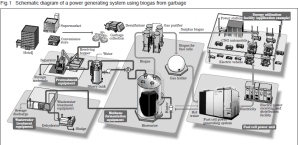
Biogas can be generated from organic waste and waste waters by anaerobic digestion. Many sewage treatment plants around the world have started generating biogas to generate power for captive use and to export the surplus power to the grid. Similarly municipalities are also implementing projects to convert ‘waste garbage’ to ‘energy’. However, the scale of operation favors only large capacity plants in larger cities. However these biogas plants will still emit carbon dioxide because biogas will be combusted using conventional engines, micro turbines and Fuelcells.This is once again a temporary solution only. We need to look beyond all these technologies to really cut the greenhouse emissions.

The only option is by Renewable Hydrogen and we need to take steps to make it a commercial reality. Biohydrogen is another potential technology. However the technology is still in a nascent stage but it is promising. Renewable Hydrogen using renewable energy sources are our best bet. Countries have already started investing in renewable energy infrastructures such as solar and wind. They can as well plan for renewable Hydrogen so that they can be certain about three things. One, they can generate and use uninterrupted power supply without importing oil or gas. Secondly they can be certain that greenhouse emissions can be reduced to pre-industrialization level. Thirdly they can be certain about the last cost of energy and its stability in the long run. These are three important factors every citizen of a country is looking for. It requires political will, determination and swift action on the part of each Government.

Power generation using fossil fuels is a well established technology dating back to 1839, when Michael Faraday invented the principle of Electro-magnetism. There was not much of a change in this technology all these years. But recently greenhouse emission and global warming has become an issue; and the world started looking for an alternative source of energy and method of power generation. However it is not an easy task to develop completely a different technology as well as a fuel in a short span of time, while an unabated man-made greenhouse gas emission continues. Scientists  are now warning  catastrophic consequences if we do not curtail greenhouse gas emissions with great urgency.Untill now the world was able to avert some of the potentially  catastrophic events happening, like ozone layer depletion, pandemic bird flu etc.But global warming is a new thereat  that demands an entirely a new solution and a swift action. But most countries in the world are not is a place to curtain greenhouse emission gas, simply because there is no alternative fuel known, except fossil fuels. Renewable energy is relatively a new concept. Though we knew about solar and wind energy sources, we did not persuade  them seriously because they could not compete with conventional fossil fuels. But the time has come for new emerging technologies that can not only compete with fossil fuels but also eliminate greenhouse emissions. The world has invested massively on fossil fuel infrastructures and still investing heavily on oil and gas explorations. Obviously there is no end in sight as far as fossil fuels are concerned and the world is carrying on business as usual.

Meanwhile a new technology based on fuel cell is emerging as an alternative for power generation. Fuel cell is a known concept and it has been successfully deployed in ‘Apollo space programme in space shuttle. This old version of alkaline fuel cells was replaced with PEM (proton exchange membrane) fuel cell or (PEMF) Polymer electrode membrane fuel cell. This new version was used in Gemini’s space programme in sixties. Fuel cell is an electro chemical device that uses Hydrogen gas as a fuel and it operates at ambient temperature. It is like a battery cell. The difference between fuel cell and batteries is the Fuel cell will keep generating power as long as fuel is supplied unlike a battery, where energy is stored in the form of chemical energy and converted into electrical energy when used by connecting through a conductor. Battery needs recharging but Fuel cell requires refueling. The fuel used in Fuel cell is invariably Hydrogen. Conventional power generation involves combustion of fossil fuel (heat energy) which drives a turbine (mechanical energy) to run an alternator to generate power (electrical energy).In fuel cell; Hydrogen gas reacts with oxygen from the atmosphere (electrochemically) to generate power. It produces water as by-product. The efficiency of Fuel cell is about 50-60% compared to 35-40% by steam or gas turbine. In regenerative fuel cell, we can split water into Hydrogen and oxygen using same proton exchange membrane elecrolyzer.We can use the resulting Hydrogen as a Fuel to the PEM Fuel cell to generate power, thus recovering  water. It is a closed circuit system. There are no mechanical moving parts, no combustion, no smoke or no noise. It is a quiet and clean operation. It is a very promising technology that can revolutionize the way we produce fuel and generate power. The Hydrogen and fuel cell combination is used in cars. Honda FCX (fuel cell model) cars work on the same principle and they are already on roads!

One problem with Hydrogen generation is it requires more power to split water, into Hydrogen and oxygen, than the power generated by resulting hydrogen, using Fuel cell. However, this technology will change the future of power generation by eliminating greenhouse emission completely. But how long it will take to become a commercial reality is something we have to wait and see! If political leaders and Governments around the world recognize the potential of this technology and take bold decisions together with swift actions, probably our future generation can breathe a clean air.

Renewable energy is one of the fastest growing energy sources of our times. But still there are many obstacles to overcome, before it can substitute current methods of electricity generation using fossil fuels, or substitute petrol in cars. The main obstacle is, the intermittent and unpredictable nature of renewable energy sources, such as wind and solar. Wind blows only certain seasons of the year and then wind velocity fluctuates widely in a day. Similarly sun shines only certain hours in a day and the intensity of radiation varies widely in a day. The wind velocity and sun’s radiation intensity are critical components in designing a reliable energy system. It is an anomalous situation, when we need power, there is no sun or wind; when sun shines or wind blows, we may not need any power. How to overcome this anomaly? That is the key, in successfully deploying renewable energy technologies.

Currently we are using batteries to store the energy. When there is a wind with reasonable velocity or sunshine with reasonable radiation intensity, we can generate power and store them in batteries. The wind velocity should be above certain threshold limit, say such as, a least wind velocity of 3mts/sec for amount of hours, while designing a wind based energy system. The same principle applies to solar energy and we need certain minimum solar   intensity and several hours. But in reality, we don’t get these minimum operating parameters, which make the design of a renewable system more complicated.

Batteries can accumulate these small energy generations by intermittent sources of wind and sun, and store them. But these batteries have certain life between 3-5 years and requires regular maintenance, replacements.They also have certain charging and discharging cycles and limitations. At the end of its life, it has to be disposed carefully because these batteries are made of lead and acid, which are toxic materials. Many companies are trying to introduce better technologies such as ‘flow batteries’. But experience shows that such batteries are confined to only smaller capacities. Large scale storage is expensive and sometimes it is not economically feasible. Lithium-ion batteries are more efficient than Lead-acid batteries, but they are more expensive so the renewable energy projects become expensive and cannot compete with conventional fossil fuels, in spite of higher tariffs offered by Government as incentives. Moreover the demand for Lithium-ion batteries will increase substantially in the future, as more and more Electric cars are produced. But lithium sources are limited and it is not sustainable.

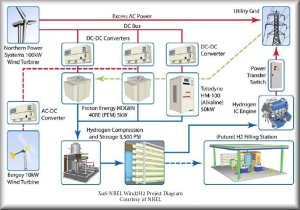
The best option to develop renewable energy systems is to generate Hydrogen using renewable energy and store them, instead of storing them in batteries. We can use stored Hydrogen to generate power, or use as fuel for the car, as and when we need. There are no maintenance or disposal problems with Hydrogen storage, when comparing with batteries. Hydrogen generators (electrolyzers) can generate Hydrogen when the intermittent power flows from wind or sun. They can run from a range of capacities from 5 to 100% of rated capacity and they are more suitable for renewable energy sources. But there will be a loss of energy, because the amount of power required to generate Hydrogen, is more than the power generated from the resulting Hydrogen by a Fuelcell.The initial cost will be higher, but it will give operational flexibility with least maintenance, and even adoptable to remote sites. Technology is improving to cut the cost of fuel cells and electrolyzers so that Hydrogen based renewable energy will become a sustainable source of energy in the future. Hydrogen is the only solution that can solve both power generation and transportation problems the world is currently facing.