Skip navigation

Category Archives: Clean energy

As the threat of global warming looms large, Governments and Industries are looking for innovative, alternative and renewable energy sources and energy efficiency solutions. But how many alternative energy sources are available and what are their potentials? How to cut our carbon footprint without making larger new investment? How to improve the energy efficiency of the existing systems so that we can increase energy output for the same amount of fuel input and cut the cost of energy? These are some of the fundamental questions Governments and industries are grappling with, for the past few years. We are used to generating cheap energy from coal, oil and gas at the cost of the environment for several decades. We are used to water supply free of cost or at negligible cost for several decades. Governments were able to survive year after year because they were able to supply these two fundamental requirements of the people namely, energy and water at low-cost. But this situation changed swiftly when scientists raised the alarm bells on carbon emission and global warming. Still many Governments, especially industrialized countries with large energy and water usage, are still playing ‘wait and watch’ game, because they cannot afford to increase the tariffs on power and water. Any such increase will make Governments unpopular and their re-election to the office doubtful.

The real alternative to fossil fuels is only solar energy, which is clean, reliable and abundant. All other forms of renewable sources such as wind, geothermal, ocean thermal energy and wave energy are only offshoot of solar energy. The prime source is still the sun and the source of energy is from the chain nuclear fusion reaction of Hydrogen atom. The radiation of this nuclear reaction in the sun has to travel an average distance of 93 million miles to reach the earth, yet it is enough to meet current energy need of  entire humanity by a factor of 20,000 times. But to convert sun’s light and heat energy into Electricity and other useful forms of energy, we need some rare materials which we never used in the past. They are called ‘rare earth materials’ because their available sources and supplies are rare on planet earth. But these exotic and rare earth materials are becoming indispensable in the development of renewable energy products and applications. The future growth of clean energy technologies depend on supply of such rare earth materials.

Fourteen elements and related materials were selected for a criticality assessment by US Government department of energy. Eight of these are rare earth metals, which are valued for their unique magnetic, optical and catalyst properties. The materials are used in clean energy technologies as follows. Lanthanum, cerium, praseodymium, neodymium, cobalt and lithium are used in electric vehicle batteries. Neodymium, praseodymium and dysprosium are used in magnets for electric vehicles and wind turbines. Samarium is also used in magnets. Lanthanum, cerium, europium, terbium and yttrium are used in phosphors for energy-efficient lighting. Indium, gallium and tellurium are used in solar cells. The materials were selected for study based on factors contributing to risk of supply disruption.

Though usage of such material is relatively small, it is anticipated that the growth of clean technologies will need a substantial quantity of these materials. Currently China is endowed with almost 95% of such rare materials in the world. These materials are available in the form of ores and minerals under the earth. They have to be mined, processed and extracted in a pure form so that they can be used in developing clean energy products of the future. We will discuss about such products and technologies in our future articles. The anomaly is the energy required to mine, process and extract these rare earth materials need energy and such energy to have to come only from the sun. It is once again Nature that comes to the rescue of human beings at such critical junctures.


We now generate electric city from heat, obtained by combustion of fossil fuel such as coal, oil and gas. But such combustion generates not only heat but also greenhouse gases such as Carbon dioxide and oxides of Nirogen.The only alternative to generate power without any greenhouse gas emission is to use a fuel with zero carbon. However, oxides of Nitrogen will still be an issue as long as we use air for combustion because atmospheric air has almost 79% Nitrogen and 21% oxygen. Therefore it becomes necessary to use an alternative fuel as well as an alternative power generation technology in the future to mitigate greenhouse problems.

Hydrogen is an ideal fuel to mitigate greenhouse gases because combustion of Hydrogen with oxygen from air generates only water that is recyclable. Combining Hydrogen with Oxygen using Fuel cell, an electrochemical device is certainly an elegant solution to address greenhouse problems. But why Hydrogen and Fuel cell are not commonly available? Hydrogen is not available freely even though it is abundantly available in nature. It is available as a compound such as water (H2O) or Methane (CH4) and Ammonia (NH3). First we have to isolate Hydrogen from this compound as free Hydrogen and then store it under pressure. Hydrogen can easily form an explosive mixture with Oxygen and it requires careful handling. Moreover it is a very light gas and can easily escape. It has to be compressed and stored under high pressure.

Generation of pure Hydrogen from water using Electrolysis requires more electricity that it can generate. However, Hydrogen cost can be reduced using renewable energy source such as solar thermal. The solar thermal can also supply thermal energy for decomposing Ammonia into Hydrogen and Nitrogen as well as to supply endothermic heat necessary for steam reformation of natural gas into Hydrogen. On-site Hydrogen generation using solar thermal using either electricity or heat can become a commercial reality. Hydrogen generation at higher temperatures such as Ammonia decomposition or steam reformation can be directly used in Fuel cell such as Phosphoric acid Fuel cell.

Phosphoric acid fuel cell is a proven and tested commercial Fuel cell that is used for base load power generation. It is also used for CHP applications. Hydrogen generation using solar thermal and power generation using Fuel cell is already a commercial reality and also an elegant solution to mitigate greenhouse gases. Large scale deployment of Fuel cell and solar thermal will also cut the cost of installations and running cost competing with fossil fuel.Fuecell technology has a potential to become a common solution for both power generation and transportation.

While Government can encourage renewable energy by subsidizing PV solar panels and discourage fossil fuel by imposing carbon tax, they should give preference and higher tariff for power purchase from Solar thermal and Fuel cell power generators. This will encourage large-scale deployment of Fuel cell as a potential base load power source.

Ammonia is a well-known industrial chemical that is manufactured worldwide as a precursor for the production of Urea. The chemistry and technology of Ammonia synthesis is well-known and well established. It was a land mark achievement to fix atmospheric Nitrogen into the soil in the form of Urea as a fertilizer. It has 17.6% Hydrogen and 82.4% Nitrogen making it an ideal fuel for combustion when compared to Gasoline in terms of greenhouse gas emission because Ammonia no carbon. Handling free Hydrogen has always been a concern due to its explosive nature and lightness. Transportation of Hydrogen in the form of Ammonia is relatively cheaper and safer. A non-regulated Ammonia nursing tank at 265 psi pressure holds 3025kg Ammonia, containing 534kg Hydrogen, because a 5900 gallon Hydrogen tube trailer at 3200 psi pressure, contain only 350kgs of Hydrogen. Low pressure Ammonia tank with less than 25% volume contain more than 53% Hydrogen than a high pressure tube trailer. Ammonia has a lower volumetric energy density compared to other fuels.However, after subtracting energy required to elicit hydrogen from each fuel, hydrogen emerges with highest energy density compared to other fuels, and it is the only fuel which is carbon free. These qualities make Ammonia, a potential  substitute for Gasoline.

Ammonia need not be used as direct combustible fuel in internal combustion engines but it can be used as Hydrogen carrier safely and economically. The Hydrogen resulting from the decomposition of Ammonia can be used as fuel in a Fuel cell car as well as in a combustion engine. It can also be used to generate small on site power using a Fuel cell or IC engine. For example, 534kg Hydrogen can generate Electricity up to 10 MW and up to 6Mw thermal energy using a Fuel cell.

Currently ammonia is manufactured using fossil fuel source such as natural gas or naphtha to generate Hydrogen in the form of Syngas.But this can be effectively substituted with renewable source of Hydrogen such as Electrolysis of water using renewable solar thermal power or wind energy. Alternatively a biogas can be steam reformed to generate Hydrogen similar to natural gas. The generated Hydrogen can be compressed and stored.

Nitrogen forms 79% of atmospheric air and it can be obtained by air liquefaction and separation by distillation or by simple membrane separation method to separate air into Nitrogen and Oxygen. The resulting Nitrogen can be compressed and stored for Ammonia sysnthsis.Production of Ammonia using Bosch Haber process is well-known. Ammonia can be transported in pipelines, in tankers by road, rail or ship to various destinations.

Ammonia can be readily be used as fuel using a spark ignited combustion engine with little changes because Ammonia is classified as non-combustible fuel. Alternatively, it can be decomposed in a catalytic bed reactor and separated into Hydrogen and Nitrogen using PSA (pressure swing adsorption) system. The resulting Hydrogen can be stored to run a Fuel cell car like Honda FCX. Ammonia, as a Hydrogen carrier can substitute gasoline as an alternative fuel for transportation and power generation. All necessary technologies and systems are commercially available to make it a commercial reality.


We  acknowledge that solar energy is a potential renewable energy source of the future. The total energy need of the world is projected in the next 40 years to be 30 TW (terra watts) and only solar energy has a potential to meet the above demand. However, harnessing sun’s energy to its fullest potential is still a long way to go. Concentrated solar power (CSP) offers a greater hope to fill this gap. The main reason is the cost  advantage of CSP compared to PV solar and energy storage technologies and their costs.

The cost of PV solar has steadily decreased in the past few years. Though the cost of solar cell has come down to $0.75 per watt, the overall cost of the PV system is still around $ 3.00 per watt. This is due to the cost of encapsulation; interconnect wiring, mounting of panels, inverters and battery bank. The overall cost of the system will not come down drastically beyond a point. This makes PV solar still more expensive compared to conventional power generation using fossil fuels. People can understand the value of renewable energy and impending dangers of global warming due to greenhouse gases, but the final cost of energy will decide the future of energy sources.

In PV solar the sun’s light energy is directly converted into Electricity, but storing such energy using batteries have certain limitations. PV solar is suitable for small-scale operations but it may not be cost-effective for large-scale base load power generation. The best option will be to harness the sun’s thermal energy and store them and use them to generate power using the conventional and established methods such as steam or gas turbines. Once we generate thermal energy of required capacity then we have number of technologies to harness them into  useful forms. As we mentioned earlier, the thermal energy can trigger a chemical reaction such as formation of Ammonia by reaction between Hydrogen and Nitrogen under pressure, which will release a large amount of thermal energy by exothermic reaction. Such heat can be used to generate steam to run a stem turbine to generate power. The resulting ammonia can be split with concentrated solar power (CSP) into Hydrogen and Nitrogen and the above process can be repeated.

The same system can also be used to split commercial Ammonia into Hydrogen and Nitrogen. The resulting Hydrogen can be separated and stored under pressure. This Hydrogen can be used to fuel Fuel cell cars such as Honda FXC or to generate small-scale power for homes and offices.

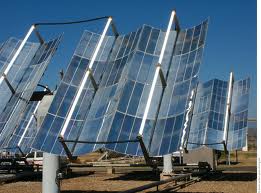
By using CSP, there is potential of cost savings as much as 70% compared to PV solar system for the same capacity power generation on a larger scale. Focusing sun’s energy using large diameter parabolic troughs and concentrators, one can generate high temperatures.  Dishes can typically vary in size and configuration from a small diameter of perhaps 1 meter to much larger structures of a dozen or more meters in diameter.  Point focus dish concentrators are mounted on tracking systems that track the sun in two axes, directly pointing at the sun, and the receiver is attached to the dish at the focal point so that as the dish moves, the receiver moves with it.  These point focus systems can generate high temperatures exceeding 800ºC and even 1,800ºC.

The temperature required to run a steam turbine does not exceed 290C and it is quite possible to store thermal energy using mixture of molten salts with high Eutectic points and use them to generate steam. Such large-scale energy storage using lead-acid batteries and power generation using PV solar may not be economical. But it will be economical and technically feasible to harness solar thermal energy using CSP for large-scale base load power generation. It is estimated that the cost of such CSP will compete with traditional power generation using coal or oil in the near future.CSP has potential to generate cost-effective clean power as well as a fuel for transportation.

The city of Athens hosted its oldest tradition of lighting the Olympic torch for the 2012 London Olympic Games on Thursday in Olympia. The torch was lit by solar power; using parabolic mirror to redirect the sun’s light to light the flame with purest natural light. The thermal energy of sun’s light can be powerful when focused to a point and it can reach a temperature as much as 600C.The parabolic trough with reflective mirror focuses the sunlight on the tube called ‘collectors’ in which a fluid with high boiling point is circulated. The hot fluid in turn is used to convert water into steam in boiler. The hot oil transfers its heat to the water in a heat exchanger and returns back to the parabolic trough. It is a closed circuit system. The hot oil at 390C generates steam at 370C at 100 bar pressure, which is used to run a HP steam turbine. The standard steam condensing cycle generates power similar to fossil fuel fired power plant. A 50 Mw Trough plant in Israel (Negev Desert) is already in operation.

The capacity of such plant can be easily expanded by adding modular parabolic troughs and collectors and the plant can be designed to meet  specific power demands. This is a straight forward method to generate base load power using standard steam cycle. The efficiency of such system will be 41% maxium.However recently few companies are trying use a combined cycle. This increase the solar to heat efficiency from 50.5% to 53.6%.This nominal 50Mw power plant generates  a total peak power of 57.10Mw using a solar collection area of 310,028m2 with annual solar to electrical efficiency at 16.3% using a water-cooled condenser in the steam cycle. The cost of energy works out to $0.23 to $ 0.25 /kwhrs.

By using a central solar collection tower (Heliostat) and bottoming with Rankin/Kalina cycle ,it is estimated that the total installed cost can be reduced by 10%.The system can be configured from 2Mw up to 100Mw using both trough and tower system. The system can be installed in any remote, arid locations using air condensers, where cooling water is a problem. The estimated annual specific energy cost is less than 6 cents/kwhrs, comparable to low-cost fossil energy but with zero pollution and with zero carbon emission.

Solar thermal is a potential clean energy of the future for many countries around the world with yearlong sunshine with good intensisty.The solar thermal energy can also be used in many process industries where thermal heating is required. Solar salt pans can use solar thermal energy very efficiently to cut their production cycle. The concentrated brine can be used as a circulation fluid in solar collectors and also be used to generate power using low heat technologies like Kalina cycle, because concentrated salt brine can store thermal heat.

Gemasolar power in Spain is a base load power station supplying power for 25,000 homes 24×7 using molten salt (60% KNO3+40% NaNO3) as a thermal storage medium instead of batteries. Nine plants were built in 1980 in Mojave Desert with a combined capacity of 354 Mws.

Other examples of solar base load power plants are Blythe solar with capacity of 968Mw at Riverside County, California and Ivanpah power station with capacity of 370 Mw capacities in US. Large scale solar base load plants are no longer a theory but a commercial reality.

Direct solar lighting is also being introduced using fiber optics. The sun light is collected at a central point and directed through fiber optics to various rooms inside the building supplying direct sun light. This saves not only electricity but also provides natural light to work places because human body requires a certain amount of UV light exposure. Solar energy is here to stay and offer various clean energy solutions in the future.


Renewability and sustainability are two critical factors that will decide the future course of the world. We have to learn from Nature how sun is able to sustain life on earth for millions of years without the slightest hitch. The sun provides light energy for the photosynthesis to generate Carbohydrate using carbon dioxide from the atmosphere and water. The green pigment in the leaves of the plant ‘Chlorophyll’ catalalyses the photosynthesis. The plant grows and serves as food for animals. After certain period both the plant and animal dies and becomes carbon. New plants and animals are produced and the cycle continues. The dead plant decays and serves as manure for the new plant. A sequence of combinations of atmosphere, photosynthesis, micronutrients in the soil, absorption of carbon dioxide from air and release of Oxygen into the atmosphere, food production, life sustainenace, death and decay play like a symphony in an orchestra. Microorganisms too play their role in this cycle.

It is obvious from the above process that life cycle is based on ‘Renewability’.The  death and decay of the old plant gives way to the birth of new plant and new cycle. There is nothing static .It is a dynamic and cyclic process, where ‘Renewability’ is the key. Only with renewability the process can ‘sustain’. Without a cyclic nature, the process will end abruptly. In fact ‘renewability’ and ‘sustainability’ are closely linked.

When we try to develop a new source of energy it is absolutely critical that such a source is renewable and available directly from Nature. Sun is the prime source of such energy, though it is also available in other forms such as wind, wave, ocean thermal etc. Such renewability can come only from Nature because human life in intricately linked with Nature such as earth, sun and wind. Everything that happens in Nature is to support life on earth and not to destroy. This is a fundamental issue.

When we dig out Carbon from the earth  that was deeply buried by Nature and burn them, we release Carbon dioxide as well as Oxide of Nirtogen.Though our primary interest is only heat, we also create by-products such as greenhouse gases that upset the natural equilibrium. Nature can make some adjustments in order to maintain equilibrium; but when this limit exceeds, the equilibrium is upset creating a new environment, which may be alien to human life. This is unsustainable. Nature does not burn organic matter indiscriminately to generate Carbon dioxide to promote photosynthesis. It judiciously and delicately uses atmospheric Carbon dioxide without the slightest disturbance to the equilibrium. Many chemical reactions are irreversible and can cause irreversible damages, similar to ‘radiation’ from a nuclear reaction.

Whatever we do in the name of science, we will have to face their consequences, if we fail to understand the process of Nature completely and thoroughly. Fossil fuel sources are limited and burning them away to meet our energy demands is neither prudent nor sustainable. Human greed has no limit. We live in a finite world with finite resources and there is no place for infinite greed and destruction. There is no solution in Science for human greed.


The World Bank development indicators 2008 shows that the wealthiest 20% of the world accounts for 76.6% of total private consumption. The poorest fifth just 1.5%.The report further states,

“Today’s consumption is undermining the environmental resource base. It is exacerbating inequalities. And the dynamics of the consumption-poverty-inequality-environment nexus are accelerating. If the trends continue without change — not redistributing from high-income to low-income consumers, not shifting from polluting to cleaner goods and production technologies, not promoting goods that empower poor producers, not shifting priority from consumption for conspicuous display to meeting basic needs — today’s problems of consumption and human development will worsen. The real issue is not consumption itself but its patterns and effects. Inequalities in consumption are stark. Globally, the 20% of the world’s people in the highest-income countries account for 86% of total private consumption expenditures — the poorest 20% a minuscule 1.3%. More specifically, the richest fifth:

  • Consume 45% of all meat and fish, the poorest fifth 5%
  • Consume 58% of total energy, the poorest fifth less than 4%
  • Have 74% of all telephone lines, the poorest fifth 1.5%
  • Consume 84% of all paper, the poorest fifth 1.1%
  • Own 87% of the world’s vehicle fleet, the poorest fifth less than 1%
  • Runaway growth in consumption in the past 50 years is putting strains on the environment never before seen.”

Clearly the above consumption pattern indicates the amount of waste generated worldwide,especially in developed countries. Unfortunately bulk of the waste are not recycled thus creating enormous amount of strain on natural resources. A typical municipal solid waste consists of food, paper, plastic, metal, glass and garden waste etc.For example the amount of MSW collected in Metropolitan Melbourne for the year 2006-2007 was 1.315,119 Mt costing about a$163 million in service cost. Though Government of Victoria follows the policy of reuse, recycle and recover; only 567,117 Mt was recycled and reprocessed.

There are several methods to process waste and such process depends on the quantity , type of waste and the recovery of products. Gasification and Anaerobic digestion to generate syngas are two common methods of converting waste to energy. However a large volume of complex municipal, industrial and biological wastes require  different methods of processing. ‘Desperate problems require desperate solutions’. One such solution is by Plasma Gasification and Vitrification. It  has clear advantages over existing method of incineration.

Plasma is called fourth state of matter after solid, liquid and gas and it is an abundant form of matter in the universe. When the MSW is heated to a high temperature up to 5000C using Plasma torch, it decomposes into syngas  and verified mass. In Plasma gasification, MSW is subject to high temperature  pyrolysis in the absence of air decomposing matter into its elemental state.Vitrification  is a  process in which semi-liquid waste is mixed with glass converting them into a stable glass form. Even radioactive liquids and sludge are converted into vitrified glass. It is similar to Plasma welding electrodes where an Argon gas is heated into a plasma torch of high temperature up to 5000C.This plasma can treat a range of waste materials such as radioactive, biological, MSW, biosolids  from sewage treatment plants and industrial wastes.  The process is highly efficient.The process can be selectively used to generate syngas with high proportion of Hydrogen  by carefully selecting the feedstock and process parameters.

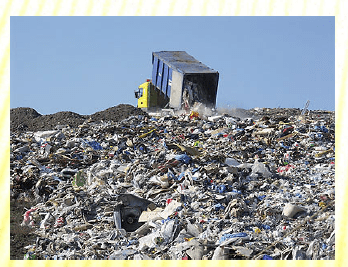
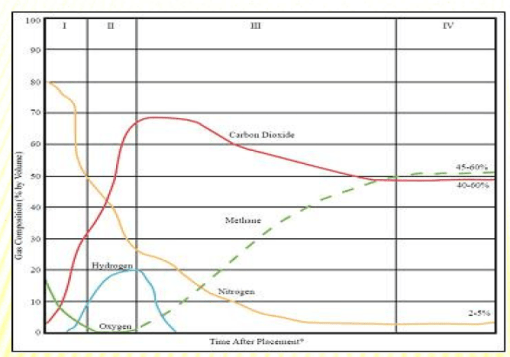
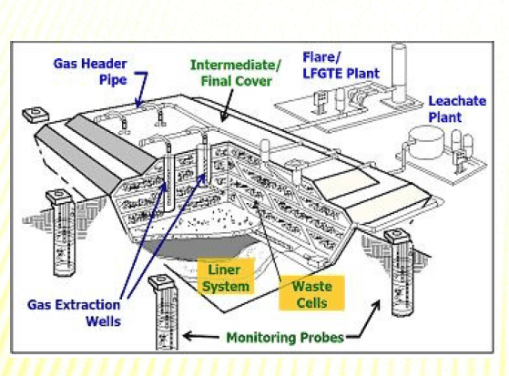
Bulk of the MSW is now sent to landfill. Such landfills generate methane gas over a time and also leach toxic chemicals and material into the soil. Plasma gasification has distinct advantages over other conventional methods of waste-to energy technologies, especially when the volume is large and the waste has highly toxic materials and metals.

It is clear substituting fossil fuels with Hydrogen is not only efficient but also sustainable in the long run. While efforts are on to produce Hydrogen at a cost in par with Gasoline or less using various methods, sustainability is equally important. We have necessary technology to convert piped natural gas to Hydrogen to generate electricity on site to power our homes and fuel our cars using Fuelcell.But this will not be a sustainable solution because we can no longer depend on piped natural gas because its availability is limited; and it is also a potent greenhouse gas. The biogas or land fill gas has the same composition as that of a natural gas except the Methane content is lower than piped natural gas. The natural gas is produced by Nature and comes out along with number of impurities such as Carbon dioxide, moisture and Hydrogen sulfide etc.The impure natural gas is cleaned and purified to increase the Methane content up to 90%, before it is compressed and supplied to the customers. The gas is further purified so that it can be liquefied into LNF (liquefied natural gas) to be transported to long distances or exported to overseas.

When the natural gas is liquefied, the volume of gas is reduced about 600 times to its original volume, so that the energy density is increased substantially, to cut the cost of transportation. The LNG can be readily vaporized and used at any remote location, where there is no natural gas pipelines are in existence or in operation. Similarly Hydrogen too can be liquefied into liquid Hydrogen. Our current focus is to cut the cost of Hydrogen to the level of Gasoline or even less. Biogas and bio-organic materials are potential sources of Hydrogen and also they are sustianable.Our current production of wastes from industries business and domestic have increased substantially creating sustainability isues.These wastes are also major sources of greenhouse gases and also sources of many airborne diseses.They also cause depletion of valuable resources without a credible recycling mechanisms. For example, number of valuable materials including Gold, silver, platinum, Lead, Cadmium, Mercury and Lithium are thrown into municipal solid waste (MSW) and sewage. Major domestic wastes include food, paper, plastics and wood materials. Industrial wastes include many toxic chemicals including Mercury, Arsenic, tanning chemicals, photographic chemicals, toxic solvents and gases. The domestic and industrial effluents contain valuable materials such as potassium, Phosphorous and Nitrates. We get these valuable resources from Nature, convert them into useful products and then throw them away as a waste. These valuable materials remain as elements without any change irrespective of type of usages.Recyling waste materials and treatment of waste water and effluent is a very big business. Waste to wealth is a hot topic.

The waste materials both organic and inorganic are too valuable to be wasted for two simple reasons. First of all it pollutes our land, water and air; secondly we need fresh resources and these resources are limited while our needs are expanding exponentially. It is not an option but an absolute necessity to recycle them to support sustainability. For example, most of the countries do not have Phosphorous, a vital ingredient for plant growth and food production. Bulk of the Phosphorus and Nitrates are not recovered from municipal waste water and sewage plants. We simply discharge them into sea at far away distance while the public is in dark and EPA shows a blind eye to such activities. Toxic Methane gases are leaking from many land fill sites and some of these sites were even sold to gullible customers as potential housing sites. Many new residents in these locations find later that their houses have been built on abandoned landfill sites. They knew only when the tap water becomes highly inflammable when lighting with a match stick. The levels of Methane were above the threshold limit and these houses were not fit for living. We have to treat wastes because we can recover valuable nutrients and also generate energy without using fresh fossil fuels. It is a win situation for everybody involved in the business of ‘waste to wealth’.

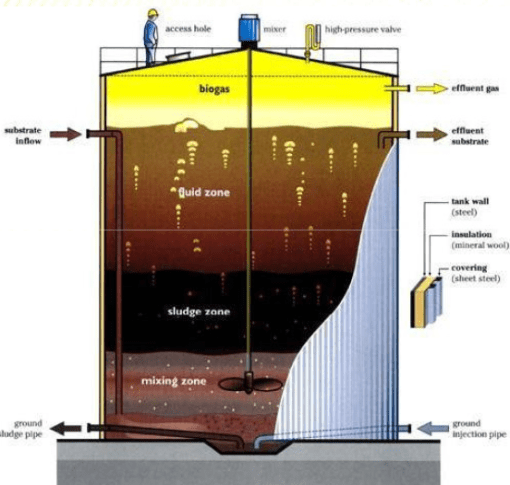
These wastes have a potential to guarantee cheap and sustainable Hydrogen for the future. Biogas is a known technology that is generated from various municipal solid wastes and effluents. But current methods of biogas generation are not efficient and further cleaning and purifications are necessary. The low-grade methane 40-55% is not suitable for many industrial applications except for domestic heating. The biogas generated by anaerobic digestion has to be scrubbed free of Carbon dioxide and Hydrogen sulfide to get more than 90% Methane gas so that it can be used for power generation and even for steam reforming to Hydrogen generation. Fuel cell used for on site power generation and Fuel cell cars need high purity Hydrogen. Such Hydrogen is not possible without cleaning and purifying ‘ biogas’ much. Hydrogen generation from Biogas or from Bioethanol is a potential source of Hydrogen in the future.

The sun is bright and warm and your roof top solar panels and solar heaters are working hard to generate power and hot water. But the rate of power generated is too small to use immediately. The hot water is not hot enough for your shower. Your 200 watt rooftop solar panel generates only 0.12 kwhrs after 5 hours of hard work. It does not meet your expectations. You expect 200 watts solar panel to generate about 1000 watt.hrs (1kwhr) in 5 hours. It is not happening. You don’t think renewable energy can meet your electricity demand.

There is a strong wind in the island and the wind turbines are rotating faster than usual but there are hardly any people living there. Wind turbine generates good power when the wind velocity is above certain level. But the electricity generated by the wind has no immediate takers.

There is a good rain this year and the dams are overflowing and the Hydro is generating surplus power but not many people are living near the catchment area. The power has to be transmitted hundred of kilometers to the nearby town through a sub-station. When the dams are dry there is hardly any power generation and power supply is rationed to the town.

When there is a demand for power Mother Nature does not offer the resources for power generation. When Mother Nature offers the resource we do not need power. This anomalous situation is the single largest obstacle that is undermining the potential of renewable energy. Of course, the high initial cost and half-hearted approach by Governments to offer subsidies or grants for renewable energy are other factors that add to the anomaly.

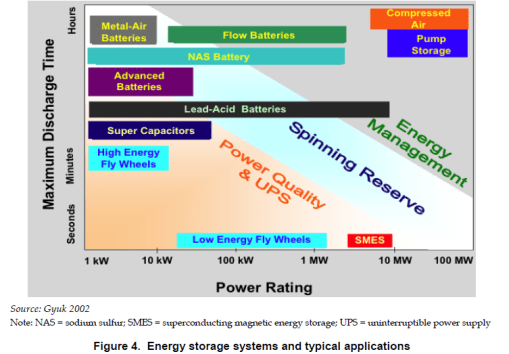
The only option to get over this situation is to store the energy 24×7 when it is generated and use them when we need them. It requires good storage technology, automation and information technology that can communicate with Natures energy resources and harness them, store them and deploy them judiciously and intelligently to meet our demands.

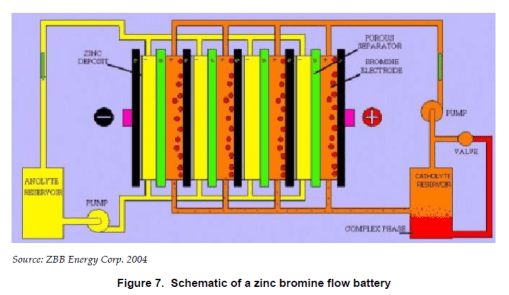
Current battery technology cannot be a long-term sustainable solution; it is expensive, requires constant maintenance and replacement, which adds to the expensive initial investment on renewable systems. The best option is to generate Hydrogen on-site when sunshine’s or wind blows and store them under pressure that can be used as and when we need electricity using Fuel cell. It is easier to handle gas than stored electricity in batteries. Batteries are very heavy, has a limited life cycle and poses health hazard and not suitable for large-scale power storage and not sustainable in the long run.

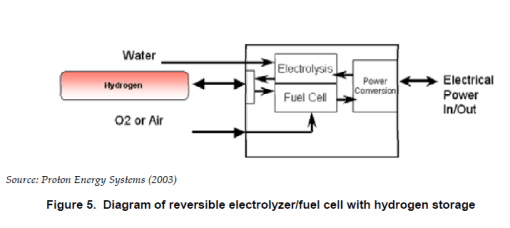
An Electrolyzer can generate Hydrogen from water on site when a sun or wind energy available and they can work from 10% to 100% capacity depending upon the availability of renewable resources. The surplus power from Hydro can be converted into Hydrogen and stored. With so much advancement in information and communication technology, harnessing nature’s energy, storing them and deploying them in a timely manner is not major issue. Hydrogen can bridge the gap between Nature resource availability and human demand. This is what science is all about. We developed science by learning from Nature or duplicating Nature and Renewable energy is nothing different.

There is a general opinion that Hydrogen is now very expensive compared to Gasoline and Diesel. It depends on how you generate Hydrogen. We have used Gasoline and Diesel for several decades and real cost of crude oil is much lower than what we are paying for Gasoline and diesel at the service stations. Crude oil is formed naturally and all the cost involved is for pumping, transportation and refining. The cost of energy spent on transportation and refining is also comparatively low. It is the geopolitical situation in the world, supply demand gap, Government taxes and levies, inventory levels, financial market and distributors play a key role in fixing the price of these fuels.

Hydrogen can be generated from tap water without involving fossil fuels at all. But Governments are spending on research and development of Hydrogen generation using fossil fuels such as natural gas and coal. It is understandable that these sources are suitable for bulk production of Hydrogen on an industrial scale. We will also be able to use existing fossil fuel infrastructure to the most extent. But the flip side of this approach is Hydrogen generated by this route is still not pure enough to meet Fuel cell requirements. This Hydrogen may be suitable for Hydrogen combustion engines. Why they are not suitable? For example, Hydrogen is generated from natural gas by steam reforming,Syngas is generated as an intermediary product which is a mixture of Hydrogen and Carbon monoxide; but also other impurities present in natural gas such Sulfur,Phosphorus and Mercaptans etc.Natural gas has to be purified to remove all these impurities before it can be subject to steam reformation. In spite of an elaborate purification methods adopted, Fuel cell suppliers are reluctant to guarantee the life of their Fuelcell.The Fuel cell uses expensive Platinum as a catalyst which can be readily poisoned by the presence of impurities in Hydrogen, produced from natural gas. This is one of the main reasons why Hydrogen becomes expensive by this route. Industries can pay high cost for this Hydrogen, but ordinary citizens cannot afford to pay.

Hydrogen can be generated directly from tap water by simply electrolyzing it using a Direct current such as solar and wind. If we use grid power, it requires about 68kwhrs of electricity, costing about $3.40 per Kg of Hydrogen. Assuming Hydrogen will cost about $5 per kg after compression and storage, it is still worth the cost. This Hydrogen will give a mileage of 73.4 miles/kg using Fuel cell car. This is equal to 3.67 Gallons of gasoline costing about $13.76, at the rate of $3.75 per gallon. It is very clear that hydrogen is cheaper than gasoline or diesel. At the current price,Gasoline  costs 275% more than Hydrogen gas.

By converting existing coal and oil based power plants into IGCC, Integrated Gasification and Combined Cycle plants, Government can cut the current emission levels of greenhouse gases, and at the same time supply electricity at the prevailing rates. We do not have to import oil or gas. Government should fund conversion of coal and oil-fired power plants into IGCC plants and create Hydrogen infrastructure, by producing more Hydrogen Fuel cell cars and Hydrogen service stations. By adopting this policy, US Government can bring down the prices of crude oil in the international market which will help cut the prices of all other petrochemical products like fertilizers, plastics, drugs and cosmetics. The crux of the issue is to divert petroleum products from fuel use to other uses. At the same time Governments can reduce their greenhouse emissions to the level demanded by scientists. By reducing the cost of solar panels to less than $.100 per watt, Renewable Hydrogen will become a commercial reality and that will be the end of fossil fuels.