Skip navigation

Author Archives: ahilan@cewt.tech

Professional chemical engineer,specializing on clean energy and water technologies.He has more than 35 years of industrial experience in various process industries.Bulk of his experience were in R&D and commercialization.He has few innovative National and International patents on desalination and power generation. His latest patent is to store renewable energy such as solar, wind and geothermal in the form of SNG (synthetic natural gas) to generate base load power. You can eliminate the usage of fossil fuel and substitute with SNG with Zero Carbon emission. He is also a writer on Eastern philosophy, especially on Advaita Vedanta. He believes that science and Vedanta are two sides of the same coin. Science applies to this physical world, and it has its limitations. However, spirituality transcends science and the physical realm. It is your TRUE NATURE. Please check my LinkedIn profile.

There is a raging debate going on around the world especially in US about the global warming and its causes, among scientists and the public alike. When IPCC released its findings on the connection between greenhouse gas emission and the global warming and its disastrous consequences, there was an overwhelming disbelief and skepticism in many people. In fact many scientists are skeptical even now   about these findings and many of them published their own theories and models to prove their skepticism with elaborate ‘scientific explanations’.   I am not going into details whether greenhouse gas emission induced by human beings causes the globe to warm or not, but certainly we have emitted billions of  tons of Carbon in the form of Carbon dioxide into the atmosphere since industrial revolution. Bulk of these emissions is from power plants fueled by Coal, oil and gas. Why power plants emit so much Carbon into the atmosphere and why Governments around the world allow it in the first place?  When the emission of Oxide of Nitrogen and Sulfur are restricted by EPA why they did not restrict Oxides of carbon? The reason is very simple. They did not have a technology to generate heat without combustion and they did not have a technology to generate power without heat. It was the dawn of industrial revolution and steam engines were introduced using coal as a fuel. The discovery of steam engines was so great and nobody was disturbed by the black smoke it emitted. They knew very well that the efficiency of a steam engine was low as shown by Carnot cycle, yet steam engine was a new discovery and Governments were willing to condone Carbon emission. Governments were happy with steam engine because it could transport millions of people and goods in bulk across the country and Carbon emission was not at all an issue. Moreover carbon emission did not cause any problem like emission of oxides of Sulfur because it was odorless, colorless and it was emitted above the ground level away from human beings. However the effect of Carbon is insidious. Similarly, power generation technology was developed by converting thermal energy into electrical energy with a maximum efficiency of 33%.This means only 33% of the thermal energy released by combustion of coal is converted into electricity. When the resulting electricity is transmitted across thousands of kilometers by high tension grids, further 5-10% power is lost in the transmission. When the high tension power is stepped down through sub stations to lower voltage such as 100/200/400V further 5% power is lost. The net power received by a consumer is only 28% of the heat value of the fuel in the form of electricity. The balance 67% of heat along with Greenhouse gases from the combustion of coal is simply vented out into the atmosphere. It is the most inefficient method to generate power. Any environmental pollution is the direct result of inefficiency of the technology. Governments and EPA around the world ignore this fact .Thank to President Obama who finally introduced the pollution control bill for power plants after 212 years of industrial revolution.  Still this bill did not go far enough to control Carbon emission in its current form. Instead of arguing whether globe is warming due to emission of Carbon by human beings or not, Scientists should focus on improving the science and technology of power generation. For example, the electrical efficiency of a Fuel cell is more than 55% compared to conventional power generation and emits reduced or no carbon. Recent research by MIT shows that such conversion of heat into electricity can be achieved up to 90% compared to current levels of 35%.Had we developed such a technology earlier, probably we will not be discussing about GHG and global warming now. MIT research group is now focusing on developing new type of PV and according to their press release: “Thermal to electric energy conversion with thermophotovoltaics relies on radiation emitted by a hot body, which limits the power per unit area to that of a blackbody. Micro gap thermophotovoltaics take advantage of evanescent waves to obtain higher throughput, with the power per unit area limited by the internal blackbody, which is n2 higher. We propose that even higher power per unit area can be achieved by taking advantage of thermal fluctuations in the near-surface electric fields. For this, we require a converter that couples to dipoles on the hot side, transferring excitation to promote carriers on the cold side which can be used to drive an electrical load. We analyze the simplest implementation of the scheme, in which excitation transfer occurs between matched quantum dots. Next, we examine thermal to electric conversion with a glossy dielectric (aluminum oxide) hot-side surface layer. We show that the throughput power per unit active area can exceed the n2 blackbody limit with this kind of converter. With the use of small quantum dots, the scheme becomes very efficient theoretically, but will require advances in technology to fabricate.” Ref:J.Appl.Phys. 106,094315c(2009); http://dx.doi.org/10.1063/1.3257402 Quantum-coupled single-electron thermal to electric conversion scheme”. Power generation and distribution using renewable energy sources and using Hydrogen as an alternative fuel is now emerging. Distributed energy systems may replace centralized power plants in the future due to frequent grid failures as we have seen recently in India. Most of the ‘black outs’ are caused  by grid failures due to cyclones, tornadoes and other weather related issues, and localized distribution system with combined heat and power offers a better alternative. For those who are skeptical about global warming caused by man-made greenhouse gases the question still remains, “What happened to billions of tons of Caron dioxide emitted into  the atmosphere by power plants and transportation  since industrial revolution?”.          

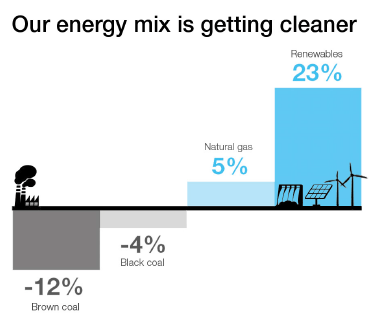
The world is debating on how to cut carbon emission and avert the disastrous consequences of global warming. But the emissions from fossil fuels continue unabated while the impact of global warming is being felt all over the world by changing weathers such as flood and draught. It is very clear that the current rate of carbon emission cannot be contained by merely promoting renewable energy at the current rate. Solar, wind, geothermal, ocean wave and OTEC (ocean thermal energy conversion) offer clean alternative energy but now their total combined percentage of energy generation   is only less than 20% of the total power generation. The rate of Carbon reduction by  renewable energy  do not match  the rate of Carbon emission increase by existing and newly built  fossil power generation and transportation, to keep up the current level of Carbon in the atmosphere. The crux of the problem is the rate of speed with which we can cut the Carbon emission in the stipulated time frame. It is unlikely to happen without active participation of industrialized countries such as US, China, India, Japan, EU and Australia by signing a legally binding agreement in reducing their Carbon emissions to an accepted level. However, they can cut their emissions by increasing the efficiency of their existing power generation and consumption by innovative means.

One potential method of carbon reduction is by substituting fossil fuels with biomass in power generation and transportation. By using this method the energy efficiency is increased from current level of 33% to 50-60% in power generation by using gasification technologies and using Hydrogen for transportation. The Fixed carbon in coal is about 70% while the Carbon content in a biomass is only 0.475 X B (B-mass of oven-dry biomass). For example, the moisture content of a dry wood is about 19%,which means the Carbon mass is only 38% in the biomass. To substitute fossil fuels, the world will need massive amounts of biomass. The current consumption of coal worldwide is 6.647 billion tons/yr  (Source:charts bin.com)and the world will need at least 13 billion tons/yr of biomass to substitute coal .The total biomass available in the world in the form of forest is 420 billion tons which means about 3% of the forest in the world will be required to substitute current level of coal consumption. This is based on the assumption that all bioenergy is based on gasification of wood mass. But in reality there are several other methods of bioenergy such as biogas, biofuels such as alcohol and bio-diesel from vegetable oils etc, which will complement biogasification to cut Carbon emission.

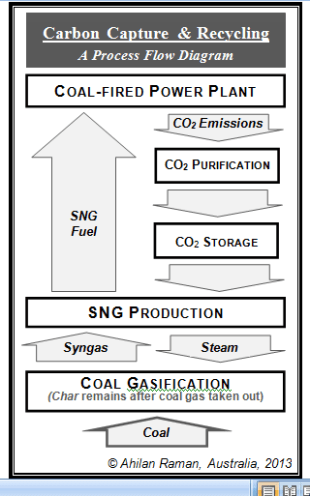
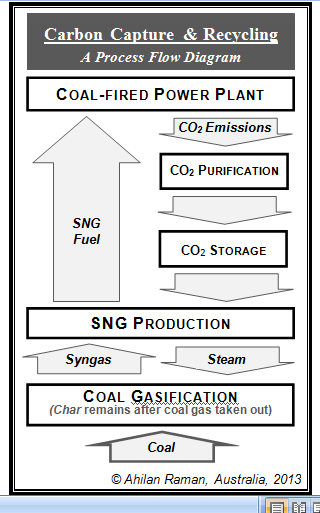
Another potential method is to capture and recover Carbon from existing fossil fuel power plants. The recovered Carbon dioxide has wider industrial applications such as industrial refrigeration and in chemical process industries such as Urea plant. Absorption of Carbon dioxide from flue gas using solvents such as MEA (mono ethanolamine) is a well established technology. The solvent MEA will dissolve Carbon dioxide from the flue gas and the absorbed carbon dioxide will be stripped in a distillation column to separate absorbed carbon dioxide and the solvent. The recovered solvent will be reused.

The carbon emission can be reduced by employing various combinations of methods such as anaerobic digestion of organic matters, generation of syngas by gasification of biomass, production of biofuels, along with other forms of renewable energy sources mentioned above. As I have discussed in my previous articles, Hydrogen is the main source of energy in all forms of Carbon based fuels and generating Hydrogen from water using renewable energy source is one of the most potential and expeditious option to reduce Carbon emission.

Biogas is fast becoming a fuel of the choice for rural economy in many parts of the world because large number of agriculture and farming communities lives in rural area. Most of these countries depend on imported   Diesel, LPG and Gasoline for their industries, agriculture, transportation and cooking. Countries like India with large population spends a huge amount of foreign currency towards import of petroleum products, making it more vulnerable to the fluctuating oil and gas prices in the international market. However, there is an increasing awareness in India recently about the importance of generating biogas as an alternative energy source to fossil fuel because 70% of the Indian population lives in rural areas. With an estimated cattle population of 280 million (National Dairy development Board 2010) there is a potential to generate biogas at 19,500 Mw.

The following calculation is based on the costing details provided by successful case studies of community based Biogas plants in India. One community based biogas plant has 121 families consisting of 5 members per family as stake holders. They supply cow dung at the rate of 4.50 Mt/day for 365days in a year and generate biogas by an anaerobic digester, designed and constructed locally. Biogas is supplied to all the stakeholders every day for 2 hrs in the morning and for about 2 hrs in the evening for cooking. This is equal to burning 3025 kgs of wood/day (121 families x 5members/family x 5kg wood per member= 3025 x 4000 kcal/kg= 12.10 mil Kcal/day= 48.40 mmBtu/day).The piped natural gas in India is supplied now at the rate of $16/mm Btu, which means the plant is able to generate revenue worth $774.40 per day. But each family of 5 members are charged only Rs.150 per month or 121 families are charged 121 x Rs.150= Rs.18, 150/month ($363/month). The family members also supply milk to co-operative dairy farm which has also contributed to set up the biogas plant. Total cost of the project is $43,000 of which Government subsidy is $20,000, Dairy farm contribution $ 16,000 and the stake holders $7000.The economic and social benefit of this project is enormous. The economic benefit by way of fuel savings, revenue from the sale of vermin compose and by way of Carbon credit amounts to Rs.48,94,326 ($97,926/yr).(source:SUMUL).

The above case study clearly shows how successfully India can adopt bioenergy as an alternative to fossil fuel in rural areas. We have already seen how biogas can be enriched to increase its methane content and to remove other impurities by way of water scrubbing as shown in the figure. The purified and dried biogas with Methane content 97% and above can be liquefied using cryogenic process by chilling to -162C.The liquefaction of biogas is energy intensive but it is worth doing  in countries like India especially when there is no natural gas pipeline network.BLG (liquefied biogas)  is an ideal fuel for industries with CHP (combined heat and power) applications with energy efficiency exceeding 80% compared to conventional diesel engine efficiency at 30%.By installing LBG service station and catering to transport industry, India can cut their import of crude oil while reducing the greenhouse gas emissions.

Producing LBG also leads to a renewable fuel available for heavier vehicles. The fuel can be stored as LBG on the vehicle, which increase the driving distance per tank. The need is that the vehicle is running frequently, otherwise LBG will vaporize and CH4 will be vented to the atmosphere. LBG is in liquid form only when the gas is stored on the vehicle. When it gets to the engine it is in its gas phase. When LBG is delivered to remote fuel stations or storages it is transported in vacuum insulated pressure vessels. One such manufacture of these semi-trailers is Cryo AB and the dimensions of a standard equipped semi-trailer, suitable for Nordic logistic conditions, is shown in Figure 13.

This trailer is optimized for the transportation of LNG/LBG and has a tank capacity of 56,000 liters (~33,000 Nm3 LBG). It is vacuum insulated and the heat in-leakage is less than 0.9 % of maximum payload LBG per 24 hour. The maximum payload is 83.7 % filling rate at 0 bar (g) (=19,730 kg). The source of heat is the surrounding air and the heat in-leakage raises the pressure of the LBG. The maximum working pressure is 7.0 bar (g). If this pressure is exceeded gas is vented to the atmosphere through a safety valve. (Cryo AB, 2008)

Fuel station technology:

There are three different types of fuel station available, using LBG as a feed stock:

– LBG refueling station

– LCBG refueling station

– Multi-purpose refueling station

LBG stations fuel LBG to vehicles equipped with a cryogenic tank while LCBG stations refuel CBG. LCBG stands for liquid to compressed biogas and LBG is transformed to CBG at the refueling station. Multi-purpose refueling stations are able to fuel both LBG and CBG, and consist of one LBG part and one LCBG part. (Vanzetti Engineering, 2008a) There are a number of companies in the LNG business working with the development of fuel stations using LBG as a feedstock. The presented data in this text is based on information from three different companies; Cryostat, Nexgen fuels and Vanzetti Engineering.

This article will focus on the multi-purpose station and since the three companies’ designs are very similar, only a general description will be presented.

The reason why the multi-purpose station is chosen is because LBG could be a good alternative for heavier vehicles. Here it is assumed that these vehicles already are available and in use on a large extent. The refueling station assumes to be situated in conjunction with one of the frequent roads in India, not in vicinity with the gas network. The following requirements lie as a background for the design:

– Possibility to fuel both LBG and CBG

– One double dispenser for CBG; one nozzle for vehicles (NGV-1) and one nozzle for busses (NGV-2)

– One single nozzle for LBG

– Expected volume of sale: 3000 Nm3/day

– Pressure on CBG: up to 230 bar (200 bars at 15°C)

The standard equipment on the multi-purpose station consists of a storage tank for LBG, cryogenic pumps, ambient vaporizer, odorant injection system and dispensers. (Cryostat, 2008a)

There are three types of cryogenic pumps:

– Reciprocating

– Centrifugal

– Submerged

Reciprocating pumps are able to function at very high pressures and are used for the filling of buffer tanks and gas cylinders. Centrifugal pumps are able to produce high flow rates and are used for the transfer of cryogenic liquids between reservoir tanks or road tankers. (Cryostat, 2008b) A submerged pump is a centrifugal pump installed inside a vacuum insulated cryogenic tank. This tank is totally submerged in the cryogenic liquid, which makes it stay in permanently cold conditions. (Vanzetti Engineering, 2008b)

A sketch over a multi-purpose station can be seen in Figure 14. LBG is stored in a vacuum insulated cryogenic vessel and LBG is delivered with semi-trailers. The volume of the storage tank is usually designed to match refilling on a weekly basis. The transfer from trailer is either done by gravity or by transfer pumps, the latter significantly reducing transfer time. (Vanzetti Engineering, 2008a) From the LBG storage tank the station is divided into two; the LBG part and the LCBG part.

The LCBG part consists of a reciprocating pump, an ambient vaporizer and buffer storage. The reciprocating pump sucks LBG from the storage tank and raises the pressure to around 300 bars, before sending it to the ambient high pressure vaporizer. CBG is then odorized before going to the CBG storage and the dispenser. The buffer unit is gas vessel storage, with a maximum working pressure of 300 bar, enabling fast filling of vehicles. (Nexgen Fueling, 2008)

The LBG part only consists of a centrifugal pump that transfers LBG from the storage tank, through vacuum insulated lines, to the LBG dispenser that dispense LBG at a pressure of 5-8 bar. (Nexgen Fueling, 2008) Some LBG dispensers are supplied with a system for the recovery of the vehicle boil of gas. (Cryostar, 2008a) To reduce methane losses all venting lines are collected and sent back to the higher parts of the storage tank, to be reliquaries by the cold LBG. (Heisch, 2008) (Ref: Nina Johanssan, Lunds Universitet)

Economics of LBG: The LNG trucks averages about 2.8 miles per gallon of LNG, equating to about 4.7 miles per DEG. Table 5 compares the energy content, fuel economy and DEG fuel economy. The greenhouse emission is completely eliminated by using LBG.

Carbon neutral biomass is becoming a potential alternative energy source for fossil fuels in our Carbon constrained economy. More and more waste –to-energy projects is implemented all over the world due to the availability of biomass on a larger scale; thanks to the increasing population and farming activities. New technological developments are taking place side by side to enhance the quality of Biogas for power generation. Distributed power generation using biogas is an ideal method for rural electrification especially, where grid power is unreliable or unavailable. Countries like India which is predominantly an agricultural country, requires steady power for irrigation as well as domestic power and fuel for her villages. Large quantity of biomass in the form of agriculture waste, animal wastes and domestic effluent from sewage treatment plants are readily available for generation of biogas. However, generation of biogas of specified quality is a critical factor in utilizing such large quantities of biomass. In fact, large quantity of biomass can be sensibly used for both power generations as well as for the production of value added chemicals, which are otherwise produced from fossil fuels, by simply integrating suitable technologies and methods depending upon the quantity and quality of biomass available at a specific location. Necessary technology is available to integrate biomass gasification plants with existing coal or oil based power plants as well as with chemical plants such as Methanol and Urea. By such integration, one can gradually change from fossil fuel economy to biofuel economy without incurring very large capital investments and infrastructural changes. For example, a coal or oil-fired power plant can be easily integrated with a large-scale biomass plant so that our dependency on coal or oil can be gradually eliminated.

Generation of biogas using anaerobic digestion is a common method. But this method generates biogas with 60% Methane content only, and it has to be enriched to more than 95% Methane content and free from Sulfur compounds, so that it can substitute piped natural gas with high calorific value or LPG (liquefied petroleum gas). Several methods of biogas purification are available but chemical-free methods such as pressurized water absorption or cryogenic separation or hollow fiber membrane separation are preferred choices.

The resulting purified biogas can be stored under pressure in tanks and supplied to each house through underground pipelines for heating and cooking. Small business and commercial establishments can generate their own power from this gas using spark-ignited reciprocating gas engines (lean burnt gas engines) or micro turbines or PAFCs (phosphoric acid fuel cells) and use the waste heat to air-condition their premises using absorption chillers. In tropical countries like India, such method of distributed power generation is absolutely necessary to eliminate blackouts and grid failures. By using this method, the rural population need not depend upon the state-owned grid supplies but generate their own power and generate their own gas, and need not depend on the supply of rationed LPG cylinders for cooking. If the volume of Bio-methane gas is large enough, then it can also be liquefied into a liquified bio-methane gas (LBG) similar to LNG and LPG. The volume of biomethane gas will be reduced by 600 times, on liquefaction. It can be distributed in small cryogenic cylinders and tanks just like a diesel fuel. The rural population can use this liquid bio-methane gas as a fuel for transportation like cars, trucks, buses, and farm equipment like tractors and even scooters and auto-rickshaws.

Alternatively, large-scale biomass can be converted into syngas by gasification methods so that resulting biomass can be used as a fuel as well as raw materials to manufacture various chemicals. By gasification methods, the biomass can be converted into a syngas (a mixture of Hydrogen and Carbon monoxide) and free from sulfur and other contaminants. Syngas can be directly used for power generation using engines and gas turbines.

Hydrogen rich syngas is a more value added product and serves not only as a fuel for power generation, but also for cooking, heating and cooling. A schematic flow diagram Fig 3,  Fig4 and Fig 6 (Ref: Mitsubishi Heavy Industries Review) shows how gasification of biomass to syngas can  compete with existing fossil fuels for various applications such as for power generation, as a raw material for various chemical synthesis and as a fuel for cooking, heating and cooling and finally as a liquid fuel for transportation. Bio-gasification has a potential to transform our fossil fuel dependant world into Carbon-free world and to help us to mitigate the global warming.

We have used Hydrocarbon as the source of fuel for our power generation and transportation since industrial revolution. It has resulted in increasing level of man-made Carbon into the atmosphere; and according to the scientists, the level of carbon has reached an unsustainable level and any further emission into the atmosphere will bring catastrophic consequences by way of climate change. We have already saw many natural disasters in a short of span of time. Though there is no direct link established between carbon level in the atmosphere and the global warming, there is certainly enough evidence towards increase in the frequency of natural disasters and increase in the global and ocean temeperatures.We have also seen that Hydrogen is a potential candidate as a source of future energy that can effectively substitute hydrocarbons such as Naphtha or Gasoline. However, hydrogen generation from water using electrolysis is energy intensive and the source of such energy can come only from a renewable source such as solar and wind. Another issue with electrolysis of water for Hydrogen generation is the quality of water used. The quality of water used for electrolysis is high, meeting ASTM Type I Deionized Water preferred, < 0.1 micro Siemen/cm (> 10 megOhm-cm).

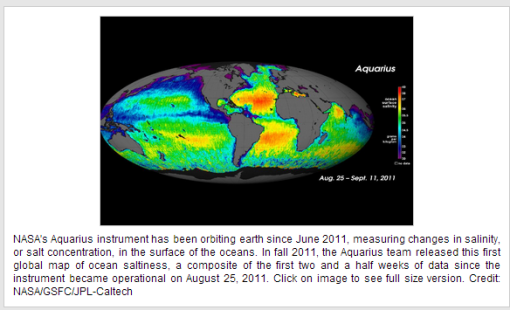
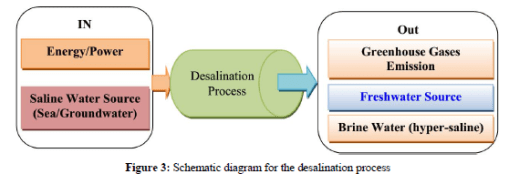
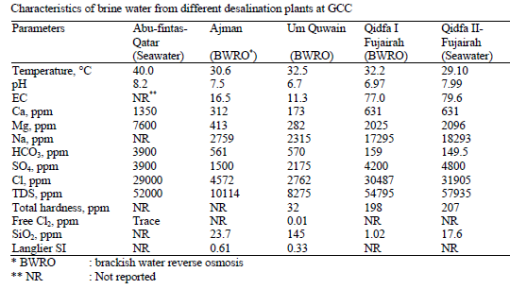
A unique desalination technology has been developed by an Australian company to generate on site Hydrogen directly from seawater. In conventional seawater desalination technology using reverse osmosis process only 30-40% of fresh water is recovered as potable water with TDS less than 500 ppm as per WHO standard. The balance highly saline concentrate with TDS above 65,000 ppm is discharged back into the sea which is detrimental to the ocean’s marine life. More and more sweater desalination plants are set up all over the world to mitigate drinking water shortage. This conventional desalination is not only highly inefficient but also causes enormous damage to the marine environment.

The technology developed by the above company will be able to recover almost 75% of fresh water from seawater and also able to convert the concentrate into Caustic soda lye with Hydrogen and Chlorine as by-products by electrolysis. The discharge into the sea is drastically reduced to less than 20% with no toxic chemicals. This technology has a potential to revolutionize the salt and caustic soda industries in the future. Caustic soda is a key raw material for a number of chemical industries including PVC.Conventionally, Caustic soda plants all over the world depends on solar salt for their production of Caustic soda.Hydrogne and Chlorine are by-products.Chlrine is used for the production of PVC (poly vinyl chloride) and Hydrogen is used as a fuel.

In the newly developed technology, the seawater is not only purified from other contaminants such as Calcium, Magnesium and Sulfate ions present in the seawater but also concentrate the seawater almost to a saturation point so that it can be readily used to generate Hydrogen on site. The process is very efficient and commercially attractive because it can recover four valuable products namely, drinking water, Caustic soda lye, Chlorine and Hydrogen. The generated Hydrogen can be used directly in a Fuel cell to generate power to run the electrolysis. This process is very ideal for Caustic soda plants that are now located on seashore. This process can solve drinking water problems around the world because potable water becomes an industrial product. The concentrated seawater can also be converted in a salt by crystallization for food and pharmaceutical applications. There is a growing gap between supply and demand of salt production and most of the chemical industries are depending upon the salt from solar pans.

Another potential advantage with this technology is to use wind power to desalinate the water. Both wind power and Hydrogen will form a clean energy mix. It is a win situation for both water industry and the environment as well as for the salt and chemical industries. In conventional salt production, thousands of hectares of land are used to produce few hundred tons of low quality salt with a year-long production schedule. There is a mis match between the demand for salt by large Caustic soda plants and supply from primitive methods of solar production by solar evaporation contaminating cultivable lands.

The above case is an example of how clean energy technologies can change water, salt and chemical industries and also generate clean power economically, competing with centralized power plants fuelled with hydrocarbons. Innovative technologies can solve problems of water shortage, greenhouse gases, global warming, and environmental pollution not only economically but also environmental friendly way. Industries involved in seawater desalination, salt production, chemical industries such as Caustic soda, Soda ash and PVC interested to learn more on this new technology can write directly to this blog address for further information.

Fuel cell technology is emerging as a base-load power generation technology as well as back-up power for intermittent renewable energy such as solar and wind, substituting conventional storage batteries. However, Fuelcell requires a Fuel in the form of Hydrogen of high purity. The advantage of Fuel cell is, its high electrical efficiency compared to conventional fossil fuel power generation technology, using Carnot cycle. Fuel cell is an electro-chemical device like a battery and generates power using electro-chemical redox reaction silently with no gaseous emission, unlike engines and turbines with combustion, rotary movements and gaseous emissions. The fuel Hydrogen can be generated using a renewable energy sources such as solar and wind as described in my previous articles, “Solar Hydrogen for cleaner future” dated 4 July 2012, and “Renewable Hydrogen for remote power supply “dated 28 June 2012.

Alternatively, Hydrogen can also be generated using biomass through Biogas. Biogas is an important source of renewable energy in the carbon constrained economy of today’s world. The biogas can be generated from waste water and agro-waste by anaerobic digestion using enzymes. Biomass such as wood waste can also be gasified to get syngas, a mixture of Hydrogen and Carbon dioxide. In anaerobic digestion, the main product will be methane gas accompanied by carbon dioxide and nitrogen while the main product in gasification will be Hydrogen, carbon monoxide and carbon dioxide and oxides of Nitrogen. Whatever may be the composition of the resulting gas mixture, our focus will be to separate methane or Hydrogen from the above mixture. In anaerobic digestion, the resulting Methane gas has to be steam reformed to get Hydrogen gas suitable for Fuel cell application. In gasification, the resulting Syngas has to be separated into pure Hydrogen and Carbon dioxide so that pure Hydrogen can be used as a fuel in Fuel cell applications. As I have outlined in many of my previous articles, Hydrogen was the only fuel we have used all these years and we are still using it  in the form of Hydrocarbons and it will continue to be the fuel in the future also. The only difference is future Hydrogen will be free from carbon.

We have to discuss two issues to mitigate Carbon emission, and it can be done by 1.Elimination of Carbon from the fuel source. 2. Generation of Renewable and Carbon free clean energy directly from solar and wind. One option  to cut Carbon from the fuel source is to use Biomass as the raw material to generate Hydrogen so that fresh Carbon will not be added  into the atmosphere by emissions .The second option is to generate pure Hydrogen from water by electrolysis using renewable energy such as wind and solar. Environmentally friendly waste-to-energy projects are becoming popular all over the world. But now most of these waste-to-energy projects generate either Biogas (Methane) by anaerobic digestion or Syngas (Hydrogen and Carbon dioxide) by gasification. Both these gases need further purification before they can be used as a fuel for power generation. The Methane content in the Biogas (about 60% methane and 40% Carbon dioxide with other impurities) needs to be enriched to 90% Methane and free from other impurities. The composition of a typical Biogas is shown in table1.

The resulting purified methane gas will be reformed using steam reformation in presence of a catalyst to get syngas; finally Hydrogen should be separated from resulting syngas so that it can be used directly into the Fuelcell.The common Fuel cell used for this application is invariably Phosphoric acid fuel cell.

PAFC uses 100% Phosphoric acid in Silicon carbide matrix as an electrolyte. PAFC is a self-contained unit completely enclosed in a cabin consisting of a gas reformer, Fuellcell power generator, Power conditioning unit and other auxiliaries. The PAFC is of modular construction with capacities ranging from 100Kw up to 500Kw as a single unit. It can be installed outdoor in the open and it can be readily connected to a piped Biogas. It can also be connected to existing piped natural gas or LPG bullet as a stand-by fuel. Any waste-to energy project can be integrated with Fuel cell power generation with CHP application to get greatest economic and environmental benefits. Hydrogen derived from biomass will be an important source of fuel in the future of clean energy; and Fuel cell will become an alternative power generation technology for both stationary power generation and transportation such as Fuel cell car or Hybrid cars.

PAFC is a compact, self-contained power generation unit that is used even for base load power. The electrical efficiency of PAFC  is about 42% .It is suitable for CHP applications so that the total energy efficiency can reach up to 85%.It is ideal for supplying continuous power 24×7 and also to use waste heat for space heating or space air-conditioning with an absorption chiller in CHP applications. The ideal candidates for PAFC power generation using CHP will be hospitals, super markets, Data centers, Universities or any continuous process industry.PAFC is now used as a backup power for large-scale renewable energy project with an access to piped natural gas. A schematic flow diagram of a fuel cell power generation is shown in Fig 3 using biogas at Yamagata sewage treatment plant in Japan. Biomass  based  Fuecell  power generation has a great potential all over the world irrespective of location and size of the country.

Batteries have become indispensable for energy storage in renewable energy systems such as solar and wind. In fact the cost of battery bank, replacements, operation and maintenance will exceed the cost of PV solar panels for off grid applications during the life cycle of 20 years. However, batteries are continued to be used by electric power utilities for the benefits of peak shaving and load leveling. Battery energy storage facilities give the dynamic benefits such as voltage and frequency regulation, load following, spinning reserve and power factor correction along with the ability to give peak power.

Fuel cell power generation is another attractive option for providing power for electric utilities and commercial buildings due to its high-efficiency and environmentally friendly nature. This type of power production is especially economical, where potential users are faced with high cost in electric power generation from coal or oil, or where environmental constraints are stringent, or where load constraints of transmission and distribution systems are so tight that their new installations are not possible. Both batteries and fuel cells have their own unique advantages to electric power systems. They also contain a great potential to back up severe PV power fluctuations under varying weather conditions.

Photovoltaic power outputs vary depending mainly upon solar insolation and cell temperature.  PV power generator may sometimes experience sharp fluctuations owing to intermittent weather conditions, which causes control problems such as load frequency control, generator voltage control and even system stability.  Therefore there is a need for backup power facilities in the PV power generation.   Fuel cells and batteries are able to respond very fast to load changes because their electricity is generated by chemical reactions. A 14.4kW lead acid battery running at 600A has greatest load gradient of 300 A/sec, a phosphoric-acid fuel cell system can match a demand that varies by more than half its rated output within 0.1 second. The dynamic response time of a 20kW solid-oxide fuel cell power plant is less than 4 second when a load increases from 1 to 100%, and it is less than 2 msec when a load decreases from 100 to 1%.  Factory assembled units provides fuel cell and battery power plants with short lead-time from planning to installation. This modular production enables them to be added in varying increments of capacity, to match the power plant capacity to expected load growth. In contrast, the installation of a single large conventional power plant may produce excess capacity for several years, especially if the load growth rate is low.  Due to their multiple parallel modular units and absence of combustion and electromechanical rotary devices, fuel cell and battery power plants are more reliable than any other forms of power generation. Fuel cells are expected to obtain performance reliability near 85%. Consequently, a utility that installs a number of fuel cell or battery power plants is able to cut its reserve margin capacity while maintaining a constant level of the system reliability. The electrochemical conversion processes of fuel cells and batteries are silent because they do not have any major rotating devices or combustion.  Water requirement for their operation is very little while conventional power plants require a massive amount of water for system cooling.

Therefore, they can eliminate water quality problems created by the conventional plants’ thermal discharges. Air pollutant emission levels of fuel cells and batteries are none or very little. Emissions of SO2 and NOx in the fuel cell power plant are 0.003 lb/MWh and 0.0004 lb/MWh respectively. Those values are projected to be about 1,000 times smaller than those of fossil-fuel power plants since fuel cells do not rely on combustion process. These environmentally friendly characteristics make it possible for those power plants to be located close to load centers in urban and suburban area. It can also cut energy losses and costs associated with transmission and distribution equipment. Their site near load centers may also cut the likelihood of power outage.

Electricity is produced in a storage battery by electro-chemical reactions. Similar chemical reactions take place in a fuel cell, but there is a difference between them with respect to fuel storage. In storage batteries chemical energy is stored in the positive/negative electrodes of the batteries. In fuel cells, however, the fuels are stored externally and need to be fed into the electrodes continuously when the fuel cells are operated to generate electricity.

Power generation in fuel cells is not limited by the Carnot Cycle in the view that they directly convert available chemical free energy to electrical energy than going through combustion processes.  Therefore fuel cell is a more efficient power conversion technology than the conventional steam-applying power generations. Fuel cell is a one-step process to generate electricity, the conventional power generator has several steps for electricity generation and each step incurs a certain amount of energy loss. Fuel cell power systems have around 40-60% efficiencies depending on the type of electrolytes. For example, the efficiencies of phosphoric-acid fuel cells and molten-carbonate fuel cells are 40-45% and 50-60%, respectively. Furthermore, the fuel cell efficiency is usually independent of size; small power plants run as efficiently as large ones. Battery power systems themselves have high energy efficiencies of nearly 80%, but their overall system efficiencies from fuel through the batteries to converted ac power are reduced to below 30%. This is due to energy losses taking place when one energy form is converted to another

A battery with a rated capacity of 200Ah battery will give less than 200 Ah. At less than 20A of discharge rates, the battery will give more that 200 Ah. The capacity of a battery is specified by their time rate of discharge. As the battery discharges, its terminal voltage, the product of the load current and the battery internal resistance gradually decreases. There is also a reduction in battery capacity with increasing rate of discharge. At 1-hr discharge rate, the available capacity is only 55% of that obtained at 20-hr rate. This is because there is insufficient time for the stronger acid to replace the weak acid inside the battery as the discharge proceeds.   For fuel cell power systems, they have equally high-efficiency at both partial and full loads. The customer’s demand for electrical energy is not always constant. So for a power utility to keep adjustment to this changing demand, either large base-load power plants must sometimes run at part load, or smaller peaking units must be used during periods of high demand. Either way, efficiency suffers or pollution increases. Fuel cell systems have a greater efficiency at full load and this high-efficiency is retained as load diminishes, so inefficient peaking generators may not be needed.

Fuel cells have an advantage over storage batteries in the respect of operational flexibility. Batteries need several hours for recharging after they are fully discharged. During discharge the batteries’ electrode materials are lost to the electrolyte, and the electrode materials can be recovered during the recharging process. Over time there is a net loss of such materials, which may be permanently lost when the battery goes through a deep discharge. The limited storage capacity of the batteries implies that it is impossible for them to run beyond several hours.

Fuel cells do not undergo such material changes. The fuel stored outside the cells can quickly be replenished, so they do not run down as long as the fuel can be supplied.   The fuel cells show higher energy density than the batteries when they run for more than 2 hours. It means that fuel cell power systems with relatively small weight and volume can produce large energy outputs. That will give the operators in central control centers for the flexibility needed for more efficient use of the capital-intensive fuel cell power plants.

In addition, where hydrogen storage is possible, renewable power sources can drive an electrolysis process to produce hydrogen gas during off-peak periods that will be used to run the fuel cells during peak demands. The usage of storage batteries in an electric utility industry is expected to increase for the purposes of load leveling at peak loads, real-time frequency control, and stabilizing transmission lines. When integrated with photovoltaic systems, the batteries are required to suppress the PV power fluctuations due to the changes of solar intensity and cell temperature. The fact that the PV power outputs change sharply under cloudy  weather conditions makes it hard to decide the capacity of the battery power plants since their discharging rates are not constant. For a lead-acid battery, the most applicable battery technology for photovoltaic applications to date, the depth of discharge should not exceed 80% because the deep discharge cycle reduces its effective lifetime. In order to prevent the deep discharge and to supplement varying the PV powers generated on cloudy weather days, the battery capacity must be large. Moreover, the large battery capacity is usually not fully used, but for only several days. Fuel cells integrated with photovoltaic systems can give smoother operation. The fuel cell system is capable of responding quickly enough to level the combined power output of the hybrid PV-fuel cell system in case of severe changes in PV power output. Such a fast time response capability allows a utility to lower its need for on-line spinning reserve. The flexibility of longer daily operation also makes it possible for the fuel cells to do more than the roles of gas-fired power plants. Gas turbines are not economical for a purpose of load following because their efficiencies become lower and operating costs get higher at less than full load conditions

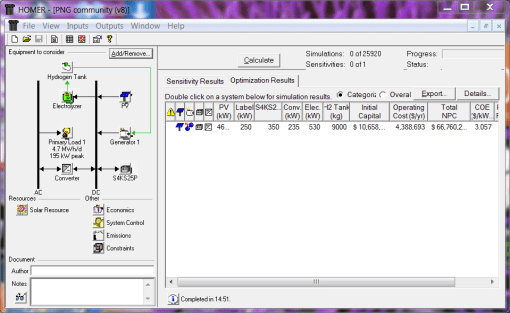
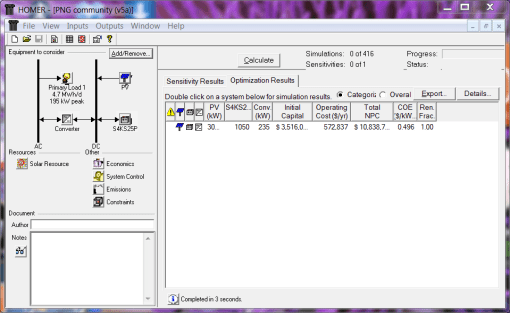
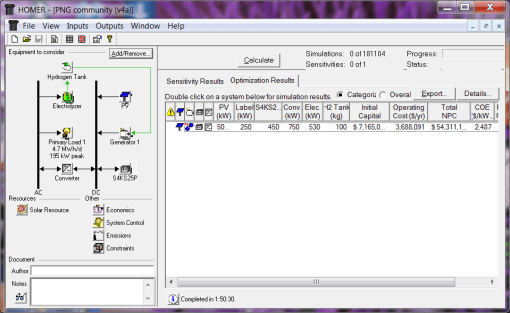
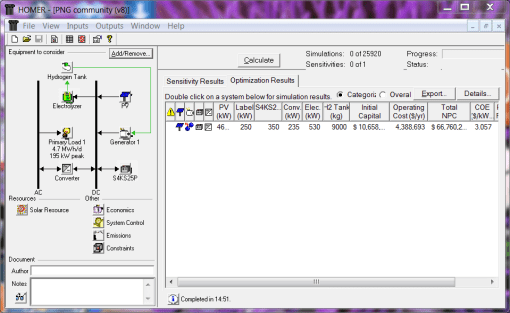
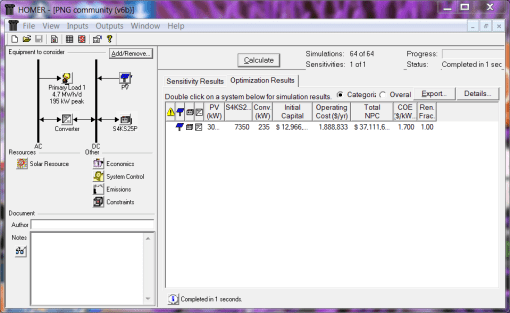
Fuel cell does not emit any emission except water vapor and there is absolutely no carbon emission.  However, storage batteries themselves do not contain any environmental impacts even though the battery charging sources produce various emissions and solid wastes. When an Electrolyzer is used to generate Hydrogen on site to fuel the Fuel cell, the cost of the system comes down due to much reduction in the capacity of the battery. The specific cost of energy and NPC is lower than fully backed battery system.

During dismantling, battery power plants require a significant amount of care for their disposal to prevent toxic materials from spreading around. All batteries that are commercially viable or under development for power system applications contain hazardous and toxic materials such as lead, cadmium, sodium, sulfur, bromine, etc. Since the batteries have no salvage value and must be treated as hazardous wastes, disposal of spent batteries is an issue. Recycling batteries is encouraged and not placing them in a landfill. One method favoring recycling of spent batteries is regulation. Thermal treatment for the lead-acid and cadmium-containing batteries is needed to recover lead and cadmium. Sodium-sulfur and zinc bromine batteries are also required to be treated before disposal.

Both batteries and fuel cells are able to respond very fast to system load changes because they produce electricity by chemical reactions inside them. Their fast load-response capability can nicely support the sharp PV power variations resulted from weather changes.  However, there are subtle different attributes between batteries and fuel cells when they are applied to a PV power backup option. Power generation in fuel cell power plants is not limited by the Carnot Cycle, so they can meet high power conversion efficiency. Even taking into account the losses due to activation over potential and ohmic losses, the fuel cells still have high efficiencies from 40% to 60%. For example, efficiencies of PAFCs and MCFCs are 40-45% and 50-60% respectively. Battery power plants, however, themselves have high energy efficiency of nearly 80%, but the overall system efficiency from raw fuel through the batteries to the converted ac power is reduced to about 30%.

A battery’s terminal voltage gradually decreases as the battery discharges due to a proportional decrease of its current. A battery capacity reduces with increasing rate of discharge, so its full capacity cannot be used when it discharges at high rates. On the other hand, fuel cell power plants have equally high-efficiency at both partial and full loads. This feature allows the fuel cells to be able to follow a changing demand without losing efficiency. The limited storage capacity of batteries indicates that it is impossible for them to run beyond several hours. The batteries when fully discharged need several hours to be recharged.

For its use in PV power connections, it is as hard   to estimate the exact capacity of the batteries. In order to prevent the batteries’ deep discharge and to supplement the varying PV powers on some cloudy weather days, the battery capacity should be large, but that large capacity is not fully utilized on shiny days. For fuel cells, they do not contain such an operational time restriction as long as the fuel can be supplied. Thus, the fuel cell power plants can give operational flexibility with the operators in central control centers by utilizing them efficiently. As intermediate power generation sources, fuel cell power plants may replace coal-fired or nuclear units under forced outage or on maintenance. For the PV power backup the batteries’ discharge rate is irregular and their full capacity may usually not be consumed. So, it is difficult to design an ideal capacity of the battery systems for support of the PV power variations and to economically run them. Instead of batteries fuel cell power plants show diverse operational flexibility for either a PV power backup or a support of power system operation.


At the outset it may sound odd but in reality water and energy are two sides of the same coin and both industries  have a great impact on global warming. Take such as, power generation industries. Two basic requirements for any power plant are fuel and water. It does not matter what kind of fuel is used whether it is a coal based power plant, liquid fuel based plant like Naphtha, and gas based plants using piped natural gas or LNG. We will  consider only power generation involving conversion of thermal energy into electrical energy. Currently more than 80% of power generation in the world is based on thermal power including nuclear plants.  All thermal power plants use steam as the prime motive force to drive the turbines, gas turbine is an exception but even, in gas based plants the secondary motive force is steam using waste heat recovery boilers, in combined cycle operations. The quality of water for conversion into steam is of high quality and purer than our drinking water. The second usage of water is for cooling purpose. The water consumption by power plants using once through cooling system is 1 lit/kwhr, and by closed circuit cooling tower, it is 1.7lit/kwhr. Only about 40% power plants in Europe for example use closed circuit cooling towers  and the rest use only ‘once through’ cooling systems. The total power generated in 2010 by two largest users US and China, were 3792Twhrs and 3715 Twhrs respectively. The total world power production, in 2008 was 20,262 Twhrs, using following methods. Fossil fuel: Coal 41 %, Oil 5.50%, Gas 21%, Nuclear 13% and Hydro 16%.Renewable: PV solar 0.06%, PV thermal 0.004%, Wind 1.1%, Tide  0.003 %, Geothermal 0.3%, Biomass &others 1.30%. (1Twhrs is = 1,000,000,000 kwhrs)(Ref: Wikipedia).

The above statistics gives us an idea on how much water is being used by power generating plants in the world. Availability of fresh water on planet earth, is only 2.5% (96. 5% oceans, 1.70% ground water, 1.7% glaciers and ice caps, and 0.001% in the air, as vapor and clouds).The world’s precious water source is used for power generation, while millions of people do not have water to drink. The cost of bottled drinking water is US$ 0.20 /lit, in countries like, India. This situation is simply unsustainable. The prime cause of this situation is lack of technology to produce clean power without using water. The power technology we use today is based on the principle of electromagnetism invented by Michael Faraday in the year 1839. That is why, renewable energy is becoming critically important at this juncture when the world is at the cross-road.

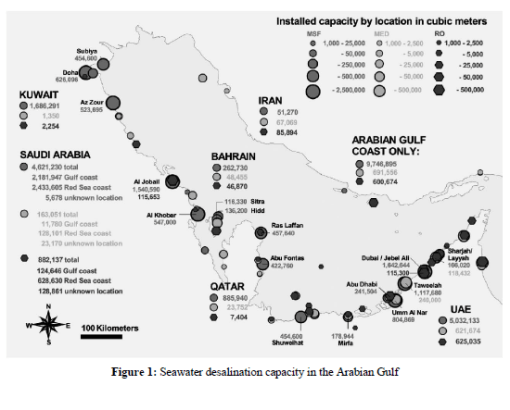
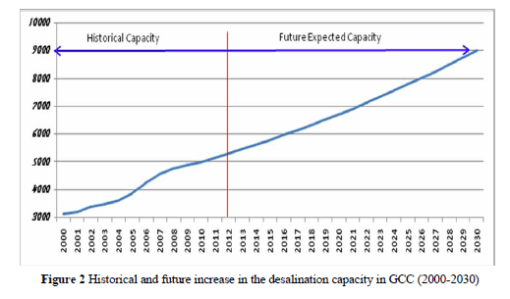
Many countries are now opting for seawater desalination to meet their water demand. Desalination again is an energy intensive process. For example, 3-4 kwhrs of power is used to desalinate 1 m3 of water. This power now comes from fossil fuel fired thermal power plants, which are often co-located with desalination plants, so that all the discharge from both the plants can be easily pumped into the sea. Since the world is running out of fresh water, we have to look for attentive source of water. In countries like India, the ground water is being exploited for agricultural purpose and power generation and the ground water is getting depleted. Depleting water resources is a threat to agriculture production especially when  countries depend only on monsoon rains. Unabated emission of greenhouse from fossil fuel power plants and transportation causes globe to warm. Draught and water scarcity threatens food security. It is a vicious circle. Recent delay in onset of monsoon rains in India have caused   grave concern for Government and the people of India. Shortage of power and water has compounded the problem for farmers and suicide rate among the farmers is increasing at alarming rate in India.

“Globally, this seems to be one of the worst summers in recorded history. The global average temperature for May was the second hottest ever since 1880 – the year records were first compiled – US National Climatic Data Centre (NCDC) has said. Only 2010 witnessed a worse May. The NCDC said such a hot May was never recorded in the northern hemisphere.
No scientist will pin it on human-induced climate change – it is scientifically untenable to do so – but many affirm that these extreme weather phenomena is along predicted lines of rise in global temperatures

For India, the looming possibility of El Nino dulling the monsoon rains in July-August only means things could get worse. There is half a chance that the El Nino phenomenon will pick up intensity and hit the tail of the monsoon. Thirteen of the 20 times El Nino has been recorded, it has dimmed the intensity of the monsoon, causing widespread drought.
Already, the northwest region of India has suffered a rainfall deficit worse than the rest of India.
But the misery of rising heat is being felt worldwide with “normal weather” systems in disarray. If large areas of the western Himalayas in Uttarakhand have suffered raging forest fires, so has the US – more than 8 lakh hectares have been engulfed in flames. The March-May period for the US has been the hottest ever. Brazil is in the midst of its worst drought in five decades with more than 1,000 towns suffering. Heavy downpours and unheard of hail has hit China and flash floods have ravaged crops in Ethiopia. The Eurasian snow cover extent has been recorded at its smallest ever for the month of May since such records were maintained for the first time in 1967. The cover was 2.67 million sq km below average in May,the USNCDC said. The southern hemisphere, where winters prevail at the moment, too has recorded extremes like never before. The Australian winter has been exceptionally cold, with the fifth coolest winter minimum temperature in over half a century of record keeping. The Antarctic sea ice extent has gone above the 1979-2000 average. In contrast, the Arctic sea ice recorded a much smaller than average extent for the same period”. (Ref: The Economic Times).

The global warming has caused many natural disasters such as recent bush fires in Colorado springs in US  destroying more than 300,000 houses  and  heavy storms in Washington causing  power black outs  for days together in sweltering heat. No country is immune to global warming and sea level rising. How the consequences of global warming will manifest in different forms affecting human beings  and other lives is yet to be seen in years to come.

That is why distributed energy systems using Hydrogen as an alternative fuel is an important step towards sustainability. One can generate Hydrogen from water, using renewable energy source like solar or wind, and store them for future usage. The stored Hydrogen can be used to generate power, as and when required, at any remote location, even where there is no grid power. The water is regenerated during this process of power generation using Fuel cell which can be recycled. There is no large consumption of water and there is no greenhouse emission. It is a clean and sustainable solution. The same stored Hydrogen can also be used to fuel their cars in the near future!

With recent announcement of the prestigious award to NREL (National renewable energy laboratory, USA) for developing SJ3 solar cells along with their industrial partner Solar Junction, there is a new hope and expectation that PV solar will become a major source of clean energy of the future.Togather with Hydrogen as an energy carrier, the PV solar hydrogen will certainly be a game changer. With increasing efficiency of solar panel from 17.24% up to 50%, and generating   high pressure hydrogen using improved solid polymer electrolyzer, the sun and water will become the future source of clean energy replacing our decade’s long dependency on fossil fuel. There is also a distinct possibility of converting water into hydrogen by direct sunlight using photo-electrolysis as explained in my earlier article, “Can we duplicate Nature’s photosynthesis for Hydrogen production?”’ dated April 2,2012.

SJ3 solar cell uses tunable band gaps, lattice matched architecture with ultra-concentration tunnel junction to meet the highest conversion efficiency of 43.5% with a possibility to reach an efficiency of 50%.This  conversion efficiency is the percentage amount of solar energy converted directly into electrical energy. Such a high-efficiency is due to the lens focusing the sunlight with 418 times intensity of the sun. There is no other cost involved except the bottom Germanium layer of three junctions with Gallium and a dash of dilute nitride alloy. This small change boosts the bottom band-gap from 0.67 eV (electron volts) to 1.0 eV.The three layered SJ3 cell captures various frequencies of sunlight at various times and conditions achieving the best efficiency of converting photons to electrons.

High pressure PEM Hydrogen generators producing 99.99% purity Hydrogen at higher pressures are already under development. With carbon fiber storage tanks up to 10,000 psi pressure ratings, Fuel cell cars will become commercial reality overtaking Lithium battery powered electrical vehicles.PV solar Hydrogen will significantly alter the transportation and stationary power generation industries in the future simply because hydrogen has the highest heat value and it is absolutely clean.

Age old centralized power plants using fossil fuels with highest carbon emission and water consumption has created serious environmental problems all over the world. Coastal power plants discharge a huge amount of ‘once through’ cooling water into the sea at higher temperature and at higher salinity.Tranasport industries using fossil fuels emit  high greenhouse gases due to age-old, inefficient combustion engines causing global warming. Low humidity, high surface temperatures, dry conditions and lightning are a perfect combination of conditions for bush fires similar to the one witnessed in Colorado mountain ranges.

It is a right time to adopt distributed energy systems so that individual’s houses and business can generate their own power using PV solar and wind Hydrogen with no transmission grids and grid failures. It is time to replace fossil fuel with sun’s light and pure water so that we can hope for a cleaner future. We have all the necessary technologies and we need a will and concerted effort to make these changes.


PV solar is expanding as a potential renewable energy source for each house, and the cost of solar panels are slowly coming down as the volume of production increases. However, the intermittent nature of solar energy is still an issue, especially for off grid and remote locations. Now solar energy is stored using lead acid batteries for such applications and inverters become part of the system. The capacity of the battery bank is designed to meet the electrical demand and to absorb the fluctuation of the energy generated by solar panels and it varies from place to place. This method stores the electrical energy generated by PV solar in the form of DC current and delivers it in the form of AC current. Though this method is the simplest one for remote locations, storing solar power in the form of Hydrogen is more economical and environmentally friendly in the long run.

Solar energy can directly be used to generate Hydrogen using solid polymer electrolyzers and stored in cyclinders.The stored Hydrogen can then be used to fuel a stationary Fuel cell to generate power on site. One can design a system by integrating various components in such a way; the Hydrogen generated by solar energy is used to generate power on site as and when required. By this method one can generate required power throughout the day 24×7 irrespective of the availability of sun. The system integration involves various components supplied by various manufacturers with various specifications and the success of a system depends on the careful design using data acquired over a time on a specific location.

Many winds to Hydrogen projects also have been tested in locations around the world.NREL (National renewable energy laboratory, USA) has conducted number of tests by integrating various components such as PV solar and wind turbines with Electrolyzers (both PEM electroylzers and alkaline electrolyzers) and Hydrogen IC engines for remote power generation as well as for fuelling vehicles with Hydrogen. Though the cost of this system is still expensive, such integration offers enormous potential as a clean energy source for remote locations without any grid power. When one takes into account the fluctuating oil prices, cost of global warming, cost of power transmissions and losses during long distance power transmission from fossil fuel power plants, Renewable Hydrogen offers the best and sustainable alternative to fossil fuels. Such a system offers complete independence, energy security, reliability and fixed power tariff.

System integration of renewable energy sources for Hydrogen production and on site power generation using Fuel cell or Hydrogen engine is the key to a successful deployment of solar and wind energy for rural electrification and to remote islands. Such system will offer greater return on investment even to supply power to the grid based on power purchase agreements with Government and private companies. Renewable Hydrogen is the only practical solution for clean power of the future and sooner we embrace this integrated solution better for a cleaner future. Government and private companies investing on oil and gas explorations can focus their attention in developing renewable Hydrogen based solutions so that the cost of Hydrogen can become competitive to fossil fuel. Once the cost of Hydrogen reaches parity with cost of fossil fuel then, it will set the beginning of a green revolution in clean energy.