Skip navigation

Tag Archives: Renewable energy


All existing power generation technologies including nuclear power plants uses heat generation as a starting point. The heat is used to generate steam which acts as a motive force to run an alternator to produces electricity. We combust fossil fuels such as coal oil and gas to generate above heat which also emits greenhouse gases such as oxides of Carbon and Nitrogen. As I have disused in my earlier article, we did not develop a technology to generate heat without combusting a fossil fuel earlier. This was due to cheap and easy availability of fossil fuel. The potential danger of emitting greenhouse gases into the atmosphere was not realized until recently when scientists pointed out the consequences of carbon build up in the atmosphere. The growth of population and industries around the world pushed the demand for fossil fuels over a period which enhanced the Carbon build up in the atmosphere.

But now Concentrated Solar Power (CSP) systems have been developed to capture the heat of the sun more efficiently and the potential temperature of solar thermal can reach up to 550. This dramatic improvement is the efficiency of solar thermal has opened up new avenues of power generation as well as other applications. “CSP is being widely commercialized and the CSP market has seen about 740 MW of generating capacity added between 2007 and the end of 2010. More than half of this (about 478 MW) was installed during 2010, bringing the global total to 1095 MW. Spain added 400 MW in 2010, taking the global lead with a total of 632 MW, while the US ended the year with 509 MW after adding 78 MW, including two fossil–CSP hybrid plants”. (Ref: Wikipedia)

“CSP growth is expected to continue at a fast pace. As of April 2011, another 946 MW of capacity was under construction in Spain with total new capacity of 1,789 MW expected to be in operation by the end of 2013. A further 1.5 GW of parabolic-trough and power-tower plants were under construction in the US, and contracts signed for at least another 6.2 GW. Interest is also notable in North Africa and the Middle East, as well as India and China. The global market has been dominated by parabolic-trough plants, which account for 90 percent of CSP plants.As of 9 September 2009, the cost of building a CSP station was typically about US$2.50 to $4 per  watt, the fuel (the sun’s radiation) is free. Thus a 250 MW CSP station would have cost $600–1000 million to build. That works out to $0.12 to $0.18/kwt. New CSP stations may be economically competitive with fossil fuels. Nathaniel Bullard,” a solar analyst at Bloomberg

New Energy Finance, has calculated that the cost of electricity at the Ivanpah Solar Power Facility, a project under construction in Southern California, will be lower than that from  photovoltaic power and about the same as that from natural gas  However, in November 2011, Google announced that they would not invest further in CSP projects due to the rapid price decline of photovoltaics. Google spent $168 million on Bright Source IRENA has published on June 2012 a series of studies titled: “Renewable Energy Cost Analysis”. The CSP study shows the cost of both building and operation of CSP plants. Costs are expected to decrease, but there are insufficient installations to clearly establish the learning curve. As of March 2012, there was 1.9 GW of CSP installed, with 1.8 GW of that being parabolic trough” Ref: Wikipedia.

One Canadian company has demonstrated to generate Hydrogen from water using a catalytic thermolysis using sun’s high temepertaure.The same company has also demonstrated generating base load power using conventional steam turbine by  CSP using parabolic troughs. They store sun’s thermal energy using a proprietary thermic fluid and use them during night times to generate continuous power. The company offers to set up CSP plants of various capacities from 15Mw up to 500Mw.


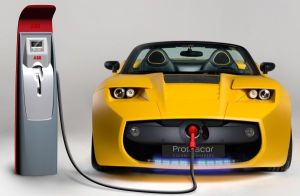
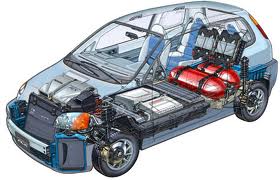
Renewable Hydrogen offers the most potential energy source of the future for the following reasons. Hydrogen has the highest heat value compared to rest of the fossil fuels such as Diesel, petrol or butane. It does not emit any greenhouse gases on combustion. It can readily be generated from water using your roof mounted solar panels. The electrical efficiency of fuel cell using Hydrogen as a fuel is more than 55% compared to 35% with diesel or petrol engine. It is an ideal fuel that can be used for CHP applications. By properly designing a system for a home, one can generate power as well as use the waste heat to heat or air-condition your home. It offers complete independence from the grid and offers complete insulation from fluctuating oil and gas prices. By installing a renewable Hydrogen facility at your home, you can not only generate Electricity for your home but also fuel your Hydrogen car. The system can be easily automated so that it can take care of your complete power need as well as your fuel requirement for your Hydrogen car. Unlike Electric cars, you can fill two cylinders of a Hydrogen car which will give a mileage of 200miles.You can also charge your electric car with Fuel cell DC power.

Renewable Hydrogen can address all the problems we are currently facing with fossil fuel using centralized power generation and distribution. It will not generate any noise or create any pollution to the environment. It does not need large amount of water. With increasing efficiency of solar panels coming into the market the cost of renewable Hydrogen power will become competitive to grid power. Unlike photovoltaic power, the excess solar power is stored in the form of Hydrogen and there is no need for deep cycle batteries and its maintenance and disposal. It is a one step solution for all the energy problems each one of us is facing. The only drawback with any renewable energy source is its intermittent nature and it can be easily addressed by building enough storage capacity for Hydrogen. Storing large amount of energy is easy compared to battery storage.

The attached ‘You Tube’ video footage show how Solar Hydrogen can be used to power your home and fuel your Hydrogen car. Individual homes and business can be specifically designed based on their power and fuel requirements.

The world is debating on how to cut carbon emission and avert the disastrous consequences of global warming. But the emissions from fossil fuels continue unabated while the impact of global warming is being felt all over the world by changing weathers such as flood and draught. It is very clear that the current rate of carbon emission cannot be contained by merely promoting renewable energy at the current rate. Solar, wind, geothermal, ocean wave and OTEC (ocean thermal energy conversion) offer clean alternative energy but now their total combined percentage of energy generation   is only less than 20% of the total power generation. The rate of Carbon reduction by  renewable energy  do not match  the rate of Carbon emission increase by existing and newly built  fossil power generation and transportation, to keep up the current level of Carbon in the atmosphere. The crux of the problem is the rate of speed with which we can cut the Carbon emission in the stipulated time frame. It is unlikely to happen without active participation of industrialized countries such as US, China, India, Japan, EU and Australia by signing a legally binding agreement in reducing their Carbon emissions to an accepted level. However, they can cut their emissions by increasing the efficiency of their existing power generation and consumption by innovative means.

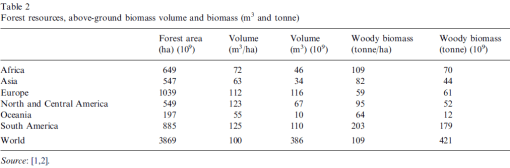
One potential method of carbon reduction is by substituting fossil fuels with biomass in power generation and transportation. By using this method the energy efficiency is increased from current level of 33% to 50-60% in power generation by using gasification technologies and using Hydrogen for transportation. The Fixed carbon in coal is about 70% while the Carbon content in a biomass is only 0.475 X B (B-mass of oven-dry biomass). For example, the moisture content of a dry wood is about 19%,which means the Carbon mass is only 38% in the biomass. To substitute fossil fuels, the world will need massive amounts of biomass. The current consumption of coal worldwide is 6.647 billion tons/yr  (Source:charts bin.com)and the world will need at least 13 billion tons/yr of biomass to substitute coal .The total biomass available in the world in the form of forest is 420 billion tons which means about 3% of the forest in the world will be required to substitute current level of coal consumption. This is based on the assumption that all bioenergy is based on gasification of wood mass. But in reality there are several other methods of bioenergy such as biogas, biofuels such as alcohol and bio-diesel from vegetable oils etc, which will complement biogasification to cut Carbon emission.

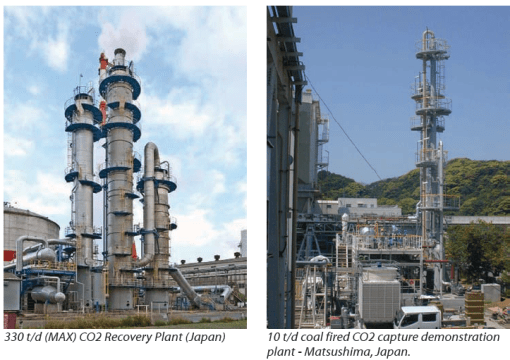
Another potential method is to capture and recover Carbon from existing fossil fuel power plants. The recovered Carbon dioxide has wider industrial applications such as industrial refrigeration and in chemical process industries such as Urea plant. Absorption of Carbon dioxide from flue gas using solvents such as MEA (mono ethanolamine) is a well established technology. The solvent MEA will dissolve Carbon dioxide from the flue gas and the absorbed carbon dioxide will be stripped in a distillation column to separate absorbed carbon dioxide and the solvent. The recovered solvent will be reused.

The carbon emission can be reduced by employing various combinations of methods such as anaerobic digestion of organic matters, generation of syngas by gasification of biomass, production of biofuels, along with other forms of renewable energy sources mentioned above. As I have discussed in my previous articles, Hydrogen is the main source of energy in all forms of Carbon based fuels and generating Hydrogen from water using renewable energy source is one of the most potential and expeditious option to reduce Carbon emission.

Fuel cell technology is emerging as a base-load power generation technology as well as back-up power for intermittent renewable energy such as solar and wind, substituting conventional storage batteries. However, Fuelcell requires a Fuel in the form of Hydrogen of high purity. The advantage of Fuel cell is, its high electrical efficiency compared to conventional fossil fuel power generation technology, using Carnot cycle. Fuel cell is an electro-chemical device like a battery and generates power using electro-chemical redox reaction silently with no gaseous emission, unlike engines and turbines with combustion, rotary movements and gaseous emissions. The fuel Hydrogen can be generated using a renewable energy sources such as solar and wind as described in my previous articles, “Solar Hydrogen for cleaner future” dated 4 July 2012, and “Renewable Hydrogen for remote power supply “dated 28 June 2012.

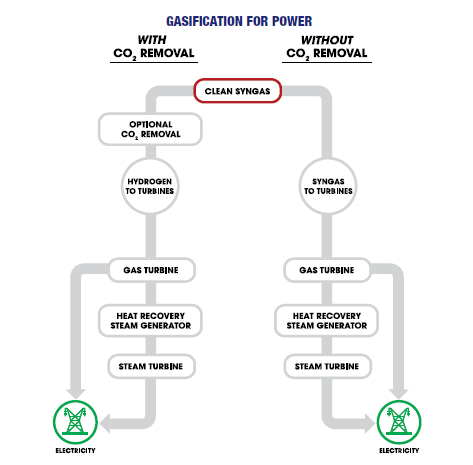
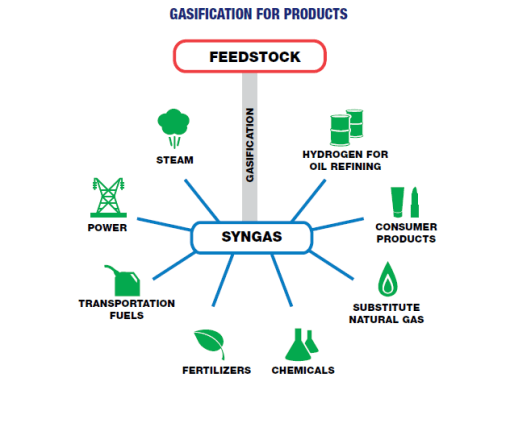
Alternatively, Hydrogen can also be generated using biomass through Biogas. Biogas is an important source of renewable energy in the carbon constrained economy of today’s world. The biogas can be generated from waste water and agro-waste by anaerobic digestion using enzymes. Biomass such as wood waste can also be gasified to get syngas, a mixture of Hydrogen and Carbon dioxide. In anaerobic digestion, the main product will be methane gas accompanied by carbon dioxide and nitrogen while the main product in gasification will be Hydrogen, carbon monoxide and carbon dioxide and oxides of Nitrogen. Whatever may be the composition of the resulting gas mixture, our focus will be to separate methane or Hydrogen from the above mixture. In anaerobic digestion, the resulting Methane gas has to be steam reformed to get Hydrogen gas suitable for Fuel cell application. In gasification, the resulting Syngas has to be separated into pure Hydrogen and Carbon dioxide so that pure Hydrogen can be used as a fuel in Fuel cell applications. As I have outlined in many of my previous articles, Hydrogen was the only fuel we have used all these years and we are still using it  in the form of Hydrocarbons and it will continue to be the fuel in the future also. The only difference is future Hydrogen will be free from carbon.

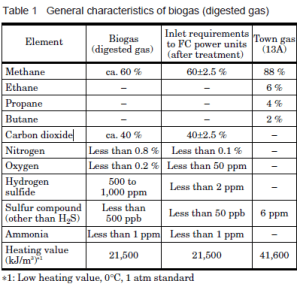
We have to discuss two issues to mitigate Carbon emission, and it can be done by 1.Elimination of Carbon from the fuel source. 2. Generation of Renewable and Carbon free clean energy directly from solar and wind. One option  to cut Carbon from the fuel source is to use Biomass as the raw material to generate Hydrogen so that fresh Carbon will not be added  into the atmosphere by emissions .The second option is to generate pure Hydrogen from water by electrolysis using renewable energy such as wind and solar. Environmentally friendly waste-to-energy projects are becoming popular all over the world. But now most of these waste-to-energy projects generate either Biogas (Methane) by anaerobic digestion or Syngas (Hydrogen and Carbon dioxide) by gasification. Both these gases need further purification before they can be used as a fuel for power generation. The Methane content in the Biogas (about 60% methane and 40% Carbon dioxide with other impurities) needs to be enriched to 90% Methane and free from other impurities. The composition of a typical Biogas is shown in table1.

The resulting purified methane gas will be reformed using steam reformation in presence of a catalyst to get syngas; finally Hydrogen should be separated from resulting syngas so that it can be used directly into the Fuelcell.The common Fuel cell used for this application is invariably Phosphoric acid fuel cell.

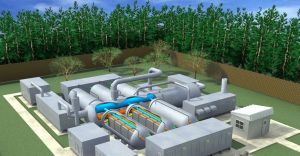
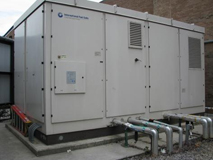
PAFC uses 100% Phosphoric acid in Silicon carbide matrix as an electrolyte. PAFC is a self-contained unit completely enclosed in a cabin consisting of a gas reformer, Fuellcell power generator, Power conditioning unit and other auxiliaries. The PAFC is of modular construction with capacities ranging from 100Kw up to 500Kw as a single unit. It can be installed outdoor in the open and it can be readily connected to a piped Biogas. It can also be connected to existing piped natural gas or LPG bullet as a stand-by fuel. Any waste-to energy project can be integrated with Fuel cell power generation with CHP application to get greatest economic and environmental benefits. Hydrogen derived from biomass will be an important source of fuel in the future of clean energy; and Fuel cell will become an alternative power generation technology for both stationary power generation and transportation such as Fuel cell car or Hybrid cars.

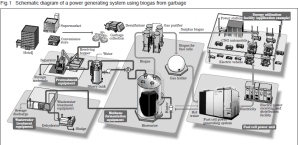
PAFC is a compact, self-contained power generation unit that is used even for base load power. The electrical efficiency of PAFC  is about 42% .It is suitable for CHP applications so that the total energy efficiency can reach up to 85%.It is ideal for supplying continuous power 24×7 and also to use waste heat for space heating or space air-conditioning with an absorption chiller in CHP applications. The ideal candidates for PAFC power generation using CHP will be hospitals, super markets, Data centers, Universities or any continuous process industry.PAFC is now used as a backup power for large-scale renewable energy project with an access to piped natural gas. A schematic flow diagram of a fuel cell power generation is shown in Fig 3 using biogas at Yamagata sewage treatment plant in Japan. Biomass  based  Fuecell  power generation has a great potential all over the world irrespective of location and size of the country.

Batteries have become indispensable for energy storage in renewable energy systems such as solar and wind. In fact the cost of battery bank, replacements, operation and maintenance will exceed the cost of PV solar panels for off grid applications during the life cycle of 20 years. However, batteries are continued to be used by electric power utilities for the benefits of peak shaving and load leveling. Battery energy storage facilities give the dynamic benefits such as voltage and frequency regulation, load following, spinning reserve and power factor correction along with the ability to give peak power.

Fuel cell power generation is another attractive option for providing power for electric utilities and commercial buildings due to its high-efficiency and environmentally friendly nature. This type of power production is especially economical, where potential users are faced with high cost in electric power generation from coal or oil, or where environmental constraints are stringent, or where load constraints of transmission and distribution systems are so tight that their new installations are not possible. Both batteries and fuel cells have their own unique advantages to electric power systems. They also contain a great potential to back up severe PV power fluctuations under varying weather conditions.

Photovoltaic power outputs vary depending mainly upon solar insolation and cell temperature.  PV power generator may sometimes experience sharp fluctuations owing to intermittent weather conditions, which causes control problems such as load frequency control, generator voltage control and even system stability.  Therefore there is a need for backup power facilities in the PV power generation.   Fuel cells and batteries are able to respond very fast to load changes because their electricity is generated by chemical reactions. A 14.4kW lead acid battery running at 600A has greatest load gradient of 300 A/sec, a phosphoric-acid fuel cell system can match a demand that varies by more than half its rated output within 0.1 second. The dynamic response time of a 20kW solid-oxide fuel cell power plant is less than 4 second when a load increases from 1 to 100%, and it is less than 2 msec when a load decreases from 100 to 1%.  Factory assembled units provides fuel cell and battery power plants with short lead-time from planning to installation. This modular production enables them to be added in varying increments of capacity, to match the power plant capacity to expected load growth. In contrast, the installation of a single large conventional power plant may produce excess capacity for several years, especially if the load growth rate is low.  Due to their multiple parallel modular units and absence of combustion and electromechanical rotary devices, fuel cell and battery power plants are more reliable than any other forms of power generation. Fuel cells are expected to obtain performance reliability near 85%. Consequently, a utility that installs a number of fuel cell or battery power plants is able to cut its reserve margin capacity while maintaining a constant level of the system reliability. The electrochemical conversion processes of fuel cells and batteries are silent because they do not have any major rotating devices or combustion.  Water requirement for their operation is very little while conventional power plants require a massive amount of water for system cooling.

Therefore, they can eliminate water quality problems created by the conventional plants’ thermal discharges. Air pollutant emission levels of fuel cells and batteries are none or very little. Emissions of SO2 and NOx in the fuel cell power plant are 0.003 lb/MWh and 0.0004 lb/MWh respectively. Those values are projected to be about 1,000 times smaller than those of fossil-fuel power plants since fuel cells do not rely on combustion process. These environmentally friendly characteristics make it possible for those power plants to be located close to load centers in urban and suburban area. It can also cut energy losses and costs associated with transmission and distribution equipment. Their site near load centers may also cut the likelihood of power outage.

Electricity is produced in a storage battery by electro-chemical reactions. Similar chemical reactions take place in a fuel cell, but there is a difference between them with respect to fuel storage. In storage batteries chemical energy is stored in the positive/negative electrodes of the batteries. In fuel cells, however, the fuels are stored externally and need to be fed into the electrodes continuously when the fuel cells are operated to generate electricity.

Power generation in fuel cells is not limited by the Carnot Cycle in the view that they directly convert available chemical free energy to electrical energy than going through combustion processes.  Therefore fuel cell is a more efficient power conversion technology than the conventional steam-applying power generations. Fuel cell is a one-step process to generate electricity, the conventional power generator has several steps for electricity generation and each step incurs a certain amount of energy loss. Fuel cell power systems have around 40-60% efficiencies depending on the type of electrolytes. For example, the efficiencies of phosphoric-acid fuel cells and molten-carbonate fuel cells are 40-45% and 50-60%, respectively. Furthermore, the fuel cell efficiency is usually independent of size; small power plants run as efficiently as large ones. Battery power systems themselves have high energy efficiencies of nearly 80%, but their overall system efficiencies from fuel through the batteries to converted ac power are reduced to below 30%. This is due to energy losses taking place when one energy form is converted to another

A battery with a rated capacity of 200Ah battery will give less than 200 Ah. At less than 20A of discharge rates, the battery will give more that 200 Ah. The capacity of a battery is specified by their time rate of discharge. As the battery discharges, its terminal voltage, the product of the load current and the battery internal resistance gradually decreases. There is also a reduction in battery capacity with increasing rate of discharge. At 1-hr discharge rate, the available capacity is only 55% of that obtained at 20-hr rate. This is because there is insufficient time for the stronger acid to replace the weak acid inside the battery as the discharge proceeds.   For fuel cell power systems, they have equally high-efficiency at both partial and full loads. The customer’s demand for electrical energy is not always constant. So for a power utility to keep adjustment to this changing demand, either large base-load power plants must sometimes run at part load, or smaller peaking units must be used during periods of high demand. Either way, efficiency suffers or pollution increases. Fuel cell systems have a greater efficiency at full load and this high-efficiency is retained as load diminishes, so inefficient peaking generators may not be needed.

Fuel cells have an advantage over storage batteries in the respect of operational flexibility. Batteries need several hours for recharging after they are fully discharged. During discharge the batteries’ electrode materials are lost to the electrolyte, and the electrode materials can be recovered during the recharging process. Over time there is a net loss of such materials, which may be permanently lost when the battery goes through a deep discharge. The limited storage capacity of the batteries implies that it is impossible for them to run beyond several hours.

Fuel cells do not undergo such material changes. The fuel stored outside the cells can quickly be replenished, so they do not run down as long as the fuel can be supplied.   The fuel cells show higher energy density than the batteries when they run for more than 2 hours. It means that fuel cell power systems with relatively small weight and volume can produce large energy outputs. That will give the operators in central control centers for the flexibility needed for more efficient use of the capital-intensive fuel cell power plants.

In addition, where hydrogen storage is possible, renewable power sources can drive an electrolysis process to produce hydrogen gas during off-peak periods that will be used to run the fuel cells during peak demands. The usage of storage batteries in an electric utility industry is expected to increase for the purposes of load leveling at peak loads, real-time frequency control, and stabilizing transmission lines. When integrated with photovoltaic systems, the batteries are required to suppress the PV power fluctuations due to the changes of solar intensity and cell temperature. The fact that the PV power outputs change sharply under cloudy  weather conditions makes it hard to decide the capacity of the battery power plants since their discharging rates are not constant. For a lead-acid battery, the most applicable battery technology for photovoltaic applications to date, the depth of discharge should not exceed 80% because the deep discharge cycle reduces its effective lifetime. In order to prevent the deep discharge and to supplement varying the PV powers generated on cloudy weather days, the battery capacity must be large. Moreover, the large battery capacity is usually not fully used, but for only several days. Fuel cells integrated with photovoltaic systems can give smoother operation. The fuel cell system is capable of responding quickly enough to level the combined power output of the hybrid PV-fuel cell system in case of severe changes in PV power output. Such a fast time response capability allows a utility to lower its need for on-line spinning reserve. The flexibility of longer daily operation also makes it possible for the fuel cells to do more than the roles of gas-fired power plants. Gas turbines are not economical for a purpose of load following because their efficiencies become lower and operating costs get higher at less than full load conditions

Fuel cell does not emit any emission except water vapor and there is absolutely no carbon emission.  However, storage batteries themselves do not contain any environmental impacts even though the battery charging sources produce various emissions and solid wastes. When an Electrolyzer is used to generate Hydrogen on site to fuel the Fuel cell, the cost of the system comes down due to much reduction in the capacity of the battery. The specific cost of energy and NPC is lower than fully backed battery system.

During dismantling, battery power plants require a significant amount of care for their disposal to prevent toxic materials from spreading around. All batteries that are commercially viable or under development for power system applications contain hazardous and toxic materials such as lead, cadmium, sodium, sulfur, bromine, etc. Since the batteries have no salvage value and must be treated as hazardous wastes, disposal of spent batteries is an issue. Recycling batteries is encouraged and not placing them in a landfill. One method favoring recycling of spent batteries is regulation. Thermal treatment for the lead-acid and cadmium-containing batteries is needed to recover lead and cadmium. Sodium-sulfur and zinc bromine batteries are also required to be treated before disposal.

Both batteries and fuel cells are able to respond very fast to system load changes because they produce electricity by chemical reactions inside them. Their fast load-response capability can nicely support the sharp PV power variations resulted from weather changes.  However, there are subtle different attributes between batteries and fuel cells when they are applied to a PV power backup option. Power generation in fuel cell power plants is not limited by the Carnot Cycle, so they can meet high power conversion efficiency. Even taking into account the losses due to activation over potential and ohmic losses, the fuel cells still have high efficiencies from 40% to 60%. For example, efficiencies of PAFCs and MCFCs are 40-45% and 50-60% respectively. Battery power plants, however, themselves have high energy efficiency of nearly 80%, but the overall system efficiency from raw fuel through the batteries to the converted ac power is reduced to about 30%.

A battery’s terminal voltage gradually decreases as the battery discharges due to a proportional decrease of its current. A battery capacity reduces with increasing rate of discharge, so its full capacity cannot be used when it discharges at high rates. On the other hand, fuel cell power plants have equally high-efficiency at both partial and full loads. This feature allows the fuel cells to be able to follow a changing demand without losing efficiency. The limited storage capacity of batteries indicates that it is impossible for them to run beyond several hours. The batteries when fully discharged need several hours to be recharged.

For its use in PV power connections, it is as hard   to estimate the exact capacity of the batteries. In order to prevent the batteries’ deep discharge and to supplement the varying PV powers on some cloudy weather days, the battery capacity should be large, but that large capacity is not fully utilized on shiny days. For fuel cells, they do not contain such an operational time restriction as long as the fuel can be supplied. Thus, the fuel cell power plants can give operational flexibility with the operators in central control centers by utilizing them efficiently. As intermediate power generation sources, fuel cell power plants may replace coal-fired or nuclear units under forced outage or on maintenance. For the PV power backup the batteries’ discharge rate is irregular and their full capacity may usually not be consumed. So, it is difficult to design an ideal capacity of the battery systems for support of the PV power variations and to economically run them. Instead of batteries fuel cell power plants show diverse operational flexibility for either a PV power backup or a support of power system operation.
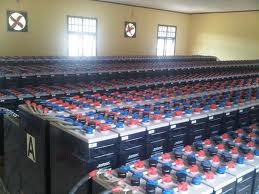
 

PV solar is expanding as a potential renewable energy source for each house, and the cost of solar panels are slowly coming down as the volume of production increases. However, the intermittent nature of solar energy is still an issue, especially for off grid and remote locations. Now solar energy is stored using lead acid batteries for such applications and inverters become part of the system. The capacity of the battery bank is designed to meet the electrical demand and to absorb the fluctuation of the energy generated by solar panels and it varies from place to place. This method stores the electrical energy generated by PV solar in the form of DC current and delivers it in the form of AC current. Though this method is the simplest one for remote locations, storing solar power in the form of Hydrogen is more economical and environmentally friendly in the long run.

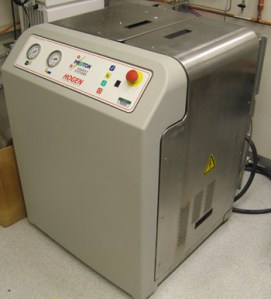
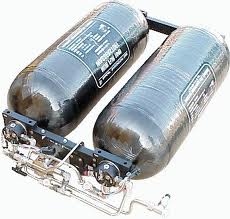
Solar energy can directly be used to generate Hydrogen using solid polymer electrolyzers and stored in cyclinders.The stored Hydrogen can then be used to fuel a stationary Fuel cell to generate power on site. One can design a system by integrating various components in such a way; the Hydrogen generated by solar energy is used to generate power on site as and when required. By this method one can generate required power throughout the day 24×7 irrespective of the availability of sun. The system integration involves various components supplied by various manufacturers with various specifications and the success of a system depends on the careful design using data acquired over a time on a specific location.

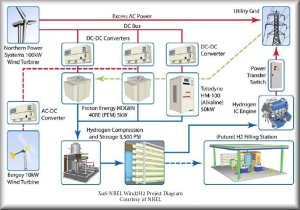
Many winds to Hydrogen projects also have been tested in locations around the world.NREL (National renewable energy laboratory, USA) has conducted number of tests by integrating various components such as PV solar and wind turbines with Electrolyzers (both PEM electroylzers and alkaline electrolyzers) and Hydrogen IC engines for remote power generation as well as for fuelling vehicles with Hydrogen. Though the cost of this system is still expensive, such integration offers enormous potential as a clean energy source for remote locations without any grid power. When one takes into account the fluctuating oil prices, cost of global warming, cost of power transmissions and losses during long distance power transmission from fossil fuel power plants, Renewable Hydrogen offers the best and sustainable alternative to fossil fuels. Such a system offers complete independence, energy security, reliability and fixed power tariff.

System integration of renewable energy sources for Hydrogen production and on site power generation using Fuel cell or Hydrogen engine is the key to a successful deployment of solar and wind energy for rural electrification and to remote islands. Such system will offer greater return on investment even to supply power to the grid based on power purchase agreements with Government and private companies. Renewable Hydrogen is the only practical solution for clean power of the future and sooner we embrace this integrated solution better for a cleaner future. Government and private companies investing on oil and gas explorations can focus their attention in developing renewable Hydrogen based solutions so that the cost of Hydrogen can become competitive to fossil fuel. Once the cost of Hydrogen reaches parity with cost of fossil fuel then, it will set the beginning of a green revolution in clean energy.

All forms of renewable energy sources are intermittent by nature and therefore storage becomes essential. Energy is used mainly for power generation and transportation and the growth of these two industries are closely linked with development of energy storage technologies and devices. Electrical energy is conventionally stored using storage batteries. Batteries are electrochemical devices in which electrical energy is stored in the form of chemical energy, which is then converted into electrical energy at the time of usage.

Batteries are key components in cars such as Hybrid electric vehicles, Plug-in Hybrid electrical vehicles and Electrical vehicles – all store energy for vehicle propulsion. Hybrid vehicle rely on internal combustion engine as the primary source of energy and use a battery to store excess energy generated during vehicle braking or produced by engine. The stored energy provides power to an electric motor that provides acceleration or provides limited power to the propulsion. Plug-in hybrid incorporates higher capacity battery than Hybrid eclectic vehicles, which are charged externally and used as a primary source of power for longer duration and at higher speed than it is required for Hybrid electric vehicles. In Electric cars, battery is the sole power source.

All electric vehicles need rechargeable batteries with capacity to quickly store and discharge electric energy over multiple cycles. There are a wide range of batteries and chemistries available in the market. The most common NiMH (Nickel Metal Hydride) used Cathode materials called AB5; A is typically a rare earth material containing lanthanum, cerium, neodymium and praseodymium; while B is a combination of nickel, cobalt, manganese and/or aluminum. Current generation Hybrid vehicles use several Kg of rare earth materials.

Lithium ion battery offers better energy density, cold weather performance, abuse tolerance and discharge rates compared to NiMH batteries. With increasing usage of electrical vehicles the demand for lithium-ion batteries and Lithium is likely to g up substantially in the coming years. It is estimated that a battery capable of providing 100miles range will contain 3.4 to 12.7 Kegs of Lithium depending upon the lithium-ion chemistry and the battery range. Lithium -ion batteries are also used in renewable energy industries such as solar and wind but Lead-acid batteries are used widely due to lower cost.

The lithium for Cathode and electrolyte is produced from Lithium Carbonate which is now produced using naturally occurring brines by solar evaporation with subsequent chemical precipitation. The naturally occurring brine such as in Atacama in Chile is now the main source of commercial Lithium. The brine is a mixture of various chlorides including Lithium chloride, which is allowed to evaporate by solar heat over a period of 18-20 months. The concentrated lithium chloride is then transferred to a production unit where it is chemically reacted with Sodium carbonate to precipitate Lithium Carbonate. Chile is the largest producers of Lithium carbonate.

Though Lithium ion batteries are likely to dominate electric vehicle markets in the future, the supply of Lithium remains limited. Alternative sources of Lithium are natural ores such as Spodumene.Many companies around the world, including couple of companies in Australia are in the process of extracting Lithium from such ores.

Manufacturers produce battery cells from anode, cathode and electrolyte materials. All lithium-ion batteries use some form of lithium in the cathode and electrolyte materials, while anodes are generally graphite based and contain no lithium.   These cells are connected in series inside a battery housing to form a complete battery pack. Despite lithium’s importance for batteries, it represents a relatively small fraction of the cost of both the battery cell and the final battery cost.

“Various programs seek to recover and recycle lithium-ion batteries. These include prominently placed recycling drop-off locations in retail establishments for consumer electronics batteries, as well as recent efforts to promote recycling of EV and PHEV batteries as these vehicles enter the market in larger numbers (Hamilton 2009). Current recycling programs focus more on preventing improper disposal of hazardous battery materials and recovering battery materials that are more valuable than lithium. However, if lithium recovery becomes more cost-effective, recycling programs and design features provide a mechanism to enable larger scale lithium recycling. Another potential application for lithium batteries that have reached the end of their useful life for vehicle applications is in stationery applications such as grid storage.

The supply chain for many types of batteries involves multiple, geographically distributed steps and it overlaps with the production supply chains of other potential critical materials, such as cobalt, which are also used in battery production. Lithium titanate batteries use a lithium titanium oxide anode and have been mentioned as a potential candidate for automotive use (Gains 2010), despite being limited by a low cell voltage compared to other lithium-ion battery chemistries.” (Ref: Centre for Transportation, Argonne National Laboratory)

Usage of power for extraction of Lithium from naturally occurring brines is lower compared to extraction from mineral sources because bulk of the heat for evaporation of brine is supplied by solar heat. However Lithium ion batteries can serve only as a storage medium and the real power has to be generated either by burning fossil fuel or from using renewable energy sources. Governments around the world should make usage of renewable power mandatory for users of Electrical vehicles. Otherwise introduction of Lithium ion battery without such regulation will only enhance carbon emission from fossil fuels.


Wind energy is one of the fastest growing renewable energy sources in the world and in 2011 the global market grew by 6% with 40.5 GW new powers brought online, according to Global Wind Report. However storage of intermittent renewable energy is a critical contributing factor in renewable energy development. A study was conducted by University of California for California Energy Commission on the economic and environmental impact of for energy storage technologies and the ways to improve the energy efficiency of wind energy. When there is a strong wind there is no demand for power, and when there is a high demand for power there is no wind. This anomalous supply demand gap demands a reliable way of storing wind power during high wind velocity periods.

They examined for energy storage technologies namely 1.lead acid batteries, 2. Zinc Bromine flow batteries, 3.Hydrogen electrolyzer and Fuel cell storage system and 4.Hydrogen option to fuel Hydrogen cars with Hydrogen. By using NREL (national Renewable Energy laboratory) computer simulation model HOMER  for high wind penetration of 18% in California, they concluded that Hydrogen storage is the most cost-effective than other battery storage technologies and using Hydrogen to fuel Hydrogen cars is economically attractive  than converting Hydrogen into Electricity. The environmental impact of using Hydrogen is benign compared to batteries with their emissions.

“The key findings of this experiments are as follows: Energy storage systems deployed in the context of greater wind power development were not particularly well used (based on the availability of “excess” off-peak electricity from wind power), especially in the 2010 time frame (which assumed 10% wind penetration statewide), but were better utilized–up to 1,600 hours of operation per year in some cases–with the greater (20%) wind penetration levels assumed for 2020.

The levelized costs of electricity from these energy storage systems ranged from a low of $0.41 per kWh—or near the marginal cost of generation during peak demand times—to many dollars per kWh (in cases where the storage was not well utilized). This suggests that in order for these systems to be economically attractive, it may be necessary to optimize their output to coincide with peak demand periods, and to identify additional, value streams from their use (e.g., transmission and distribution system optimization, provision of power quality and grid ancillary services, etc.).

At low levels of wind penetration (1%–2%), the electrolyzer/fuel cell system was either inoperable or uneconomical (i.e., either no electricity was supplied by the energy storage system or the electricity provided carried a high cost per MWh).

In the 2010 scenarios, the flow battery system delivered the lowest cost per energy stored and delivered.  At higher levels of wind penetration, the hydrogen storage systems became more economical such that with the wind penetration levels in 2020 (18% from Southern California), the hydrogen systems delivered the least costly energy storage.

Projected decreases in capital costs and maintenance requirements along with a more durable fuel cell allowed the electrolyzer/fuel cell to gain a significant cost advantage over the battery systems in 2020.

Sizing the electrolyzer/fuel cell system to match the flow battery system’s relatively high instantaneous power output was found to increase the competitiveness of this system in low energy storage scenarios (2010 and Northern California in 2020), but in scenarios with higher levels of energy storage (Southern California in 2020), the electrolyzer/fuel cell system sized to match the flow battery output became less competitive.

The hydrogen production case was more economical than the electrolyzer/fuel cell case with the same amount of electricity consumed (i.e., hydrogen production delivered greater revenue from hydrogen sales than the electrolyzer/fuel cell avoided the cost of electricity, once the process efficiencies are considered).

Furthermore, the hydrogen production system with a higher-capacity power converter and electrolyzer (sized to match the flow battery converter) was more cost-effective than the lower-capacity system that was sized to match the output of the solid-state battery. This is due to economies of scale found to produce lower-cost hydrogen in all cases.

In general, the energy storage systems themselves are fairly benign from an environmental perspective, with the exception of emissions from the manufacture of certain components (such as nickel, lead, cadmium, and vanadium for batteries). This is particularly true outside of the U.S., where battery plant emissions are less tightly controlled and potential contamination from improper disposal of these and other materials is more likely. The overall value proposition for energy storage systems used in conjunction with intermittent renewable energy systems depends on diverse factors:

The interaction of generation and storage system characteristics and grid and energy resource conditions at a particular site The potential use of energy storage for multiple purposes in addition to improving the dependability of intermittent renewable (e.g., peak/off-peak power price arbitrage, helping to optimize the transmission and distribution infrastructure, load-leveling the grid in general, helping to mitigate power quality issues, etc.)

The degree of future progress in improving forecasting techniques and reducing prediction errors for intermittent.  Electricity market design and rules for compensating renewable energy systems for their output”. Hydrogen storage and Hydrogen cars hold the key for future renewable energy industries and Governments and industries should focus on these two key segments.

As the threat of global warming looms large, Governments and Industries are looking for innovative, alternative and renewable energy sources and energy efficiency solutions. But how many alternative energy sources are available and what are their potentials? How to cut our carbon footprint without making larger new investment? How to improve the energy efficiency of the existing systems so that we can increase energy output for the same amount of fuel input and cut the cost of energy? These are some of the fundamental questions Governments and industries are grappling with, for the past few years. We are used to generating cheap energy from coal, oil and gas at the cost of the environment for several decades. We are used to water supply free of cost or at negligible cost for several decades. Governments were able to survive year after year because they were able to supply these two fundamental requirements of the people namely, energy and water at low-cost. But this situation changed swiftly when scientists raised the alarm bells on carbon emission and global warming. Still many Governments, especially industrialized countries with large energy and water usage, are still playing ‘wait and watch’ game, because they cannot afford to increase the tariffs on power and water. Any such increase will make Governments unpopular and their re-election to the office doubtful.

The real alternative to fossil fuels is only solar energy, which is clean, reliable and abundant. All other forms of renewable sources such as wind, geothermal, ocean thermal energy and wave energy are only offshoot of solar energy. The prime source is still the sun and the source of energy is from the chain nuclear fusion reaction of Hydrogen atom. The radiation of this nuclear reaction in the sun has to travel an average distance of 93 million miles to reach the earth, yet it is enough to meet current energy need of  entire humanity by a factor of 20,000 times. But to convert sun’s light and heat energy into Electricity and other useful forms of energy, we need some rare materials which we never used in the past. They are called ‘rare earth materials’ because their available sources and supplies are rare on planet earth. But these exotic and rare earth materials are becoming indispensable in the development of renewable energy products and applications. The future growth of clean energy technologies depend on supply of such rare earth materials.

Fourteen elements and related materials were selected for a criticality assessment by US Government department of energy. Eight of these are rare earth metals, which are valued for their unique magnetic, optical and catalyst properties. The materials are used in clean energy technologies as follows. Lanthanum, cerium, praseodymium, neodymium, cobalt and lithium are used in electric vehicle batteries. Neodymium, praseodymium and dysprosium are used in magnets for electric vehicles and wind turbines. Samarium is also used in magnets. Lanthanum, cerium, europium, terbium and yttrium are used in phosphors for energy-efficient lighting. Indium, gallium and tellurium are used in solar cells. The materials were selected for study based on factors contributing to risk of supply disruption.

Though usage of such material is relatively small, it is anticipated that the growth of clean technologies will need a substantial quantity of these materials. Currently China is endowed with almost 95% of such rare materials in the world. These materials are available in the form of ores and minerals under the earth. They have to be mined, processed and extracted in a pure form so that they can be used in developing clean energy products of the future. We will discuss about such products and technologies in our future articles. The anomaly is the energy required to mine, process and extract these rare earth materials need energy and such energy to have to come only from the sun. It is once again Nature that comes to the rescue of human beings at such critical junctures.


We now generate electric city from heat, obtained by combustion of fossil fuel such as coal, oil and gas. But such combustion generates not only heat but also greenhouse gases such as Carbon dioxide and oxides of Nirogen.The only alternative to generate power without any greenhouse gas emission is to use a fuel with zero carbon. However, oxides of Nitrogen will still be an issue as long as we use air for combustion because atmospheric air has almost 79% Nitrogen and 21% oxygen. Therefore it becomes necessary to use an alternative fuel as well as an alternative power generation technology in the future to mitigate greenhouse problems.

Hydrogen is an ideal fuel to mitigate greenhouse gases because combustion of Hydrogen with oxygen from air generates only water that is recyclable. Combining Hydrogen with Oxygen using Fuel cell, an electrochemical device is certainly an elegant solution to address greenhouse problems. But why Hydrogen and Fuel cell are not commonly available? Hydrogen is not available freely even though it is abundantly available in nature. It is available as a compound such as water (H2O) or Methane (CH4) and Ammonia (NH3). First we have to isolate Hydrogen from this compound as free Hydrogen and then store it under pressure. Hydrogen can easily form an explosive mixture with Oxygen and it requires careful handling. Moreover it is a very light gas and can easily escape. It has to be compressed and stored under high pressure.

Generation of pure Hydrogen from water using Electrolysis requires more electricity that it can generate. However, Hydrogen cost can be reduced using renewable energy source such as solar thermal. The solar thermal can also supply thermal energy for decomposing Ammonia into Hydrogen and Nitrogen as well as to supply endothermic heat necessary for steam reformation of natural gas into Hydrogen. On-site Hydrogen generation using solar thermal using either electricity or heat can become a commercial reality. Hydrogen generation at higher temperatures such as Ammonia decomposition or steam reformation can be directly used in Fuel cell such as Phosphoric acid Fuel cell.

Phosphoric acid fuel cell is a proven and tested commercial Fuel cell that is used for base load power generation. It is also used for CHP applications. Hydrogen generation using solar thermal and power generation using Fuel cell is already a commercial reality and also an elegant solution to mitigate greenhouse gases. Large scale deployment of Fuel cell and solar thermal will also cut the cost of installations and running cost competing with fossil fuel.Fuecell technology has a potential to become a common solution for both power generation and transportation.

While Government can encourage renewable energy by subsidizing PV solar panels and discourage fossil fuel by imposing carbon tax, they should give preference and higher tariff for power purchase from Solar thermal and Fuel cell power generators. This will encourage large-scale deployment of Fuel cell as a potential base load power source.