The global energy system is undergoing structural disruption driven by geopolitical instability and climate constraints. This is not a temporary crisis — it is the breakdown of an outdated energy architecture.
For over a century, energy systems have operated as open loops: Extract → Burn → Generate → Emit → Pollute
This model is no longer viable.
Carbon Recycling Technology (CRT), developed by Clean Energy and Water Technologies (CEWT), introduces a closed-loop energy architecture where carbon is continuously recycled rather than emitted.
CRT transforms captured CO₂ into renewable methane using green hydrogen, enabling dispatchable, zero-emission power generation while maintaining energy density and infrastructure compatibility.
This represents a paradigm shift from fuel substitution to system redesign.
THE OPPORTUNITY
• Global energy markets are facing volatility due to supply disruptions and geopolitical risk • Industrial sectors require 24/7 power, heat, and molecular fuels • Hydrogen alone faces storage, transport, and cost limitations • Existing infrastructure is built around hydrocarbons
CRT addresses all four simultaneously.
It enables: • Baseload renewable power • Industrial heat continuity • Molecular energy storage • Compatibility with existing gas infrastructure
CORE TECHNOLOGY
CRT integrates: • CO₂ capture • Renewable hydrogen production • Methanation (CO₂ + 4H₂ → CH₄ + 2H₂O) • Gas turbine power generation
Carbon becomes a recyclable carrier. Hydrogen becomes the energy input. Methane becomes the storage medium.
The result is a perpetual carbon-energy loop.
INVESTMENT CASE
1. System-Level Innovation CRT is not a single technology — it is an integrated energy architecture addressing power, heat, and fuel simultaneously.
2. Infrastructure Advantage Leverages existing gas pipelines, storage, and turbines — reducing transition costs.
3. Energy Sovereignty Enables nations to produce fuel domestically from CO₂ and renewable electricity.
4. Market Alignment Aligned with global decarbonisation policies, carbon markets, and energy security priorities.
5. Scalability Applicable across power generation, steel, chemicals, and desalination sectors.
STRATEGIC POSITIONING
CRT sits at the intersection of: • Renewable energy • Carbon management • Synthetic fuels • Industrial decarbonisation
It bridges the gap between intermittent renewables and continuous industrial demand.
WHY NOW
• Fossil fuel volatility is rising • Hydrogen economics remain uncertain • Carbon pricing is tightening globally • Grid stability challenges are increasing
The current disruption is accelerating adoption of closed-loop systems.
CONCLUSION
The energy transition is not simply about replacing fuels.
It is about redesigning the system.
CRT enables that transition by closing the carbon loop — transforming a liability into a reusable asset.
This is not incremental improvement.
This is foundational change.
CONTACT Clean Energy and Water Technologies Pty Ltd (CEWT) Australia
The global energy system is undergoing structural disruption driven by geopolitical instability and climate constraints. This is not a temporary crisis — it is the breakdown of an outdated energy architecture.
For over a century, energy systems have operated as open loops: Extract → Burn → Generate → Emit → Pollute
This model is no longer viable.
Carbon Recycling Technology (CRT), developed by Clean Energy and Water Technologies (CEWT), introduces a closed-loop energy architecture where carbon is continuously recycled rather than emitted.
CRT transforms captured CO₂ into renewable methane using green hydrogen, enabling dispatchable, zero-emission power generation while maintaining energy density and infrastructure compatibility.
This represents a paradigm shift from fuel substitution to system redesign.
THE OPPORTUNITY
• Global energy markets are facing volatility due to supply disruptions and geopolitical risk • Industrial sectors require 24/7 power, heat, and molecular fuels • Hydrogen alone faces storage, transport, and cost limitations • Existing infrastructure is built around hydrocarbons
CRT addresses all four simultaneously.
It enables: • Baseload renewable power • Industrial heat continuity • Molecular energy storage • Compatibility with existing gas infrastructure
CORE TECHNOLOGY
CRT integrates: • CO₂ capture • Renewable hydrogen production • Methanation (CO₂ + 4H₂ → CH₄ + 2H₂O) • Gas turbine power generation
Carbon becomes a recyclable carrier. Hydrogen becomes the energy input. Methane becomes the storage medium.
The result is a perpetual carbon-energy loop.
INVESTMENT CASE
1. System-Level Innovation CRT is not a single technology — it is an integrated energy architecture addressing power, heat, and fuel simultaneously.
2. Infrastructure Advantage Leverages existing gas pipelines, storage, and turbines — reducing transition costs.
3. Energy Sovereignty Enables nations to produce fuel domestically from CO₂ and renewable electricity.
4. Market Alignment Aligned with global decarbonisation policies, carbon markets, and energy security priorities.
5. Scalability Applicable across power generation, steel, chemicals, and desalination sectors.
STRATEGIC POSITIONING
CRT sits at the intersection of: • Renewable energy • Carbon management • Synthetic fuels • Industrial decarbonisation
It bridges the gap between intermittent renewables and continuous industrial demand.
WHY NOW
• Fossil fuel volatility is rising • Hydrogen economics remain uncertain • Carbon pricing is tightening globally • Grid stability challenges are increasing
The current disruption is accelerating adoption of closed-loop systems.
CONCLUSION
The energy transition is not simply about replacing fuels.
It is about redesigning the system.
CRT enables that transition by closing the carbon loop — transforming a liability into a reusable asset.
This is not incremental improvement.
This is foundational change.
CONTACT Clean Energy and Water Technologies Pty Ltd (CEWT) Australia
The global energy system is undergoing structural disruption driven by geopolitical instability and climate constraints. This is not a temporary crisis — it is the breakdown of an outdated energy architecture.
For over a century, energy systems have operated as open loops: Extract → Burn → Generate → Emit → Pollute
This model is no longer viable.
Carbon Recycling Technology (CRT), developed by Clean Energy and Water Technologies (CEWT), introduces a closed-loop energy architecture where carbon is continuously recycled rather than emitted.
CRT transforms captured CO₂ into renewable methane using green hydrogen, enabling dispatchable, zero-emission power generation while maintaining energy density and infrastructure compatibility.
This represents a paradigm shift from fuel substitution to system redesign.
THE OPPORTUNITY
• Global energy markets are facing volatility due to supply disruptions and geopolitical risk • Industrial sectors require 24/7 power, heat, and molecular fuels • Hydrogen alone faces storage, transport, and cost limitations • Existing infrastructure is built around hydrocarbons
CRT addresses all four simultaneously.
It enables: • Baseload renewable power • Industrial heat continuity • Molecular energy storage • Compatibility with existing gas infrastructure
CORE TECHNOLOGY
CRT integrates: • CO₂ capture • Renewable hydrogen production • Methanation (CO₂ + 4H₂ → CH₄ + 2H₂O) • Gas turbine power generation
Carbon becomes a recyclable carrier. Hydrogen becomes the energy input. Methane becomes the storage medium.
The result is a perpetual carbon-energy loop.
INVESTMENT CASE
1. System-Level Innovation CRT is not a single technology — it is an integrated energy architecture addressing power, heat, and fuel simultaneously.
2. Infrastructure Advantage Leverages existing gas pipelines, storage, and turbines — reducing transition costs.
3. Energy Sovereignty Enables nations to produce fuel domestically from CO₂ and renewable electricity.
4. Market Alignment Aligned with global decarbonisation policies, carbon markets, and energy security priorities.
5. Scalability Applicable across power generation, steel, chemicals, and desalination sectors.
STRATEGIC POSITIONING
CRT sits at the intersection of: • Renewable energy • Carbon management • Synthetic fuels • Industrial decarbonisation
It bridges the gap between intermittent renewables and continuous industrial demand.
WHY NOW
• Fossil fuel volatility is rising • Hydrogen economics remain uncertain • Carbon pricing is tightening globally • Grid stability challenges are increasing
The current disruption is accelerating the adoption of closed-loop systems.
CONCLUSION
The energy transition is not simply about replacing fuels.
It is about redesigning the system.
CRT enables that transition by closing the carbon loop — transforming a liability into a reusable asset.
This is not an incremental improvement.
This is foundational change.
CONTACT Clean Energy and Water Technologies Pty Ltd (CEWT) Australia
Clean Energy and Water Technologies Pty Ltd (CEWT)
ABN 61 691 320 028 | ACN 691 320 028
Technology Note
Why Carbon Recycling Technology (CRT) Is Structurally Superior for Green Iron Production
Date: March 2026
Prepared for: Government agencies, investors, industrial partners
Overview
Carbon Recycling Technology (CRT) enables zero-emission iron production by combining hydrogen-rich syngas reduction with a closed carbon loop.
Unlike hydrogen-only pathways that require large new infrastructure and massive electrolysis capacity, CRT preserves the proven gas-based reduction chemistry used in Direct Reduced Iron (DRI) systems while eliminating net carbon emissions.
This approach allows the transition to green iron production using existing industrial infrastructure with significantly lower energy and hydrogen requirements.
1. Uses Proven Gas-Based Iron Reduction Chemistry
CRT reduces iron ore using hydrogen-rich syngas (CO + H₂) generated through steam reforming.
This is the same fundamental chemistry used in natural-gas-based DRI processes such as those deployed globally by Midrex.
Advantages
Proven shaft-furnace technology
Established reduction kinetics
Mature industrial operating experience
Reduced technical risk
CRT therefore builds on existing metallurgical practice rather than introducing an entirely new process.
2. Achieves Zero Emissions Through Carbon Recycling
In conventional natural-gas DRI:
Natural Gas → Reduction → CO₂ released to atmosphere
In CRT:
Natural Gas / RNG → Reduction → CO₂ captured → recycled → Renewable Natural Gas (RNG)
The carbon atom, therefore, circulates continuously within the system, acting as a recyclable carrier rather than being emitted.
This closed molecular loop allows CRT to achieve net-zero emissions without eliminating carbon from the process chemistry.
3. Dramatically Lower Hydrogen Requirement
Hydrogen-only ironmaking requires hydrogen to supply both:
the reducing gas, and
the energy source for the process
This results in very large electrolysis capacity requirements.
CRT instead uses hydrogen-rich syngas, with only a small renewable hydrogen trim required to maintain the carbon recycling loop.
Benefits
significantly smaller electrolysers
lower renewable electricity demand
reduced hydrogen storage requirements
improved economic feasibility
4. Compatible With Existing Industrial Infrastructure
Hydrogen-only steelmaking requires major changes to industrial systems, including:
new hydrogen production infrastructure
new fuel supply networks
modified furnaces and process systems
CRT maintains compatibility with existing infrastructure, including:
gas reforming systems
DRI shaft furnaces
gas handling and distribution networks
high-temperature industrial heat systems
This allows decarbonisation to proceed faster and at lower capital cost.
Structural Advantage of CRT
Traditional decarbonisation approaches attempt to remove carbon from industrial energy systems.
CRT instead recycles carbon as a molecular energy carrier, while renewable hydrogen provides the incremental energy required to maintain the loop.
This architecture preserves the thermodynamic advantages of carbon-based fuels while eliminating net emissions.
Conclusion
Carbon Recycling Technology provides a practical pathway for green iron production by combining:
proven gas-based reduction chemistry
closed-loop carbon recycling
minimal hydrogen requirements
compatibility with existing infrastructure
This system architecture enables heavy industry to transition toward zero-emission production while maintaining operational reliability and economic viability.
Recently I filed a preliminary patent application on ‘decarbonisation’. It is a holistic process that uses only seawater and sun to generate a base load power with zero emission using the principle of ‘circular economy’. Somebody asked me to explain this technology in a lay man’s language. It is similar to an example what I explained as follows: Let me explain in a lay mans’s language. Imagine you fill your car with 50 lit petrol and go on a trip. The petrol is a Hydrocarbon (chemical term).Suppose I fit a small equipment on the exhaust pipe of your car which will collect the exhaust gases in a liquid form and collect it. When you finish your trip you can remove that equipment which collected your exhaust in a liquid form and hand over to a small processing unit on the road side. The processing unit will convert that exhaust liquid into Petrol once agin. You can fill your car with this new petrol and also fit your car with new exhaust collector and return back to your destination. It means there is a zero emission from your car. You need not convert your car into electric or do any modification at all. You don’t have to fill your car with new petrol. It is called CRT (carbon recycling technology). It means you don’t need any petrol at all except for the initial filling. Even that can be eliminated by extracting Carbon from sea water and synthesising a Carbon negative Petrol. No pollution at all because of zero emissions. It simply uses the same Carbon atom again and again by substituting the ‘fossil hydrogen’ with’ renewable hydrogen’ with absolutely no emissions. It fulfils all the requirement of a ‘circular economy’ and a Carbon -free atmosphere. What is unique about this technology is it derives Carbon from seawater (where CO2 has already been absorbed from industrial emissions) and converting into Carbon negative synthetic fuel (unlike Carbon neutral synthetic fuels which are made from CO2 emissions that encourages continuous usage of fossil fuels) with cleaner properties. An Oxy combustion will make it a unique fuel of the future. Our current focus is to generate a base load power(24 x7) without any energy storage at all. It is the only technology in the world that generates a base load power (24 x 7) and synthetic fuels such as aviation fuel, marine fuel, petrol, diesel and CNG using only Sun/wind and Seawater.
Poll results and the discussions: A recent poll conducted in Linkedin and the results discussed as follows:
1.According to the poll recently conducted 73% of people said, “decarbonization” means to reduce Carbon emission. How to reduce CO2 emission when every time we switch our lights on or start our car engine CO2 is automatically emitted? It is possible only when the electricity we use (lights or Electric car) have zero or substantially reduced carbon footprint. Each individual house can have roof top solar panel with storage battery just for their consumption so that they can achieve zero carbon footprint. Alternatively small house holds (hundreds to thousands) can collectively install fully automated micro grids for their power generation and distribution network using solar and wind with battery storage and not to export or import from the centralized grid meant for large power generators for industrial applications. They can also have their own gas network (mixture of 80% natural gas + 20% renewable Hydrogen) for individual CHP applications. The centralized grid should have a zero emission or substantially reduced Carbon emission highlighted in the following paragraphs.
2. Zero percent people said Carbon should be substituted entirely by Hydrogen. The top 10 GHG emitting countries can use either EV or Fuel cell vehicles or a combination of these two for transport applications provided the electricity supply have a zero or substantially reduced Carbon footprint. For power and heating/cooling requirements individual houses can install their own CHP units using gas network (a mixture of 80% natural gas + 20% renewable hydrogen). Fuel cell cars can use renewable Hydrogen generated using PV solar/ wind turbine.
3. 13% of the people voted for adding Hydrogen to carbon. A distributed power system using syngas (a mixture of CO and Hydrogen) as a fuel to generate electricity and district heating and cooling using waste heat can be installed. The resulting CO2 emission along with water vapor can be captured and recycled in the form of syngas using PEM or SOFC electrolyzers.
4. 13% of the people voted for Carbon to disappear. I guess they prefer Carbon capture and use or storage (CCUS) or Carbon capture and sequester deep underground. This technology is yet to be proven commercially on large scale especially by power plants using coal. But “making carbon disappear” is impossible because it violates the fundamental law of physics (matter can neither be created or destroyed). It can be stored temporarily deep underground, but I question the technical feasibility and economic viability of such a scheme. Coal has been used for power generation due to its cheap availability and cheap cost of power generation despite a low electrical efficiency at 32%. But CO2 content in the flue gas is only around 11% and recovery of CO2, compression, long distance transportation and sequestration may substantially increase the cost of CO2 disposal making electricity very expensive. It will be simply unviable.
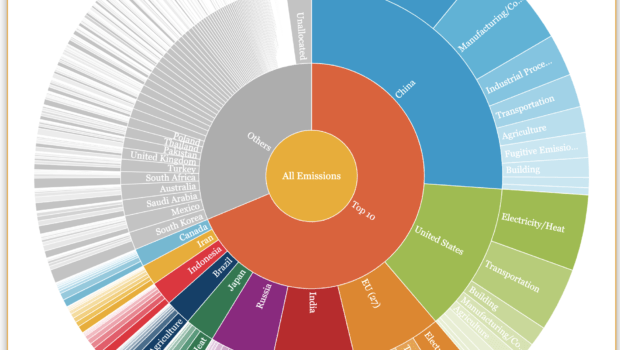
Top 10 GHG (greenhouse gases) emitters in the world
(Source: World resources institute)
The top three GHG emitters- China, EU and USA contribute 41.5% of the total global emissions while the bottom 100 countries account for only 3.6%. Collectively the top 10 emitters account for over two third of the global GHG emissions according to WRI.
Summary of Life cycle GHG emission intensity (Source: World nuclear association report)
Technology
Mean
Low
High
tones CO2e/GWh
Lignite
1,054
790
1,372
Coal
888
756
1,310
Oil
733
547
935
Natural Gas
499
362
891
Solar PV
85
13
731
Biomass
45
10
101
Nuclear
29
2
130
Hydroelectric
26
2
237
Wind
26
6
124
About 84% % of the world’s energy in the year 2020 was met only by fossil fuels according to Forbes based on BP’s annual review. Therefore, CO2 emission reduction should be targeted mainly by power generation and transportation industries two major users of fossil fuels.
Various methods of using fossil fuels for power generation and their CO2 emissions are shown below assuming Oxy combustion and gasification are used.
Fuel Process Reaction CO2 emission by wt. percentage
THE OXIDANTS USED IN ALL THE ABOVE PROCESSES ARE PURE OXYGEN AND NOT AIR
(Air oxidation will show low CO2 emission by weight percentage due to large portion of Oxides of Nitrogen, Nitrogen and excess oxygen present in the flue gas)
1.By simply closing all coal operations and switching over to natural gas for power generation the CO2 emission can be reduced by 48% compared to coal and by 17.4 % compared to Diesel. It is critical top 10 emitters of GHG emission should close all their coal fired power plants by 2022 or impose Carbon tax at the rate of $250/Mt to force such closures. CCS or CCUS can be allowed by coal fired power plants provided such technologies are commercially proven and verifiable. Otherwise, Carbon penalty should apply retrospectively.
2 All gas fired power plants can use either natural gas or Syngas (H2 +CO mix) using Oxy combustion to generate power and achieve an electrical efficiency of at least 65% by bottom cycling with sCO2 power cycle using waste heat or 85% using CHP application. Synthetic natural gas (SNG) can substitute natural gas (fossil origin) by using DIC dissolved inorganic in the form of CO2 recovered from seawater and renewable Hydrogen so that SNG will be Carbon negative. Alternatively, CO2 recovered directly from air can be used to synthesize SNG using renewable hydrogen. Carbon pricing will encourage such Carbon negative fuels. Fuels synthesized from captured CO2 from natural gas fired power plants and hydrogen should be treated as “Carbon neutral’ till 2022 and it should attract carbon tax beyond 2022.
3.Oxy combustion closed super critical CO2 power cycle using natural gas is to be encouraged by enabling pipeline CO2 to be recycled in the form of renewable synthetic methane gas (RSMG) using renewable Hydrogen thus achieving zero emission. It should be confined to individual location and RSMG should not be allowed to be exported but recycled within the premises.
4.CO2 emissions by transport can be reduced by 17.8% by substituting diesel vehicles with CNG by countries other than the top 10 emitters. Top emitting countries can use Fuel cell using renewable Hydrogen banning IC engine using fossil fuels or allow Electric vehicles with Fuel Cell extenders.
5. Deployment of largescale renewables such as solar and wind as well as biomass technologies substituting coal fired power plants will be the key. However renewable energy is only intermittent and will require large scale battery for energy storage. Even battery production emits 150-200 kgs of CO2 per kwh based on the energy consumption @97-181 kwh per kwh battery production (Nearly 200 times more CO2 emission than coal fired power plants). Therefore, utility scale batteries should be justified. Therefore, Bioenergy can play a major role in countries like Australia, African countries, Indonesia, India and Brazil in decarbonization especially biocrude can be converted into renewable synthetic fuels as Carbon neutral fuels.
6. Renewable energy such as solar and wind can be stored in the form of syngas by electrolysis of CO2 emissions from Oxy combustion of natural gas or by gasification of coal as shown above. Low temperature electrolysis using PEM or high temperature electrolysis using SOFC (solid oxide fuel cell) can convert CO2 into syngas. Both the processes have been already demonstrated. Syngas can be stored under pressure, and it can be used as a fuel for a continuous production electricity using Oxy combustion such as sCO2 Brayton cycle and recycling CO2 in the form of Syngas.
CO2 + H2O => H2 + CO (by electrolysis using PEM or SOFC)
7.Using Oxy combustion of natural gas in closed super critical CO2 Bryton power cycle and recycling CO2 internally in the form of RSMG using renewable Hydrogen, ZERO EMISSION base load power can be achieved. The advantage of this system it requires natural gas only for the start-up and it can generate RSMG internally using renewable Hydrogen. It can generate baseload power with zero emissions. And the electrical efficiency of such as system can be up to 65%. It runs completely using only renewable energy sources such as solar and wind. Water electrolysis using PEM or Alkaline Electrolyzer have been commercially proven.
It does not require any energy storage at all. The power can be directly exported to the centralized grid as well as imported from the grid for hydrogen generation.
By adopting CRT (Carbon recycling technology) outlined above it is possible to achieve zero emissions by power plants and supply power to all industries including transport industries.
By the introduction of Electric vehicles and Fuel cell vehicles replacing petrol/diesel vehicles the electricity demand will sharply increase in some countries which will proportionately increase GHG emissions. CRT can eliminate GHG emissions as shown above.
The best option is to generate base load electricity with zero GHG emissions using CRT using sCO2 power cycle and recycling CO2 in the form of RSMG and converting waste heat into electricity by bottom cycling using sCO2 power cycle thus increasing the electrical efficiency to more than 70-75%. Advanced bioenergy to convert biomass directly into biomethane can play a major role in decarbonization. It will require massive plantation of high CO2 absorbing short life plant varieties all over the world but unlikely to happen.
Implementation of the above technologies will require massive amount of water especially for renewable hydrogen and for biomass production and gasification and the major source will be the sea. Advancement in seawater desalination such as high recovery, low energy consumption, better concentrate management by recovering value added chemicals and minerals and substituting solar salt by high purity brine directly from seawater desalination will be required, achieving zero liquid discharge in SWRO plants will be critical to eliminate global warming by highly concentrated effluent discharge. All SWRO plants should use only renewable energy sources sch as solar and wind or Hydro.
The above suggestions are purely based on the author’s assessment based on his personal experience in the industry for the past 40 years.
Most of the renewable energy projects that are now set up around the world are grid connected with feed-in power tariff arrangement. People can generate their own electricity by solar/wind to meet their demand and supply the surplus power to the grid at an agreed power rates. They can also draw power from the grid if there is any short fall in their production of renewable energy. It is two-way traffic. There is an opportunity for people to generate revenue by sale of surplus power. It is an incentive for people to invest on renewable energy and that is why the investment on renewable energy has steadily increased over a time. But this is not the case with many developing and under developed countries. The situation is still worse in many islands where there is no centralized power generation at all or power distribution through grids. They depend on diesel generators. Even to transport diesel from mainland they have to use diesel operated boats. They have no drinking water even though they are surrounded by sea. I happened to visit a remote island in PNG few years ago and saw the plight of those people first hand. They live in absolute poverty and nobody cares to offer them a solution. Their voices are never heard and permanently drowned in the deafening roar of the sea.
The problems of supplying clean power and water to these remote islands are not only political but also technical and commercial in nature. One has to use only commercially available systems and components which are meant for a single or three-phase grid connected power supplies. Even though renewable energy sources basically generate only direct current (DC), one has to convert them into alternate current (AC) for easy distribution and to use appliances which are designed for AC operations. Isolated communities like islands can use direct current and also use DC operated appliances because they are commercially available and they are more efficient. Anyhow most of the house appliances need DC supply and AC/DC converters are commonly used for this purpose thus sacrificing efficiency in the process. They also need better storage solutions because they are not connected to the grid and they have to necessarily store power for several days. Some of these islands are connected with inefficient wind turbines backed by diesel generators. It is an absolute necessity to incorporate a long-term storage capabilities in the system if one has to offer a continuous power and clean water. If the wind velocity is not enough (during off seasons) or if there is no sun (cloudy) for days together and if there is not enough storage capacity, then all the investment made on the project will be of no use. Any half-baked solutions will not serve the real purpose.
There are also commercial problems because a well designed system will cost more, which will eventually increase the power tariff. Unless the Government subsidizes the power sufficiently, people cannot afford to pay for their electricity or water. It requires a careful planning and community consultations to set up a ‘stand alone renewable energy projects in islands’. Governments in the pacific islands should act with great urgency because there is also a risk of inundation by sea level rising due to global warming.
We are in the process of designing a solution to provide such islands with clean power, clean drinking water and even wireless connectivity for schools so that children can get education. It may sound ambitious but it is the first step one has to take into long journey of sustainability and self-reliance by these isolated communities. There is a good possibility that such island may one day become completely independent and self-sufficient with clean power and water.
The same solution can be implemented in other countries too. Many countries have necessary infrastructure to generate and distribute power yet they suffer regular power cuts and black outs due to inefficiencies in their system.
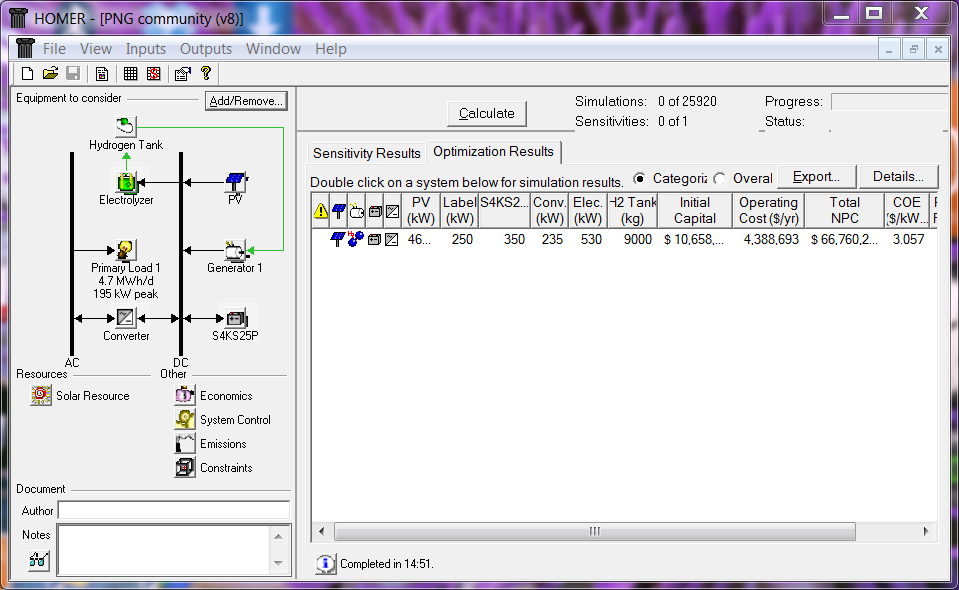
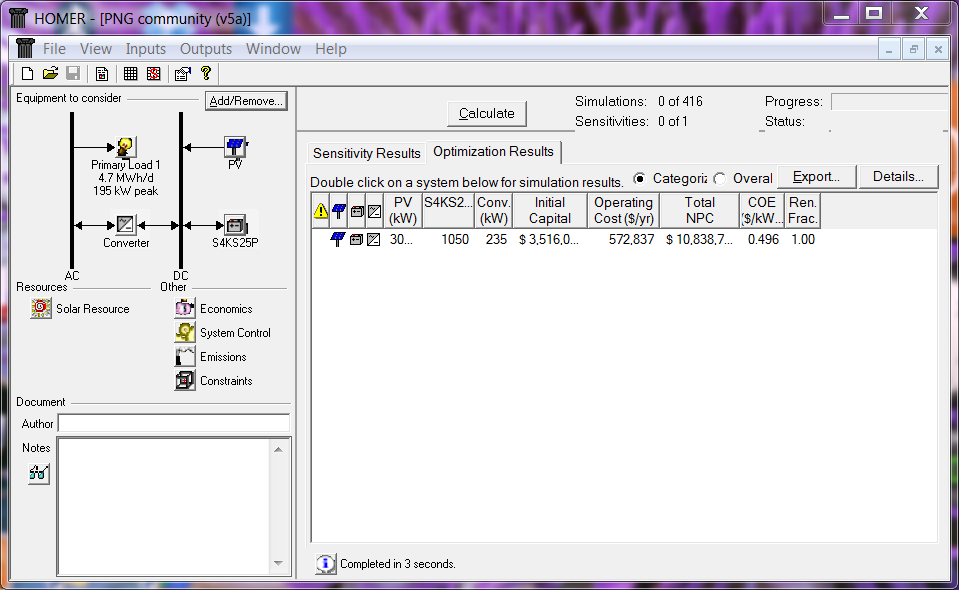
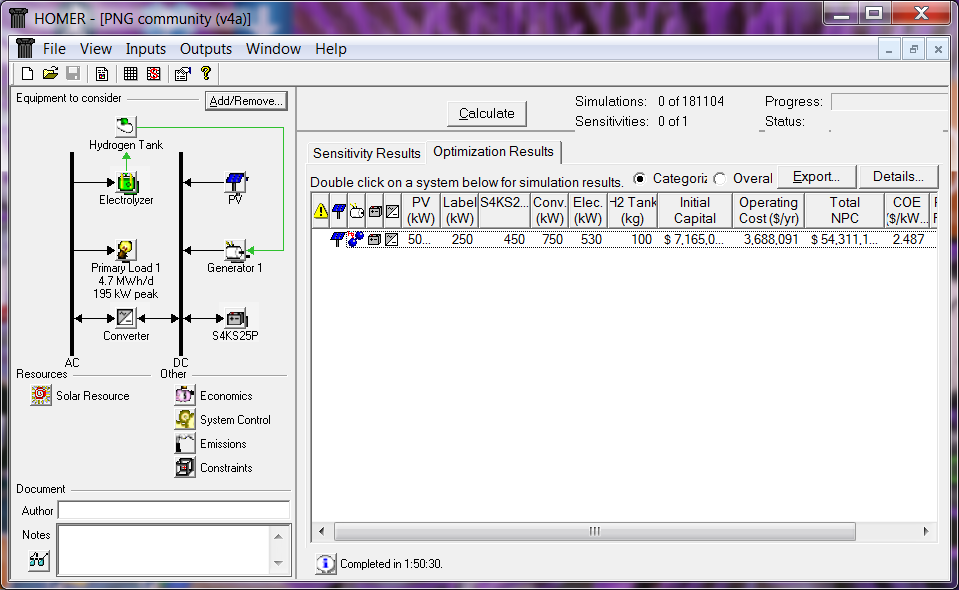
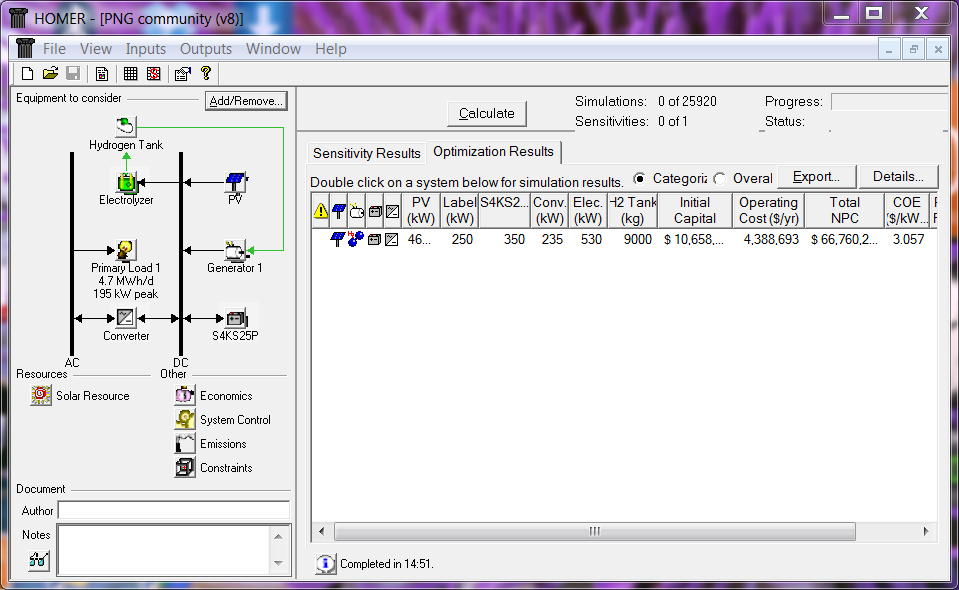
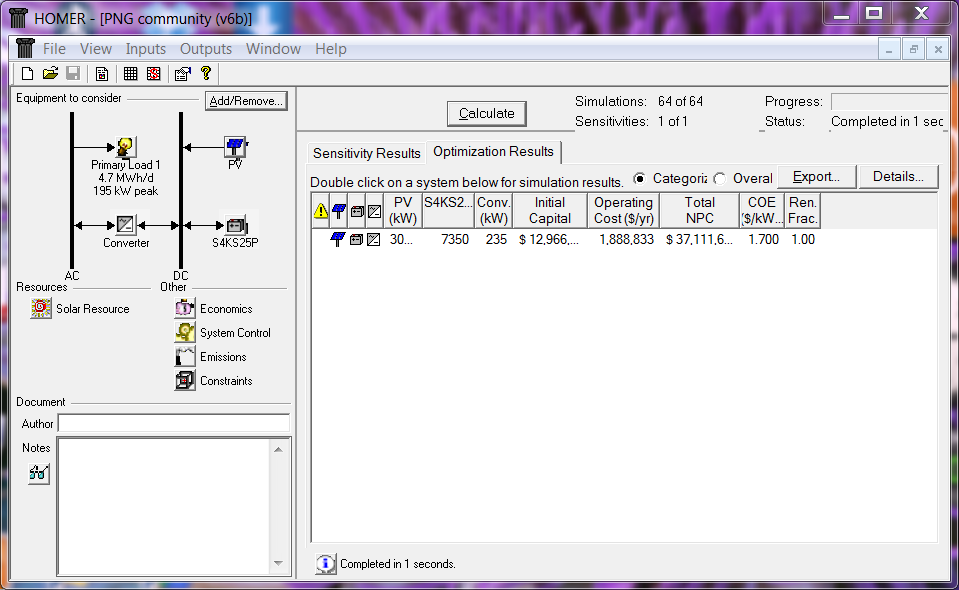
Our proposed solution can provide uninterrupted clean power and water because the system will have long duration centralized energy storage. We have made a detailed analysis of various alternatives available for the above purpose using Homer hybrid solution software. The solution proposes a PV solar with storage solutions using battery bank as well as Fuel cell back up. The solution also proposes a long duration of storage ranging from few hours up to a fortnight .It is a standalone system with complete energy management and suitable for remote operations. The solution can also incorporate wind turbine in addition to PV solar depending upon the site and wind velocity profile.
The model is to supply clean power and drinking water for 600 families with an average 3 people in a family. The system will supply power at the rate of 1.50kwhrs/day/person (1800 x1.5 = 2700kwhrs/day) and drinking water at the rate of 200 lits/day/person (1800 x 200 lit/person= 360,000 lits/day).The power for a desalination plant will be 1980 kwhrs/day. The system is designed for a total power generation capacity of 4680Khwhrs/day.
The model is based on battery storage as well as based on Hydrogen storage with varying durations. Comparative analysis is shown in the figures.
The first window is based on PV solar with 2 months Hydrogen autonomy.
The third window is based on PV solar with battery storage 5 days and Hydrogen 17hrs autonomy.
The fourth and fifth window is based on PV solar with battery 12hrs and Hydrogen 17hrs storage autonomy with varying panel costs
The sixth window is based on PV solar with 172 hrs (one week) battery autonomy.
The resulting analysis indicates that a centralized Hydrogen storage with Fuel cell back up offers the most economical solution even though the power tariff is higher than a system with battery storage. The investment for long duration battery storage is almost double that of Hydrogen based solution. The cost can further be reduced if and when the Electrolyzers as well as Fuel cells are manufactured on mass scale. The added advantage with this system is it can also provide Hydrogen fuel for Fuel cell cars and boats substituting diesel. One day it may become a reality that these isolated islands can become completely self sufficient in terms of water, fuel and power with no greenhouse gas emissions. This solution can be replicated to all the islands all over the world.
Note:
The above system can also be installed in many developing countries in Africa which is an emerging market. An Africa-Australia Infrastructure Conference will be held in Melbourne, Australia on 2-3 September 2013 and it will offer a platform for Australian companies to invest in Africa on infrastructural projects.
Most of the renewable energy projects that are now set up around the world are grid connected with feed-in power tariff arrangement. People can generate their own electricity by solar/wind to meet their demand and supply the surplus power to the grid at an agreed power rates. They can also draw power from the grid if there is any short fall in their production of renewable energy. It is two-way traffic. There is an opportunity for people to generate revenue by sale of surplus power. It is an incentive for people to invest on renewable energy and that is why the investment on renewable energy has steadily increased over a time. But this is not the case with many developing and under developed countries. The situation is still worse in many islands where there is no centralized power generation at all or power distribution through grids. They depend on diesel generators. Even to transport diesel from mainland they have to use diesel operated boats. They have no drinking water even though they are surrounded by sea. I happened to visit a remote island in PNG few years ago and saw the plight of those people first hand. They live in absolute poverty and nobody cares to offer them a solution. Their voices are never heard and permanently drowned in the deafening roar of the sea.
The problems of supplying clean power and water to these remote islands are not only political but also technical and commercial in nature. One has to use only commercially available systems and components which are meant for a single or three-phase grid connected power supplies. Even though renewable energy sources basically generate only direct current (DC), one has to convert them into alternate current (AC) for easy distribution and to use appliances which are designed for AC operations. Isolated communities like islands can use direct current and also use DC operated appliances because they are commercially available and they are more efficient. Anyhow most of the house appliances need DC supply and AC/DC converters are commonly used for this purpose thus sacrificing efficiency in the process. They also need better storage solutions because they are not connected to the grid and they have to necessarily store power for several days. Some of these islands are connected with inefficient wind turbines backed by diesel generators. It is an absolute necessity to incorporate a long-term storage capabilities in the system if one has to offer a continuous power and clean water. If the wind velocity is not enough (during off seasons) or if there is no sun (cloudy) for days together and if there is not enough storage capacity, then all the investment made on the project will be of no use. Any half-baked solutions will not serve the real purpose.
There are also commercial problems because a well designed system will cost more, which will eventually increase the power tariff. Unless the Government subsidizes the power sufficiently, people cannot afford to pay for their electricity or water. It requires a careful planning and community consultations to set up a ‘stand alone renewable energy projects in islands’. Governments in the pacific islands should act with great urgency because there is also a risk of inundation by sea level rising due to global warming.
We are in the process of designing a solution to provide such islands with clean power, clean drinking water and even wireless connectivity for schools so that children can get education. It may sound ambitious but it is the first step one has to take into long journey of sustainability and self-reliance by these isolated communities. There is a good possibility that such island may one day become completely independent and self-sufficient with clean power and water.
The same solution can be implemented in other countries too. Many countries have necessary infrastructure to generate and distribute power yet they suffer regular power cuts and black outs due to inefficiencies in their system.
Our proposed solution can provide uninterrupted clean power and water because the system will have long duration centralized energy storage. We have made a detailed analysis of various alternatives available for the above purpose using Homer hybrid solution software. The solution proposes a PV solar with storage solutions using battery bank as well as Fuel cell back up. The solution also proposes a long duration of storage ranging from few hours up to a fortnight .It is a standalone system with complete energy management and suitable for remote operations. The solution can also incorporate wind turbine in addition to PV solar depending upon the site and wind velocity profile.
The model is to supply clean power and drinking water for 600 families with an average 3 people in a family. The system will supply power at the rate of 1.50kwhrs/day/person (1800 x1.5 = 2700kwhrs/day) and drinking water at the rate of 200 lits/day/person (1800 x 200 lit/person= 360,000 lits/day).The power for a desalination plant will be 1980 kwhrs/day. The system is designed for a total power generation capacity of 4680Khwhrs/day.
The model is based on battery storage as well as based on Hydrogen storage with varying durations. Comparative analysis is shown in the figures.
The first window is based on PV solar with 2 months Hydrogen autonomy.
The third window is based on PV solar with battery storage 5 days and Hydrogen 17hrs autonomy.
The fourth and fifth window is based on PV solar with battery 12hrs and Hydrogen 17hrs storage autonomy with varying panel costs
The sixth window is based on PV solar with 172 hrs (one week) battery autonomy.
The resulting analysis indicates that a centralized Hydrogen storage with Fuel cell back up offers the most economical solution even though the power tariff is higher than a system with battery storage. The investment for long duration battery storage is almost double that of Hydrogen based solution. The cost can further be reduced if and when the Electrolyzers as well as Fuel cells are manufactured on mass scale. The added advantage with this system is it can also provide Hydrogen fuel for Fuel cell cars and boats substituting diesel. One day it may become a reality that these isolated islands can become completely self sufficient in terms of water, fuel and power with no greenhouse gas emissions. This solution can be replicated to all the islands all over the world.
Note:
The above system can also be installed in many developing countries in Africa which is an emerging market. An Africa-Australia Infrastructure Conference will be held in Melbourne, Australia on 2-3 September 2013 and it will offer a platform for Australian companies to invest in Africa on infrastructural projects.
Water and energy are two critical issues that will decide the future of humanity on the planet earth. They determine the security of a nation and that is why there is an increasing competition among nations to achieve self-sufficiency in fresh water and clean energy. But these issues are global issues and we need collective global solutions. In a globalised world the carbon emission of one nation or the effluent discharged into the sea from a desalination plant changes the climate of the planet and affects the entire humanity. It is not just a problem of one nation but a problem of the world. The rich and powerful nations should not pollute the earth, air and sea indiscriminately, hoping to achieve self-sufficiency for themselves at the cost of other nations. It is very short-sighted policy. Such policies are doomed to fail over a time. Next generation will pay the price for such policies. Industrialised countries and oil rich countries should spend their resources on research and development than on weapons and invent new and creative solutions to address some of the global problems such as energy and water. With increasing population and industrialisation the demand for energy and water is increasing exponentially. But the resources are finite. It is essential that we conserve them, use them efficiently and recycle them wherever possible so that humanity can survive with dignity and in peace. It is possible only by innovation that follows ‘Nature’s path.
The earth’s climate is changing rapidly with unpredictable consequences .Many of us are witnessing for the first time in our lives unusual weather patterns such as draughts, flash flooding, unprecedented snow falls, bush fires, disease and deaths. Although we consider them as natural phenomena there is an increasing intensity and frequency that tells us a different story. They are human induced and we human beings cause these unprecedented events. When scientists point out human beings cause the globe to warm there were scepticism. We never believed we were capable of changing the entire weather system of the globe.
We underestimate our actions. By simply discharging effluent from our desalination plants into the sea, can we change the salinity of the ocean or by burning coal can we change the climate of the world? The answer is “Yes” according to science. Small and incremental pollution we cause to our air and water in everyday life have dramatic effects because we disturb the equilibrium of the Nature. In order to restore the equilibrium, Nature is forced to act by changing the climate whether we like it or not.
Nature always maintains“equilibrium” that maintains perfect balance and harmony in the world. If any slight changes are made in the equilibrium by human beings then Nature will make sure such changes are countered by a corresponding change that will restore the equilibrium. This is a natural phenomenon. The changes we cause may be small or incremental but the cumulative effect of such changes spanning hundreds of years will affect the equilibrium dramatically.
We depend on fossil fuels for our energy needs. These fossils were buried by Nature millions of years ago. But we dig deep into the earth, bring them to surface and use them to generate power, run our cars and heat our homes. Our appetite for fossil fuels increased exponentially as our population grew. We emitted Carbon into the atmosphere from burning fossil fuels for hundreds of years without many consequences. But the emissions have reached a limit that causes a shift in Nature’s equilibrium and Nature will certainly act to counter this shift and the consequences are changes in our weather system that we are now witnessing. The only way to curtail further Carbon emission into the atmosphere is to capture the current Carbon emissions and convert them into a fuel so that we can recycle them for further power generations without adding fresh fossil fuel into the system while meeting our energy demands.
We can convert Carbon emissions into a synthetic natural gas (SNG) by using Hydrogen derived from water. That is why I always believe ‘Water and energy are two sides of the same coin’. But cost of Hydrogen generation from water will be high and that is the price we will have to pay to compensate the changing climate. Sooner we do better will be the outcome for the world.
In other word the cost of energy will certainly go up whether we price the Carbon by way of trading or impose Carbon tax or pay incentives for renewable energy or spend several billions of dollars for an innovative technology. There is no short cut. This is the reality of the situation. It will be very difficult for politicians to sell this concept to the public especially during election times but they will have no choice.
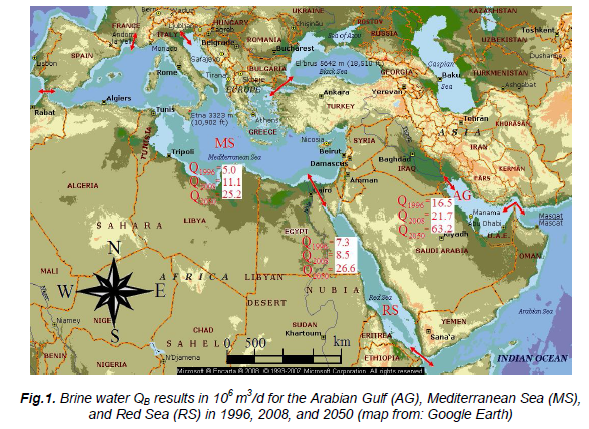
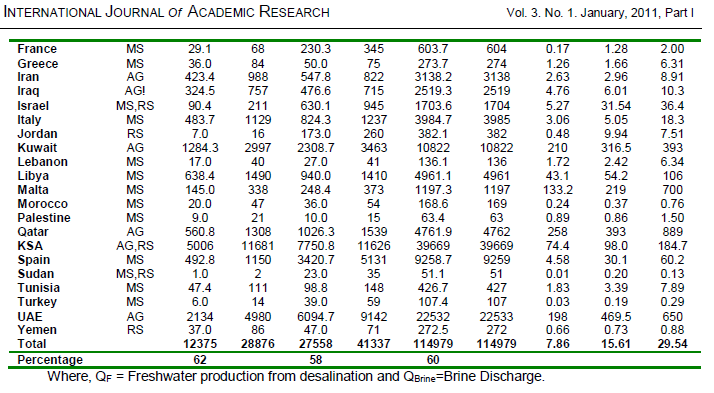
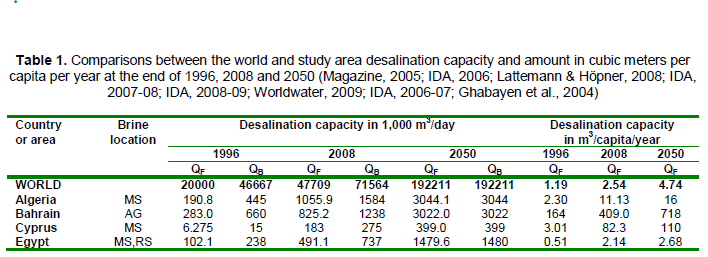
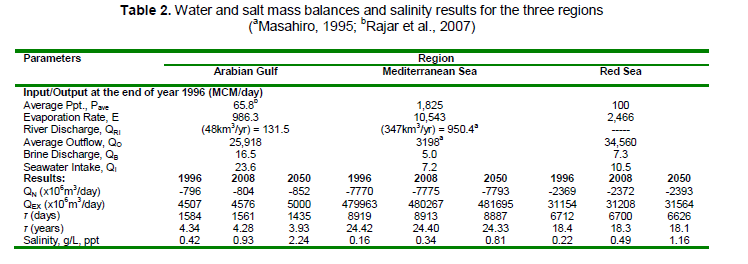
Similarly serious shortage for fresh water in many parts of the world will force nations to desalinate seawater to meet their growing demand. Saudi Arabia one of the largest producers of desalinated water in the world is still planning for the highest capacity of 600,000m3/day. This plant will discharge almost 600,000 m3/day of effluent back into the sea with more than double the salinity of seawater. Over a time the salinity of seawater in the Gulf region has increased to almost 40% higher than it was a decade ago. What it means is their recovery of fresh water by desalination will decrease or their energy requirement will further increase. Any increase in salinity will further increase the fossil fuel consumption (which they have in plenty) will increase the Carbon emission. It is a vicious cycle and the entire world will have to pay the price for such consequences. Small island nations in pacific will bear the brunt of such consequences by inundation of seawater or they will simply disappear into the vast ocean. Recent study by NASA has clearly demonstrated the relationship between the increasing salinity of seawater and the climate change.
According to Amber Jenkins Global Climate Change Jet Propulsion Laboratory:
“We know that average sea levels have risen over the past century, and that global warming is to blame. But what is climate change doing to the saltness, or salinity, of our oceans? This is an important question because big shifts in salinity could be a warning that more severe droughts and floods are on their way, or even that global warming is speeding up...
Now, new research coming out of the United Kingdom (U.K.) suggests that the amount of salt in seawater is varying in direct response to man-made climate change. Working with colleagues to sift through data collected over the past 50 years, Peter Stott, head of climate monitoring and attribution at the Met Office in Exeter, England, studied whether or not human-induced climate change could be responsible for rises in salinity that have been recorded in the subtropical regions of the Atlantic Ocean, areas at latitudes immediately north and south of Earth’s tropics. By comparing the data to climate models that correct for naturally occurring salinity variations in the ocean, Stott has found that man-made global warming — over and above any possible natural sources of global warming, such as carbon dioxide given off by volcanoes or increases in the heat output of the sun — may be responsible for making parts of the North Atlantic Ocean more salty.
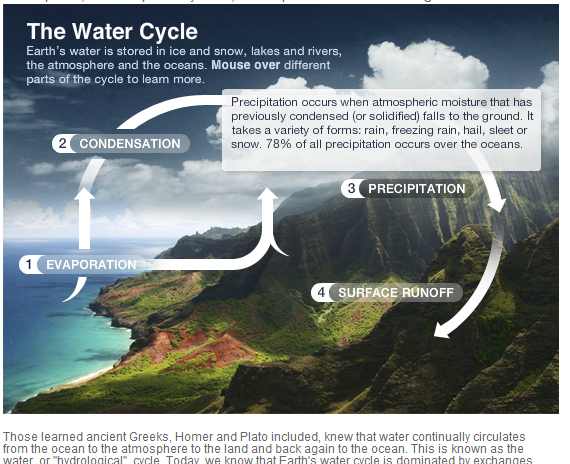
Salinity levels are important for two reasons. First, along with temperature, they directly affect seawater density (salty water is denser than freshwater) and therefore the circulation of ocean currents from the tropics to the poles. These currents control how heat is carried within the oceans and ultimately regulate the world’s climate. Second, sea surface salinity is intimately linked to Earth’s overall water cycle and to how much freshwater leaves and enters the oceans through evaporation and precipitation. Measuring salinity is one way to probe the water cycle in greater detail.”
It is absolutely clear that the way we generate power from fossil fuels and the water we generate from desalination of seawater cannot be continued as business as usual but requires an innovation. New technologies to generate power without emitting Carbon into the atmosphere and generating fresh water from seawater without dumping the highly saline effluent back into the sea will decide the future of our planet. Discharge of concentrated brine into sea will wipe out the entire fish population in the region. The consequences are dire. Oil rich countries should spend their riches on Research and Developments to find innovative ways of desalinating seawater instead of investing massively on decades old technologies and changing the chemistry of the ocean and the climate forever.



 ahilan@cewt.tech

 Clean Energy and Water Technologies Pty Ltd