
Skip navigation

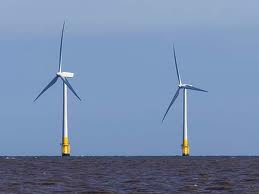
Wind energy is one of the fastest growing renewable energy sources in the world and in 2011 the global market grew by 6% with 40.5 GW new powers brought online, according to Global Wind Report. However storage of intermittent renewable energy is a critical contributing factor in renewable energy development. A study was conducted by University of California for California Energy Commission on the economic and environmental impact of for energy storage technologies and the ways to improve the energy efficiency of wind energy. When there is a strong wind there is no demand for power, and when there is a high demand for power there is no wind. This anomalous supply demand gap demands a reliable way of storing wind power during high wind velocity periods.

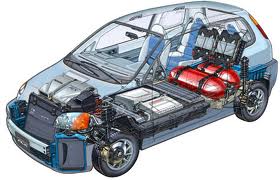
They examined for energy storage technologies namely 1.lead acid batteries, 2. Zinc Bromine flow batteries, 3.Hydrogen electrolyzer and Fuel cell storage system and 4.Hydrogen option to fuel Hydrogen cars with Hydrogen. By using NREL (national Renewable Energy laboratory) computer simulation model HOMER  for high wind penetration of 18% in California, they concluded that Hydrogen storage is the most cost-effective than other battery storage technologies and using Hydrogen to fuel Hydrogen cars is economically attractive  than converting Hydrogen into Electricity. The environmental impact of using Hydrogen is benign compared to batteries with their emissions.

“The key findings of this experiments are as follows: Energy storage systems deployed in the context of greater wind power development were not particularly well used (based on the availability of “excess” off-peak electricity from wind power), especially in the 2010 time frame (which assumed 10% wind penetration statewide), but were better utilized–up to 1,600 hours of operation per year in some cases–with the greater (20%) wind penetration levels assumed for 2020.

The levelized costs of electricity from these energy storage systems ranged from a low of $0.41 per kWh—or near the marginal cost of generation during peak demand times—to many dollars per kWh (in cases where the storage was not well utilized). This suggests that in order for these systems to be economically attractive, it may be necessary to optimize their output to coincide with peak demand periods, and to identify additional, value streams from their use (e.g., transmission and distribution system optimization, provision of power quality and grid ancillary services, etc.).

At low levels of wind penetration (1%–2%), the electrolyzer/fuel cell system was either inoperable or uneconomical (i.e., either no electricity was supplied by the energy storage system or the electricity provided carried a high cost per MWh).

In the 2010 scenarios, the flow battery system delivered the lowest cost per energy stored and delivered.  At higher levels of wind penetration, the hydrogen storage systems became more economical such that with the wind penetration levels in 2020 (18% from Southern California), the hydrogen systems delivered the least costly energy storage.

Projected decreases in capital costs and maintenance requirements along with a more durable fuel cell allowed the electrolyzer/fuel cell to gain a significant cost advantage over the battery systems in 2020.

Sizing the electrolyzer/fuel cell system to match the flow battery system’s relatively high instantaneous power output was found to increase the competitiveness of this system in low energy storage scenarios (2010 and Northern California in 2020), but in scenarios with higher levels of energy storage (Southern California in 2020), the electrolyzer/fuel cell system sized to match the flow battery output became less competitive.

The hydrogen production case was more economical than the electrolyzer/fuel cell case with the same amount of electricity consumed (i.e., hydrogen production delivered greater revenue from hydrogen sales than the electrolyzer/fuel cell avoided the cost of electricity, once the process efficiencies are considered).

Furthermore, the hydrogen production system with a higher-capacity power converter and electrolyzer (sized to match the flow battery converter) was more cost-effective than the lower-capacity system that was sized to match the output of the solid-state battery. This is due to economies of scale found to produce lower-cost hydrogen in all cases.

In general, the energy storage systems themselves are fairly benign from an environmental perspective, with the exception of emissions from the manufacture of certain components (such as nickel, lead, cadmium, and vanadium for batteries). This is particularly true outside of the U.S., where battery plant emissions are less tightly controlled and potential contamination from improper disposal of these and other materials is more likely. The overall value proposition for energy storage systems used in conjunction with intermittent renewable energy systems depends on diverse factors:

The interaction of generation and storage system characteristics and grid and energy resource conditions at a particular site The potential use of energy storage for multiple purposes in addition to improving the dependability of intermittent renewable (e.g., peak/off-peak power price arbitrage, helping to optimize the transmission and distribution infrastructure, load-leveling the grid in general, helping to mitigate power quality issues, etc.)

The degree of future progress in improving forecasting techniques and reducing prediction errors for intermittent.  Electricity market design and rules for compensating renewable energy systems for their output”. Hydrogen storage and Hydrogen cars hold the key for future renewable energy industries and Governments and industries should focus on these two key segments.
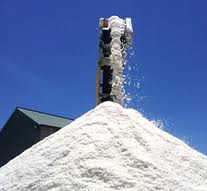

Sodium chloride commonly known as ‘ common salt ‘ is a basic  raw material for the production of a range of chemicals including Caustic soda and Soda ash. The cost salt has been recently increasing steadily due to wide demand supply gap all over the world. This in turn has increased the cost of all other chemicals derived from salt and this situation is expected to continue in future.

Salt industry has been traditionally using a ‘solar evaporation’, an age-old technique from antiquity. The technology involves pumping of seawater on large area of arid land and allowed to evaporate as the concentration of salt increases. The brine then passes on through the various ponds, with the sodium chloride content rising from 2% to 25%. This increasing salinity gives the ponds a distinctive pink color, as algae in strongly saline solutions produce a red pigment called haematochrome. The Red Sea is red for the same reason.

The saturated brine is pumped to smaller ponds where nature continues its work of evaporation. Once the volume has been reduced to 10.2% of the original, any further concentration results in the deposition of sodium chloride. From September to February more brine is added until at least 25 mm of salt has settled and it is time for harvesting. The brine remaining (called “bittern”) is a saturated solution of NaCl, with the other salts present at concentrations well below saturation. This is pumped out to sea just before the harvest is gathered, as these ions would contaminate the salt if all the water were evaporated off. For four to six weeks beginning in early March, mechanical harvesters scoop up the crystallized salt and load it on to trucks that shuttle back and forth across the ponds to the washer. In the two washing plants the salt is washed in clean saturated brine, where the other salts, present as impurities, dissolve. From their hundreds of tones of clean washed salt are discharged daily on to the stacks for storage – up to 10,000 tons per day. During winter no more salt is recovered, but the plant continues its regular work of processing and bagging the stockpiled salt.

But this raw salt has number of impurities such as Calcium, Magnesium and Sulfate ions which are harmful for the production of further chemicals. Though the cost of producing salt is cheaper by solar evaporation, the cost of purifying salt from above impurities and making suitable brine for chemical production is expensive .The cost of salt used in chemical processing industries after transportation and purification increase to whopping $ 200 and above. Many Asian countries such as Japan, South Korea, China, Taiwan and Indonesia are major importers of salt. The salt import by the above importers in Asia pacific region between 2000 and 2009 has increased by 6 million tonnes, equal to 40% or 4.6% per annum.In four years between 2005 and 2009, the price of salt increased  by US$25/Mt, equal to 83% or 16% per annum.The average price of imported salt varies between US$40 to $47/Mt. (Ref: Salt partners).

Erratic weather patterns, sea level rise, Tsunami, inundation, flooding and unseasonal rains have hampered salt production all over the world. The chemical industries are facing an uncertain future and unpredictable pricing of salt. Prolonged winter in Europe and US and other parts of the world have pushed the demand for salt for de-icing. India is the third largest and cheapest producer of salt in the world with lowest labor cost. But even in India, the prices of salt have gone up recently from Rs.600 to Rs.1000/Mt.

An Australian company has developed and patented an innovative technology to solve the above problems. The company uses membrane technology to produce Sodium chloride brine directly from seawater suitable for all chemical products in the downstream. This novel technology separates seawater into salt and drinking water, after all seawater has about 95% pure water. It can solve the problems of many mining companies in Australia who need Caustic soda as well as water for their processing.India can certainly adopt this technology because shrinking coastal land for solar evaporation will become  scarcer in the future.

Chemistry has revolutionized human life and it has affected each and every one of us in some way or other for the past several decades. We were happily using these chemicals in our everyday life without really understanding their side effects.Individuls and companies who invented and commercialized chemical products were keen to offer end products to consumers often without explaining the side effects of such chemicals.They themselves were not fully aware of long-term consequences of such chemicals. Classical examples are Chlorine and its derivatives.

Chlorine is a common chemical that is used even today in many countries to disinfect drinking water in water treatment plants. Their usage is sill continued though they found that Haloethanes, which are formed by the action of Chlorine on decayed organic leaves in water storage, causes cancer (carcinogenic). DDT is another chemical that was used widely as a pesticide, known as “atom bomb of pesticides”,  until their side effects proved deadly for human beings and to the environment. It was officially banned in USA in 1972 by EPA, though it is still continued in some third world countries. Bleaching powder in another example of powder disinfectant ( a popular form of disinfectant used on roads in India when  prominent political leaders visit municipalities; though they are only chalk  powder with no traces of residual Chlorine).

A whole range of dyes known as coal-tar dyes derived from coal  were used in many applications including ‘food colors’, later substituted by petroleum-based organic chemicals. These ‘food colors’ are now substituted with ‘natural organic colors’ such as vegetable colors derived from vegetables and fruits. Industrial chemicals, both organic and inorganic have caused serious environmental damages all over the world for several decades, but Governments, companies and EPA did not realize the deadly consequences of some these chemicals for a long time. The ‘Bhopal Gas tragedy’ in India is one such grim reminder of such consequences.

Chemicals are not natural products even though one can separate them into various organic chemical molecules but some of the consequences of such separation and usage are not fully understood. Many natural herbs have outstanding medicinal values and when consumed in a Natural form, it has absolutely no side effects and they show tremendous therapeutic values. But when you isolate certain molecules from such herbs (Alkaloids) and used as a drug, they can cure a disease but at the same time, they create many side effects. Nature offers such drugs in a diluted form that is quite compatible to human beings. One such example is ‘Vinblastine’ and “Vincristine’, anti-cancer drugs derived from a herb called ‘vinca rosea’.

Of late there is awareness among companies, people and Governments about Green technologies that can help protect the environment. Greenhouse gas and global warming is one such issue. When Petrol or Diesel, an organic chemical known as Hydrocarbon is burnt, it not only generates power but also emits greenhouse gases such as Carbon dioxide and oxides of Nitrogen, that cause globe to warm. We were happily burning away such fossil fuels until scientists raised an issue on emission of ‘greenhouse gases’ in recent past. When we deal with chemicals and chemical reactions, the molecule is transformed into a new molecule and often such reaction cannot be reversed.It is not a physical change but a chemical change. When we convert water into steam, we can get back water by condensing steam; but when you convert Chlorine into PVC (Poly vinyl chloride) plastic, there are environmental consequences and reversing PVC into Chlorine gas in not easy, though it is technically possible with environmental consequences.

One has to observe and learn from Nature what is good and what is bad when developing a new technology, because such development will not only affect the environment but also many generations to come. When Nature teaches how to turn sugar into Alcohol by fermentation using air-borne microorganisms, we should follow Nature to make alcohol. We know how to turn Alcohol into PVC, but we do not know how to make biodegradable PVC from Alcohol. Companies call it ‘Green Chemistry’, but not until we can make a biodegradable PVC. Human knowledge is imperfect and we can learn ‘Green chemistry and Clean Technologies’ only from Nature and not by deviating from the path of Nature.

The first few hydrogen atom electron orbitals ...

The first few hydrogen atom electron orbitals shown as cross-sections with color-coded probability density (Photo credit: Wikipedia)

Hydrogen is well-known as a potential source of clean energy of the future. But it is not available in a free form; its generation from   water using Electrolysis requires more energy than, a free Hydrogen can generate.  It requires about 5kws power to generate 1 m3 Hydrogen gas, which means, it requires about 56 Kw power to generate 1 Kg Hydrogen using water electrolysis. But 1Kg Hydrogen can generate only about 15-20 Kw Electricity using a Fuel cell. This anomalous situation makes Hydrogen generation using water electrolysis uneconomical for clean power generation. That is why most of the Hydrogen is now generated by steam reforming natural gas. Another reason for using natural gas is, to cut the cost of Hydrogen and also, to make a smooth transition from fossil economy to Hydrogen economy using existing infrastructures. Power generation and transportation using Hydrogen and Fuel cell has been commercially tested, proven and ready for deployment. However, we still have to deal with emission of greenhouse gas during steam reformation of natural gas due to the presence of carbon atom in natural gas.

Meanwhile, one American company recently announced a break-through technology that will generate free thermal energy from atomic Hydrogen using a patented process. The inventor of the process claims, when atomic Hydrogen is allowed to react with a specific Catalyst, Hydrogen atom undergoes a transition to a new atom called “Hydrino”, releasing energy while the electron in the atom shifts to a lower orbit close to proton. It was believed so far that the electron in Hydrogen atom is at its lowest level (ground level) and the closest to proton. This is the first time somebody claims that there is a lower state than the ground state  in Hydrogen atom and the amount of energy released in this transition to ‘Hydrino”,  is  in between by an uncatalyzed Hydrogen atom by combustion and nuclear energy. Unlike nuclear energy, this energy is non-radioactive. But the energy released by this process is more than 200 times than energy released by Hydrogen atom by normal combustion. The reaction does not create any pollution or radio-active materials as by-products. The process has been tested, verified and certified by scientists in few  laboratories and universities.

The above process offers great hope to generate a clean, non-polluting energy at the lowest cost. The ‘dihydrino and Hydrogen is separated and Hydrogen is recycled back to continue the process while’dihydrino’ has other potential commercial applications. The inventor has named this power as “Black power” as he hypotheses that such phenomena explain the presence of “dark matter” in Galaxies. According to quantum mechanics, the energy level of a normal Hydrogen atom is at its ground level as its minimum level (N=1), but its energy level increases at higher states such as N=2, 3, 4.When the energy level jumps from higher (excited state) to a lower level, it emits energy in the form of photon of light (Quanta).The spectrum of such emission matches the ultraviolet light of the sun. Since sub-quantum atoms are non-radioactive, the inventor claims that he is duplicating the above process of Nature by a catalytic thermal process in the state of Plasma using a specific Catalyst.

If such a large thermal energy is released by formation of ‘Hydrino’atom in the above process, then such energy can be used to generate Hydrogen by conventional water electrolysis at a fraction of the cost.

Then, Hydrogen economy can become a commercial reality and the above technology has a potential not only to generate power at fraction of a cost of the fossil fuel but also to generate a clean and non-polluting power. The inventor has also hypothesised a “grand new unified theory” of atom as the basis for the above invention. Mainstream scientists have always have been reluctant to support such “free energy” theories but, when someone can prove the process of generating an excess energy (more than 200 times than the theoretical energy released by an exothermic chemical reaction) and it is non-radioactive then mainstream scientists may be sidelined by world community. It is always possible to prove something unique without any theory   and come out later with a theoretical explanation to satisfy the scientific community. Many discoveries in the past were by mere accidents and one should have an open mind to look into any new concepts without any bias, especially if the discovery can resolve serious problems of humanity at  times  of crisis.


Governments and industries seek comfort from the fact that Global Warming is not directly linked with greenhouse gas emissions and there is no concrete scientific proof yet, linking these two, and think they can carry on the business as usual. Few scientists in the scientific communities also have backed such sentiments. Alternative technologies such as renewable energy technologies are expensive and cannot compete with fossil fuel based  power plants in near terms. Advanced renewable technologies need rare earth materials such as Lanthanum, cerium, praseodymium, neodymium, cobalt and lithium that are used in electric vehicle batteries; Neodymium, praseodymium and dysprosium that are used in magnets for electric vehicles and wind turbines. Lanthanum, cerium, europium, terbium and yttrium that are used in Phosphors for energy-efficient lighting; Indium, gallium and tellurium that are used in solar cells. The supply of these materials are limited or confined to few countries such as China. These new material also need more energy to mine, process and extract  using only fossil fuel generated power. Transport vehicles such as Hybrid or Electrical cars require a substantial amount of rare earth material such as Lithium for Battery production. The cost of Lithium batteries according to Centre for Transportation, Argonne National Laboratory is:

________________________________________________________

Battery type         Base line                       Optimistic              Goal

________________________________________________________

High energy          $706/kwh                   $200/kwh           >150/kwh

35kwh                  $, 24,723                      $ 8767

High-power           $, 2,486                       $ 1,095                   $300

100 10A-h cell

_________________________________________________________

The cost and maintenance of such vehicles are expensive compared to gasoline cars. The looming financial crisis, unemployment and political instability in many parts of the world have overshadowed the problem of greenhouse house and global warming. Governments in power are trying to postpone the issue of global warming as long as possible because they are unpopular among their public, who are increasingly wary of  high energy cost and their household budgets.

Industrialized countries such as US, China, India and Australia have projected their production and use of their coal, oil and gas usage in the future, which are steadily on the rise. Australia’s mining and resources industries are booming with increasing production of Coal, Coal seam methane gas, LNG, Iron ore, copper, Nickel and Gold. Increasing demand by growing economies such as India and China have propelled the production of coal and LNG and other minerals in Australia. The booming mining and shipping industries of Australia have prompted UNESCO to warn Australia about the impending danger of ‘Great Barrier reef’ being destroyed by its busy shipping activities. The Great Barrier Reef is the world’s largest coral reef ecosystem. The only living organic collective visible from space, it is considered one of the seven natural wonders of the world, and is a World Heritage listed area.

It boosts the Queensland’s image of sun, swimming and tropical islands, and around 2 million people visit the reef every year, generating more than $2 billion in direct tourism revenue in the area. The mining boom brings revenue but it also brings natural disasters and destruction of its natural wonders. The net effect will be destruction of Nature and displacement of people at the cost of mining revenue. But how long such a boom will last, and if the economies of China and India starts slowing down then, what happens to all the investments and the damage caused?

The above developments paint a grim picture on global warming. The world has witnessed natural disasters causing huge human and financial losses. The natural disasters have costed an economic loss of nearly 13 to 30 billion dollars in the past two years in Australia alone. Yet, people and Governments want a ‘concrete proof’ that man-made greenhouse gases causes global warming and triggers natural disasters. Well, we can carry on such conversation indefinitely till we reach a point of no return. “Wisdom comes from experience; but experience comes from foolishness”.

As the threat of global warming looms large, Governments and Industries are looking for innovative, alternative and renewable energy sources and energy efficiency solutions. But how many alternative energy sources are available and what are their potentials? How to cut our carbon footprint without making larger new investment? How to improve the energy efficiency of the existing systems so that we can increase energy output for the same amount of fuel input and cut the cost of energy? These are some of the fundamental questions Governments and industries are grappling with, for the past few years. We are used to generating cheap energy from coal, oil and gas at the cost of the environment for several decades. We are used to water supply free of cost or at negligible cost for several decades. Governments were able to survive year after year because they were able to supply these two fundamental requirements of the people namely, energy and water at low-cost. But this situation changed swiftly when scientists raised the alarm bells on carbon emission and global warming. Still many Governments, especially industrialized countries with large energy and water usage, are still playing ‘wait and watch’ game, because they cannot afford to increase the tariffs on power and water. Any such increase will make Governments unpopular and their re-election to the office doubtful.

The real alternative to fossil fuels is only solar energy, which is clean, reliable and abundant. All other forms of renewable sources such as wind, geothermal, ocean thermal energy and wave energy are only offshoot of solar energy. The prime source is still the sun and the source of energy is from the chain nuclear fusion reaction of Hydrogen atom. The radiation of this nuclear reaction in the sun has to travel an average distance of 93 million miles to reach the earth, yet it is enough to meet current energy need of  entire humanity by a factor of 20,000 times. But to convert sun’s light and heat energy into Electricity and other useful forms of energy, we need some rare materials which we never used in the past. They are called ‘rare earth materials’ because their available sources and supplies are rare on planet earth. But these exotic and rare earth materials are becoming indispensable in the development of renewable energy products and applications. The future growth of clean energy technologies depend on supply of such rare earth materials.

Fourteen elements and related materials were selected for a criticality assessment by US Government department of energy. Eight of these are rare earth metals, which are valued for their unique magnetic, optical and catalyst properties. The materials are used in clean energy technologies as follows. Lanthanum, cerium, praseodymium, neodymium, cobalt and lithium are used in electric vehicle batteries. Neodymium, praseodymium and dysprosium are used in magnets for electric vehicles and wind turbines. Samarium is also used in magnets. Lanthanum, cerium, europium, terbium and yttrium are used in phosphors for energy-efficient lighting. Indium, gallium and tellurium are used in solar cells. The materials were selected for study based on factors contributing to risk of supply disruption.

Though usage of such material is relatively small, it is anticipated that the growth of clean technologies will need a substantial quantity of these materials. Currently China is endowed with almost 95% of such rare materials in the world. These materials are available in the form of ores and minerals under the earth. They have to be mined, processed and extracted in a pure form so that they can be used in developing clean energy products of the future. We will discuss about such products and technologies in our future articles. The anomaly is the energy required to mine, process and extract these rare earth materials need energy and such energy to have to come only from the sun. It is once again Nature that comes to the rescue of human beings at such critical junctures.


We now generate electric city from heat, obtained by combustion of fossil fuel such as coal, oil and gas. But such combustion generates not only heat but also greenhouse gases such as Carbon dioxide and oxides of Nirogen.The only alternative to generate power without any greenhouse gas emission is to use a fuel with zero carbon. However, oxides of Nitrogen will still be an issue as long as we use air for combustion because atmospheric air has almost 79% Nitrogen and 21% oxygen. Therefore it becomes necessary to use an alternative fuel as well as an alternative power generation technology in the future to mitigate greenhouse problems.

Hydrogen is an ideal fuel to mitigate greenhouse gases because combustion of Hydrogen with oxygen from air generates only water that is recyclable. Combining Hydrogen with Oxygen using Fuel cell, an electrochemical device is certainly an elegant solution to address greenhouse problems. But why Hydrogen and Fuel cell are not commonly available? Hydrogen is not available freely even though it is abundantly available in nature. It is available as a compound such as water (H2O) or Methane (CH4) and Ammonia (NH3). First we have to isolate Hydrogen from this compound as free Hydrogen and then store it under pressure. Hydrogen can easily form an explosive mixture with Oxygen and it requires careful handling. Moreover it is a very light gas and can easily escape. It has to be compressed and stored under high pressure.

Generation of pure Hydrogen from water using Electrolysis requires more electricity that it can generate. However, Hydrogen cost can be reduced using renewable energy source such as solar thermal. The solar thermal can also supply thermal energy for decomposing Ammonia into Hydrogen and Nitrogen as well as to supply endothermic heat necessary for steam reformation of natural gas into Hydrogen. On-site Hydrogen generation using solar thermal using either electricity or heat can become a commercial reality. Hydrogen generation at higher temperatures such as Ammonia decomposition or steam reformation can be directly used in Fuel cell such as Phosphoric acid Fuel cell.

Phosphoric acid fuel cell is a proven and tested commercial Fuel cell that is used for base load power generation. It is also used for CHP applications. Hydrogen generation using solar thermal and power generation using Fuel cell is already a commercial reality and also an elegant solution to mitigate greenhouse gases. Large scale deployment of Fuel cell and solar thermal will also cut the cost of installations and running cost competing with fossil fuel.Fuecell technology has a potential to become a common solution for both power generation and transportation.

While Government can encourage renewable energy by subsidizing PV solar panels and discourage fossil fuel by imposing carbon tax, they should give preference and higher tariff for power purchase from Solar thermal and Fuel cell power generators. This will encourage large-scale deployment of Fuel cell as a potential base load power source.

Coal is the single largest fuel used for power generation all over the world, due to its abundant availability and established infrastructure and technology. However, greenhouse gas emission poses a significant challenge in continuing the usage of coal as prime fuel. Currently, Natural gas is favored as fuel for power generation and number of LNG (liquefied natural gas) plants have been set up in many parts of the world. Coal seam methane gas is another potential source that competes with natural gas. Basically, Methane is the major constituent of such gases in the form of Hydrogen  and they are suitable for both combustion as well as for gasification for power generation. Countries who are endowed with large deposits of coal such as Australia, South Africa, Indonesia have advantages in clean coal technologies and in reducing their greenhouse gas emissions. There is an opportunity for coal-fired power plants to continue their operations, if they can solve the greenhouse gas emission and other pollution problems associated with coal. Number of companies are now re-evaluating clean coal technologies such as IGCC and carbon capture and reuse.

As we have seen in previous articles, Hydrogen is the key in developing clean coal technology of the future. That is why, gasification technology such as IGCC (Integrated Gasification and Combined Cycle) is gaining importance over combustion technologies because that is the only way we can introduce a Hydrogen molecule in the combustion by way of ‘Syngas’. By introducing Hydrogen, we not only can improve the thermal efficiency but also use the heat of combustion to the most by combined cycle with reduced GHG emission. It also facilitates the usage of existing and known power generation technologies such as, steam turbine and gas turbine, as well as, new technologies such as Fuel cell and Hydrogen turbines.

Coal in the form of pumpable liquid (CWS –coal water slurry) is another key milestone in developing a clean coal technology. Countries like China and Indonesia have been using coal water slurry for power generation successfully. Finely powdered coal is mixed with water in the ratio of 60:40 along with dispersant such as Lignosulfonate as additives to make a finely dispersed, viscous liquid that resembles heavy petroleum oil, ready for combustion. It is easier to handle pumpable oil than a solid coal.

A novel products called ‘colloidal coal water’ (CCW) is a finely dispersed colloidal coal in water with additives such as surfactants and dispersants with specific formulating agents leading to certain rheological properties is a key development in clean coal technology. The coal water slurry now used does not have long-term stability and storage properties like colloidal coal water fuel. The work is under development and it is expected that such finely dispersed colloidal coal water mix resembling a liquid hydrocarbon may be named as ‘liquid coal’ for all practical purposes will become a low-cost fuel in the future power generation.

This ‘colloidal coal liquid’ can be easily gasified or used as liquid fuel for combustion equipment such as boilers and also serve as precursor for a number of chemical product synthesis as downstream products. The emitted Carbon dioxide can be captured cryogenically and separated in a pure form for potential application such as ‘Natural Refrigerant’ and to synthesize number of chemical products. Clean coal can become a commercial reality provided we re-evaluate the coal preparation, gasification methods and to contain emitted carbon into a useful product of commerce.

How many of us think  about the Sun and Sea, when you drink ‘Mineral water’ from that ‘PVC bottle’; or think about the PVC cables that transmit power to your home; or  eat  meal with a pinch of salt or bicarbonate; or when your municipal water treatment plant use Chlorine to disinfect your drinking  water? All these come from sea water energized by sun’s light, day after day, for several decades.

Every year 111 billion liters of seawater are evaporated using solar energy to produce 1.1 billion liters of brine. The amount of solar energy required to produce this, is equal to 11 million tons of coal, valued at US$ 1.10 billion. The brine is then crystallized to produce 2 million tones of solar salt, the essential raw material for 18 basic inorganic chemicals, including soda ash. Soda ash and Caustic soda are two fundamentals raw materials to chemical industries, as steel is to the engineering industries. This above statistics applies to one single manufacturer, and there are hundreds of manufacturers around the world.

Sun and sea are two great gifts of Nature to mankind. But industries use three great resources  namely Sun, seawater and a vast stretch of land often free of cost. Companies convert  seawater  into  salt using sun’s energy, manufacture valuable chemicals, sell them with profits   and then dump all toxic wastes on the soil and discharge all the industrial effluents back into the sea, polluting not only the source of their raw materials but also killing thousands of marine species they call ‘sea’ as their home.

Governments and EPA (government agencies) turn a blind eye to such pollution and give them clearance year  after year in each country for several decades, because they depend on taxpayer’s money to run their Governments. The manufacturer use these natural resources free of cost or at a fraction of  cost and make huge profits to their shareholders and pay tax to the Government, to make sure  that Governments don’t interfere with their activities. What is really happening is few rich and powerful are able to exploit the natural resources and enrich themselves with the help of Governments  at the cost of earth, water and air, we human beings habitat.

This avaricious exploitation of Nature has driven not only human beings but many animals and species to extinction. Basic needs of life such as water and air are polluted, man-made waste are dumped indiscriminately on soil, polluting the earth and ground water. The plastic manufactured using Nature’s sun and sea water, are dumped back on earth as non-biodegradable pollutants. This is how we repay Nature.

Human beings have caused an irreversible damage to Nature in the name of science, technology and industrialization at the cost of future generation, while enriching few rich and powerful. The damage is irreversible,  because we are forced to continue the same path to avert any disruption to our growth story. As long as we value materials over morals and ethics, there is no future and Nature will eventually turn its back with vengeance. We value how much a person is worth financially  rather  than, what a person can contribute to the uplifting of human beings and Nature. This is the crux of all problems in the world, including the financial crisis we are currently facing. We created the monster called ‘materialism’ and the same monster is now destroying humanity.


Ammonia is a well-known industrial chemical that is manufactured worldwide as a precursor for the production of Urea. The chemistry and technology of Ammonia synthesis is well-known and well established. It was a land mark achievement to fix atmospheric Nitrogen into the soil in the form of Urea as a fertilizer. It has 17.6% Hydrogen and 82.4% Nitrogen making it an ideal fuel for combustion when compared to Gasoline in terms of greenhouse gas emission because Ammonia no carbon. Handling free Hydrogen has always been a concern due to its explosive nature and lightness. Transportation of Hydrogen in the form of Ammonia is relatively cheaper and safer. A non-regulated Ammonia nursing tank at 265 psi pressure holds 3025kg Ammonia, containing 534kg Hydrogen, because a 5900 gallon Hydrogen tube trailer at 3200 psi pressure, contain only 350kgs of Hydrogen. Low pressure Ammonia tank with less than 25% volume contain more than 53% Hydrogen than a high pressure tube trailer. Ammonia has a lower volumetric energy density compared to other fuels.However, after subtracting energy required to elicit hydrogen from each fuel, hydrogen emerges with highest energy density compared to other fuels, and it is the only fuel which is carbon free. These qualities make Ammonia, a potential  substitute for Gasoline.

Ammonia need not be used as direct combustible fuel in internal combustion engines but it can be used as Hydrogen carrier safely and economically. The Hydrogen resulting from the decomposition of Ammonia can be used as fuel in a Fuel cell car as well as in a combustion engine. It can also be used to generate small on site power using a Fuel cell or IC engine. For example, 534kg Hydrogen can generate Electricity up to 10 MW and up to 6Mw thermal energy using a Fuel cell.

Currently ammonia is manufactured using fossil fuel source such as natural gas or naphtha to generate Hydrogen in the form of Syngas.But this can be effectively substituted with renewable source of Hydrogen such as Electrolysis of water using renewable solar thermal power or wind energy. Alternatively a biogas can be steam reformed to generate Hydrogen similar to natural gas. The generated Hydrogen can be compressed and stored.

Nitrogen forms 79% of atmospheric air and it can be obtained by air liquefaction and separation by distillation or by simple membrane separation method to separate air into Nitrogen and Oxygen. The resulting Nitrogen can be compressed and stored for Ammonia sysnthsis.Production of Ammonia using Bosch Haber process is well-known. Ammonia can be transported in pipelines, in tankers by road, rail or ship to various destinations.

Ammonia can be readily be used as fuel using a spark ignited combustion engine with little changes because Ammonia is classified as non-combustible fuel. Alternatively, it can be decomposed in a catalytic bed reactor and separated into Hydrogen and Nitrogen using PSA (pressure swing adsorption) system. The resulting Hydrogen can be stored to run a Fuel cell car like Honda FCX. Ammonia, as a Hydrogen carrier can substitute gasoline as an alternative fuel for transportation and power generation. All necessary technologies and systems are commercially available to make it a commercial reality.