
Skip navigation

Tag Archives: Renewable energy

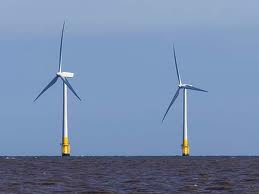
Wind energy is one of the fastest growing renewable energy sources in the world and in 2011 the global market grew by 6% with 40.5 GW new powers brought online, according to Global Wind Report. However storage of intermittent renewable energy is a critical contributing factor in renewable energy development. A study was conducted by University of California for California Energy Commission on the economic and environmental impact of for energy storage technologies and the ways to improve the energy efficiency of wind energy. When there is a strong wind there is no demand for power, and when there is a high demand for power there is no wind. This anomalous supply demand gap demands a reliable way of storing wind power during high wind velocity periods.

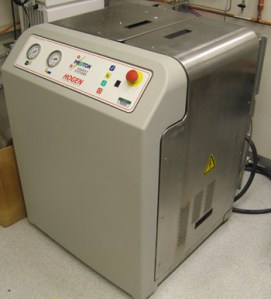
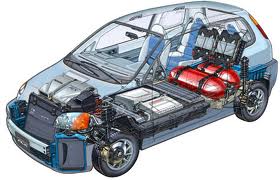
They examined for energy storage technologies namely 1.lead acid batteries, 2. Zinc Bromine flow batteries, 3.Hydrogen electrolyzer and Fuel cell storage system and 4.Hydrogen option to fuel Hydrogen cars with Hydrogen. By using NREL (national Renewable Energy laboratory) computer simulation model HOMER  for high wind penetration of 18% in California, they concluded that Hydrogen storage is the most cost-effective than other battery storage technologies and using Hydrogen to fuel Hydrogen cars is economically attractive  than converting Hydrogen into Electricity. The environmental impact of using Hydrogen is benign compared to batteries with their emissions.

“The key findings of this experiments are as follows: Energy storage systems deployed in the context of greater wind power development were not particularly well used (based on the availability of “excess” off-peak electricity from wind power), especially in the 2010 time frame (which assumed 10% wind penetration statewide), but were better utilized–up to 1,600 hours of operation per year in some cases–with the greater (20%) wind penetration levels assumed for 2020.

The levelized costs of electricity from these energy storage systems ranged from a low of $0.41 per kWh—or near the marginal cost of generation during peak demand times—to many dollars per kWh (in cases where the storage was not well utilized). This suggests that in order for these systems to be economically attractive, it may be necessary to optimize their output to coincide with peak demand periods, and to identify additional, value streams from their use (e.g., transmission and distribution system optimization, provision of power quality and grid ancillary services, etc.).

At low levels of wind penetration (1%–2%), the electrolyzer/fuel cell system was either inoperable or uneconomical (i.e., either no electricity was supplied by the energy storage system or the electricity provided carried a high cost per MWh).

In the 2010 scenarios, the flow battery system delivered the lowest cost per energy stored and delivered.  At higher levels of wind penetration, the hydrogen storage systems became more economical such that with the wind penetration levels in 2020 (18% from Southern California), the hydrogen systems delivered the least costly energy storage.

Projected decreases in capital costs and maintenance requirements along with a more durable fuel cell allowed the electrolyzer/fuel cell to gain a significant cost advantage over the battery systems in 2020.

Sizing the electrolyzer/fuel cell system to match the flow battery system’s relatively high instantaneous power output was found to increase the competitiveness of this system in low energy storage scenarios (2010 and Northern California in 2020), but in scenarios with higher levels of energy storage (Southern California in 2020), the electrolyzer/fuel cell system sized to match the flow battery output became less competitive.

The hydrogen production case was more economical than the electrolyzer/fuel cell case with the same amount of electricity consumed (i.e., hydrogen production delivered greater revenue from hydrogen sales than the electrolyzer/fuel cell avoided the cost of electricity, once the process efficiencies are considered).

Furthermore, the hydrogen production system with a higher-capacity power converter and electrolyzer (sized to match the flow battery converter) was more cost-effective than the lower-capacity system that was sized to match the output of the solid-state battery. This is due to economies of scale found to produce lower-cost hydrogen in all cases.

In general, the energy storage systems themselves are fairly benign from an environmental perspective, with the exception of emissions from the manufacture of certain components (such as nickel, lead, cadmium, and vanadium for batteries). This is particularly true outside of the U.S., where battery plant emissions are less tightly controlled and potential contamination from improper disposal of these and other materials is more likely. The overall value proposition for energy storage systems used in conjunction with intermittent renewable energy systems depends on diverse factors:

The interaction of generation and storage system characteristics and grid and energy resource conditions at a particular site The potential use of energy storage for multiple purposes in addition to improving the dependability of intermittent renewable (e.g., peak/off-peak power price arbitrage, helping to optimize the transmission and distribution infrastructure, load-leveling the grid in general, helping to mitigate power quality issues, etc.)

The degree of future progress in improving forecasting techniques and reducing prediction errors for intermittent.  Electricity market design and rules for compensating renewable energy systems for their output”. Hydrogen storage and Hydrogen cars hold the key for future renewable energy industries and Governments and industries should focus on these two key segments.

As the threat of global warming looms large, Governments and Industries are looking for innovative, alternative and renewable energy sources and energy efficiency solutions. But how many alternative energy sources are available and what are their potentials? How to cut our carbon footprint without making larger new investment? How to improve the energy efficiency of the existing systems so that we can increase energy output for the same amount of fuel input and cut the cost of energy? These are some of the fundamental questions Governments and industries are grappling with, for the past few years. We are used to generating cheap energy from coal, oil and gas at the cost of the environment for several decades. We are used to water supply free of cost or at negligible cost for several decades. Governments were able to survive year after year because they were able to supply these two fundamental requirements of the people namely, energy and water at low-cost. But this situation changed swiftly when scientists raised the alarm bells on carbon emission and global warming. Still many Governments, especially industrialized countries with large energy and water usage, are still playing ‘wait and watch’ game, because they cannot afford to increase the tariffs on power and water. Any such increase will make Governments unpopular and their re-election to the office doubtful.

The real alternative to fossil fuels is only solar energy, which is clean, reliable and abundant. All other forms of renewable sources such as wind, geothermal, ocean thermal energy and wave energy are only offshoot of solar energy. The prime source is still the sun and the source of energy is from the chain nuclear fusion reaction of Hydrogen atom. The radiation of this nuclear reaction in the sun has to travel an average distance of 93 million miles to reach the earth, yet it is enough to meet current energy need of  entire humanity by a factor of 20,000 times. But to convert sun’s light and heat energy into Electricity and other useful forms of energy, we need some rare materials which we never used in the past. They are called ‘rare earth materials’ because their available sources and supplies are rare on planet earth. But these exotic and rare earth materials are becoming indispensable in the development of renewable energy products and applications. The future growth of clean energy technologies depend on supply of such rare earth materials.

Fourteen elements and related materials were selected for a criticality assessment by US Government department of energy. Eight of these are rare earth metals, which are valued for their unique magnetic, optical and catalyst properties. The materials are used in clean energy technologies as follows. Lanthanum, cerium, praseodymium, neodymium, cobalt and lithium are used in electric vehicle batteries. Neodymium, praseodymium and dysprosium are used in magnets for electric vehicles and wind turbines. Samarium is also used in magnets. Lanthanum, cerium, europium, terbium and yttrium are used in phosphors for energy-efficient lighting. Indium, gallium and tellurium are used in solar cells. The materials were selected for study based on factors contributing to risk of supply disruption.

Though usage of such material is relatively small, it is anticipated that the growth of clean technologies will need a substantial quantity of these materials. Currently China is endowed with almost 95% of such rare materials in the world. These materials are available in the form of ores and minerals under the earth. They have to be mined, processed and extracted in a pure form so that they can be used in developing clean energy products of the future. We will discuss about such products and technologies in our future articles. The anomaly is the energy required to mine, process and extract these rare earth materials need energy and such energy to have to come only from the sun. It is once again Nature that comes to the rescue of human beings at such critical junctures.


We now generate electric city from heat, obtained by combustion of fossil fuel such as coal, oil and gas. But such combustion generates not only heat but also greenhouse gases such as Carbon dioxide and oxides of Nirogen.The only alternative to generate power without any greenhouse gas emission is to use a fuel with zero carbon. However, oxides of Nitrogen will still be an issue as long as we use air for combustion because atmospheric air has almost 79% Nitrogen and 21% oxygen. Therefore it becomes necessary to use an alternative fuel as well as an alternative power generation technology in the future to mitigate greenhouse problems.

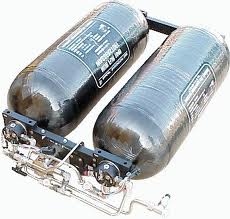
Hydrogen is an ideal fuel to mitigate greenhouse gases because combustion of Hydrogen with oxygen from air generates only water that is recyclable. Combining Hydrogen with Oxygen using Fuel cell, an electrochemical device is certainly an elegant solution to address greenhouse problems. But why Hydrogen and Fuel cell are not commonly available? Hydrogen is not available freely even though it is abundantly available in nature. It is available as a compound such as water (H2O) or Methane (CH4) and Ammonia (NH3). First we have to isolate Hydrogen from this compound as free Hydrogen and then store it under pressure. Hydrogen can easily form an explosive mixture with Oxygen and it requires careful handling. Moreover it is a very light gas and can easily escape. It has to be compressed and stored under high pressure.

Generation of pure Hydrogen from water using Electrolysis requires more electricity that it can generate. However, Hydrogen cost can be reduced using renewable energy source such as solar thermal. The solar thermal can also supply thermal energy for decomposing Ammonia into Hydrogen and Nitrogen as well as to supply endothermic heat necessary for steam reformation of natural gas into Hydrogen. On-site Hydrogen generation using solar thermal using either electricity or heat can become a commercial reality. Hydrogen generation at higher temperatures such as Ammonia decomposition or steam reformation can be directly used in Fuel cell such as Phosphoric acid Fuel cell.

Phosphoric acid fuel cell is a proven and tested commercial Fuel cell that is used for base load power generation. It is also used for CHP applications. Hydrogen generation using solar thermal and power generation using Fuel cell is already a commercial reality and also an elegant solution to mitigate greenhouse gases. Large scale deployment of Fuel cell and solar thermal will also cut the cost of installations and running cost competing with fossil fuel.Fuecell technology has a potential to become a common solution for both power generation and transportation.

While Government can encourage renewable energy by subsidizing PV solar panels and discourage fossil fuel by imposing carbon tax, they should give preference and higher tariff for power purchase from Solar thermal and Fuel cell power generators. This will encourage large-scale deployment of Fuel cell as a potential base load power source.

We  acknowledge that solar energy is a potential renewable energy source of the future. The total energy need of the world is projected in the next 40 years to be 30 TW (terra watts) and only solar energy has a potential to meet the above demand. However, harnessing sun’s energy to its fullest potential is still a long way to go. Concentrated solar power (CSP) offers a greater hope to fill this gap. The main reason is the cost  advantage of CSP compared to PV solar and energy storage technologies and their costs.

The cost of PV solar has steadily decreased in the past few years. Though the cost of solar cell has come down to $0.75 per watt, the overall cost of the PV system is still around $ 3.00 per watt. This is due to the cost of encapsulation; interconnect wiring, mounting of panels, inverters and battery bank. The overall cost of the system will not come down drastically beyond a point. This makes PV solar still more expensive compared to conventional power generation using fossil fuels. People can understand the value of renewable energy and impending dangers of global warming due to greenhouse gases, but the final cost of energy will decide the future of energy sources.

In PV solar the sun’s light energy is directly converted into Electricity, but storing such energy using batteries have certain limitations. PV solar is suitable for small-scale operations but it may not be cost-effective for large-scale base load power generation. The best option will be to harness the sun’s thermal energy and store them and use them to generate power using the conventional and established methods such as steam or gas turbines. Once we generate thermal energy of required capacity then we have number of technologies to harness them into  useful forms. As we mentioned earlier, the thermal energy can trigger a chemical reaction such as formation of Ammonia by reaction between Hydrogen and Nitrogen under pressure, which will release a large amount of thermal energy by exothermic reaction. Such heat can be used to generate steam to run a stem turbine to generate power. The resulting ammonia can be split with concentrated solar power (CSP) into Hydrogen and Nitrogen and the above process can be repeated.

The same system can also be used to split commercial Ammonia into Hydrogen and Nitrogen. The resulting Hydrogen can be separated and stored under pressure. This Hydrogen can be used to fuel Fuel cell cars such as Honda FXC or to generate small-scale power for homes and offices.

By using CSP, there is potential of cost savings as much as 70% compared to PV solar system for the same capacity power generation on a larger scale. Focusing sun’s energy using large diameter parabolic troughs and concentrators, one can generate high temperatures.  Dishes can typically vary in size and configuration from a small diameter of perhaps 1 meter to much larger structures of a dozen or more meters in diameter.  Point focus dish concentrators are mounted on tracking systems that track the sun in two axes, directly pointing at the sun, and the receiver is attached to the dish at the focal point so that as the dish moves, the receiver moves with it.  These point focus systems can generate high temperatures exceeding 800ºC and even 1,800ºC.

The temperature required to run a steam turbine does not exceed 290C and it is quite possible to store thermal energy using mixture of molten salts with high Eutectic points and use them to generate steam. Such large-scale energy storage using lead-acid batteries and power generation using PV solar may not be economical. But it will be economical and technically feasible to harness solar thermal energy using CSP for large-scale base load power generation. It is estimated that the cost of such CSP will compete with traditional power generation using coal or oil in the near future.CSP has potential to generate cost-effective clean power as well as a fuel for transportation.

Majority of current power generation technologies are based on thermodynamic principles of heat and work. Heat is generated by  chemical reactions such as combustion of coal, oil or gas with air or pure oxygen. This heat of combustion is then converted into work by a reciprocating engine or steam turbine of gas turbine. The mechanical energy is converted into electricity in power generation and as a motive force in transportation. The fundamental principles remain the same irrespective of the efficiencies and sophistication we incorporated as we progressed. The efficiency of these systems hardly exceeds 30-40 of the heat input, while the remaining 60-70 heat is wasted. We were also able to use this waste heat and improved the efficiency of the system by way of CHP (combined heat and power) up to 80-85%.But this is possible only in situations where one can use both power and heat simultaneously. In a centralized power plant such large heat simply dissipated as a waste heat through cooling towers and in the flue gas. This is a huge loss of heat because a substantial part of heat of combustion is simply vented into the atmosphere in the form of greenhouse gases. If ‘greenhouse gas’ and ‘Global warming’ were not issues of concern to the world, probably we would have continued our business as usual.

Generation of heat by combustion of hydrocarbon is one example of a chemical reaction. In many chemical reactions, heat is either released or absorbed depending upon the type of reaction, whether it is exothermic or endothermic. Sometimes these chemical reactions are reversible. It may release heat while the reaction moves forward and it may absorb heat while it moves backward in the reverse direction. By selecting such reaction one can make use of such energy transformations to our advantages. One need not release the heat and then release the product of reaction into the air like burning fossil fuels.

Ammonia is one such reaction. When Hydrogen and Nitrogen is reacted in presence of a catalyst under high temperature and pressure the reaction goes forward releasing a large amount of energy as practiced in industries using Heber’s process. The heat released by this reaction can be converted into steam and we can generate power using steam cycle. The resulting Ammonia can further be heated in presence of a catalyst by external heat due to endothermic nature of the reaction and split into Hydrogen and Nitrogen.  However, such heat can be supplied only from external sources. One University in Australia is trying use the above principle by using solar thermal energy as a source of external heat. The advantage of this system is power can be generated without burning any fossil fuel or emitting any greenhouse gas. One can use a renewable energy sources such as solar thermal and also use Ammonia as a storage medium.

Ammonia is a potential source of energy to substitute fossil fuels. However, such Ammonia is now synthesized using Hydrocarbon such as oil and gas. The source of Hydrogen is from synthesis gas resulting from steam reformation of a Hydrocarbon. Hydrogen can also be derived from water using electrolysis using renewable energy source. In both the above cases, renewable energy is the key, without which no Hydrogen can be produced without a Hydrocarbon or an external heat is supplied for splitting Ammonia.

Ammonia can also be split into Hydrogen and Nitrogen using external heat.  The resulting Hydrogen can be used to generate power using a Fuel cell or run a Fuel cell car. Nitrogen also has many industrial applications.Thereoefore ammonia is a potential chemical that can substitute fossil fuels in the new emerging renewable economy.

We live in a carbon constrained world where carbon emission is considered as the biggest challenge of the twenty-first century. We unearthed fossil fuel which Nature buried for millions of years and burnt them for our advantage to generate power and to run our cars. Scientist pointed out that the unabated emission of greenhouse will cause the globe to warm with dire consequences. However this came as an ‘inconvenient truth’ to industries and Governments around the world. The economic consequences of stopping fossil fuels weighted more than the global warming. Governments were in a precarious situation and unable to take a concrete policy decision. Popular Governments were not willing to risk their power by taking ethical decisions and opted for popular decision to keep up their growth. Then the financial crisis became an issue, which has nothing to do with greenhouse emission or global warming. Yet, the economic and industrial growth stumbled in many developed countries and unemployment skyrocketed. Governments are caught in a situation where they need to take a balanced view between an ethical decision and economic decisison.The overwhelming evidence of global warming and their consequences are slowly felt by countries around the world by natural disasters of various sizes and intensities.

Some scientist suggested that there is nothing wrong using fossil fuels; we can continue with greenhouse emission without risking the economic growth by  capturing  the carbon emission and burying  them underground. Carbon sequestration and clean coal technologies became popular and more funds were allocated to them than renewable energy development.Countires like India and China are not in a hurry to discontinue fossil fuels but continue to make massive investments on coal-fired power plants. They neither tried to capture carbon nor bury them, but continue to emit carbon claiming that it is their turn of economic growth and right to emit carbon emission. The chief of UN panel on climate change headed by an Indian has no sayin the matter.Politicians push scientists into the background when the truth is inconvenient to them.

How feasible in the carbon sequestration technology and what is the cost? Even if we can come up with a successful technology of capturing carbon and burying them underground, there will be a cost involved. This cost will invariably be passed on to the consumer which  will  eventually increase the cost of energy. Constraining carbon emission without incurring a cost can only be a dream. Capturing carbon emission is nothing new; Carbon dioxide is absorbed by solvents like MEA (Monoethanolamine) in many chemical industries. The absorbed carbon dioxide can be stripped free of solvent and the solvent can be recycled. This carbon dioxide can be treated with Ammonia to get Urea, a Fertilizer. But the source of Hydrogen can come only from renewable energy sources. That is why ‘Renewable Hydrogen ‘is the key to solve global warming problem. We can produce Urea from “captured Carbon” and ‘Renewable Hydrogen’ so that we can cut a real quantity of greenhouse emission. Carbon recycling is a sustainable solution than Carbon capturing and burying. Countries like India who depend upon import of Urea for their agriculture production should immediately make Carbon recycling into Urea production mandatory. It is a win situation for everybody in the world.

Hydrogen has been accepted as a source of clean energy for many reasons. Hydrogen can eliminate anthropic Greenhouse Gas  into the atmosphere and stop global warming. It has high energy content than any other fossil fuels we are currently using, making it an efficient fuel. The combustion product of Hydrogen is only water which is   recyclable. Many people, Governments  and institutions around the world are trying develop  cheaper methods of generating Hydrogen from various sources both renewable as well as non-renewable. The non-renewable sources are supposed to facilitate a smooth transition from fossil fuel economy to Hydrogen economy.

However, all attempts to generate Hydrogen at a cost lower than the projected cost of $ 2.50 per kg by DOE has not been successful, even though many recent technologies are promising. Meanwhile massive investments are made on Renewable Energy including wind, solar and biological all over the world. Generating Hydrogen from water using Solid Polymer Membrane Electrolyzer is a known technology using renewable energy sources. One can easily deploy such systems for commercial applications even though it is now expensive.

Many people and institutions are also claiming ‘free energy’ sources with or without generating Hydrogen. In some cases researches are claiming an abnormal production of Hydrogen using ‘Cold plasma’ or ‘Plasma electrolysis’ of water, as much as 800% more than the theoretical values. Some companies claim low energy consumption using photo- catalyst to generate Hydrogen  using direct sunlight and water. Hydrogen generation using renewable sources is a distinct possibility to cut the cost of Hydrogen in the long run. However, the world is in hurry to develop a cheap and sustainable method of Hydrogen generation without any greenhouse gas emissions.

One US based company is claiming to have invented a new Hydrogen atom which has not been reported before in the literature. According to the inventor, this new atom of Hydrogen is called ‘Hydrino’.He has presented a detailed theory called ‘Grand Unified Theory’   that predicts catalysts that allow energy to be extracted from lower energy state of Hydrogen atom. They have demonstrated the process using a proto type in the laboratory and their claims have been validated by an independent Laboratory after conducting trial runs and analyzing the results using spectrum analysis and other techniques.

The process involves a generation of Hydrogen by using electrolysis of water. The resulting Hydrogen is then reacted with a proprietary solid catalyst developed by the company. According to the company,

“Since certain proprietary catalysts cause the hydrogen atoms to transition to lower-energy states by allowing their electrons to fall to smaller radii around the nucleus with a release of energy that is intermediate between chemical and nuclear energies, the primary application is as a new primary energy source. Specifically, energy is released as the electrons of hydrogen atoms are induced by a catalyst to transition to lower-energy levels (i.e. drop to lower base orbits around each atom’s nucleus). The lower-energy atomic hydrogen product called “hydrino” reacts with another reactant supplied to the reaction cell to form a hydride ion bound to the other reactant to constitute a novel proprietary compound. Alternatively, two hydrinos react to form a very stable hydrogen-type molecule called molecular hydrino. Thus, rather than pollutants, the byproducts may have significant advanced technology applications based on their stability characteristics. For example, hydrino hydride ions having extraordinary binding energies may stabilize a cation (positively charged ion of a battery) in an extraordinarily high-oxidation state as the basis of a high-voltage battery. Further, significant applications exist for the corresponding molecular hydrino wherein the excited vibration-rotational levels could be the basis of a UV laser that could significantly advance photolithography and line-of-sight telecommunications. A plasma-producing cell based on the extraordinarily energetic Process has also been developed that may have commercial applications in chemical plasma processing and as a light source.”

The company claims that an average generating capacity of a system will be 1000kw, with installed cost at $1000/kw with fuel cost at less than $0.001/kw with zero greenhouse emission.The solid catalyst is regenerated and recycled. The cost of Hydrogen from electrolysis becomes insignificant due to generation  of large excess thermal energy, to generate power.

The above claims are too attractive to ignore and it could be a game changer in the energy industry. The output energy is more than the theoretical values calculated,  thus violating the Law of Thermodynamics. This excess energy is attributed to the presence of ‘Hydrino’. However, one has to be open to new ideas because science is ever-changing and even well-established theories and concepts are challenged as Science evolves with new discoveries and inventions.


We live in a technological world where fuel and power play a critical role in shaping our lives and building our nations. The growth of a nation is measured in terms of fuel and power usage; yet there are many challenges and uncertainties in fuel supply and power generation technologies in recent past due to environmental implications. Fossil fuels accelerated our industrial growth and the civilization . But diminishing supply of oil and gas, global warming, nuclear disasters, social upheavals in the Arabian countries, financial problems, and high cost of renewable energy have created an uncertainty in the energy supply of the future. The future cost of energy is likely to increase many folds yet nobody knows for certain what will be the costs of energy for the next decade or what will be the fuel for our cars.  Renewable energy sources like solar and wind seem to be getting popular among people but lack of concrete Government plans and financial incentives for renewable, are sending mixed signals for investors. Recently number of solar industries in Germany are facing bankruptcy due to withdrawal of Government subsidies. Wind energy in India has got a setback due to withdrawal of Government financial support. Renewable industries are at their infant stages of  growth both technologically and financially. These industries will face a natural death in the absence of Government supports and incentives.

Individuals, small businesses and industries are unable to plan their future due to above uncertinities.In a globalised world such problem have to be tackled jointly and collectively. But that too looks unlikely due to ideological, political and social differences between countries. In the absence of any clear path forward, a common man is left with no alternative but find solutions for himself. Individuals can form small groups to produce their own fuel and generate their own power. There has never been a right moment in our history for such ventures. It can be easily done by people from rural areas especially in farming communities. They can set an example and rest of the country can follow. This will also help preventing mass migration from rural areas to cities, especially in China and India. They neglect their farms and migrate to cities to work in electronic industries for a better life.

The farming communities can form  groups and generate their own ‘Biogas’ or ‘Bioethanol’  from a common facility to fuel their cars and power their homes without any Government incentives and political interefernces.Making ‘Bioethanol’ from cane sugar molasses, beet sugar, corn, tapioca or sorghum on a small or medium scale is a  straight forward method. Fermentation and distillation is a well-known technology. It is controlled by Government excise departments for revenue purpose but Government can certainly allow farms or people to make their own ‘Bioethanol’ for their cars. Farms can generate their own Biogas’ from manure, agriculture wastes,  food waste, and waste water treatment facilities and generate their own power and supply biogas for heating and cooking for their communities.

Governments should allow people to make their own choices and decisions instead of controlling everything especially when they are unable to solve a problem. Countries like India should encourage farming communities in groups to set up their own ‘Bioethanol’ and ‘Biogas’ plants and allow import of  flex-fuel cars for Ethanol blends of various proportions. Alcohol has been a a’taboo’in many countries for several years but with current uncertainties with supply of  fuel and power, Government  can certainly remove such ‘taboo’ by highlighting the value of ‘Bioethanol as a source of fuel.Goevernments  can forgo their excise revenue by allowing people to make their own fuel. Alternatively they should offer incentives and subsidies for renewable energy developments. They cannot refuse both and still hope to continue in power because people will sooner or later  throw them out of power. After all Government are elected by people to address their problems.

Synthesis of Ammonia is one of the  remarkable achievements of Chemical engineering in forties .It is a precursor for Urea, the fertilizer  that  brought about ‘Green revolution’ in agriculture industry and helped to achieve record food production all over the world. It was a milestone in modern chemistry to synthesis a molecule containing I atom of Nitrogen and 3 atoms of Hydrogen, represented by NH3 called Ammonia. The HeberBosch process for the production of Ammonia is a well established mature, commercial technology.

The process uses a Hydrocarbon source such as Naphtha or Natural gas as the feed stock to generate a synthesis gas composed of Hydrogen and Carbondioxide.The gas mixture is separated into carbon dioxide and Hydrogen using PSA (pressure swing adsorption ) technology. The resulting Hydrogen is used to combine with Nitrogen to synthesize Ammonia.

The chemical reaction can be represented by the following equation.

N2 + 3H2 ———- 2 NH3

The above reaction takes place at a pressure of 100-200 bars and temperature of 300-500C in presence of  catalysts. It is an exothermic (heat releasing) reaction and the catalyst bed is cooled and maintained at 400C to be efficient.But this process of Hydrogen generation using Hydrocarbon emits greenhouse gases. Alternatively, Hydrogen can be generated using different methods using renewable energy sources using water electrolysis. Such process may be used in the future for this application.

Nitrogen is derived from atmospheric air. The air we breathe has about 79% of Nitrogen and 21% Oxygen. But these two gases can be separated by liquefying the air by cryogenic process and distilling them into two fractions. Alternatively, they can separated using pressure swing adsorption or membrane separation process, utilizing their density differences. In either way, Nitrogen can be separated from atmospheric air. By combining the above Hydrogen and Nitrogen, it is possible to synthesis Ammonia on a commercial-scale.

The ammonia can be easily split into Hydrogen and Nitrogen by passing Ammonia through a bed of Nickel catalyst at 200-400C as and when required to generate on site Hydrogen. This Hydrogen can be used for power generation or to run our cars using PEM Fuelcell.As we have seen previously, we are now looking for various sources of Hydrogen, and Ammonia is one of the promising sources for couple of reasons. The process and technology of Ammonia production, transportation and usage is well documented and has been practiced for few decades. It does not emit  greenhouse gases.Liquified Ammonia has been widely used in air-conditioning and refrigeration systems. Ammonia can be easily metered into any system directly from the cylinder.

It is easier to use Ammonia directly into a convention internal combustion engines in place of Gasoline and this technology has already been practiced in 1880. Ammonia is pungent and any leakage can be easily identified. The advantage of using Ammonia as a fuel in cars, it does not emit any smoke  but only water vapour.It can be admixed with Gasoline or used as 100% anhydrous Ammonia. It also helps in reduction of NO2 emission, especially is diesel engines.

Ammonia has a great potential as a source of future fuel provided the sources of Hydrogen comes from water using renewable technologies or by photo electrolysis using direct sunlight.

The sun is bright and warm and your roof top solar panels and solar heaters are working hard to generate power and hot water. But the rate of power generated is too small to use immediately. The hot water is not hot enough for your shower. Your 200 watt rooftop solar panel generates only 0.12 kwhrs after 5 hours of hard work. It does not meet your expectations. You expect 200 watts solar panel to generate about 1000 watt.hrs (1kwhr) in 5 hours. It is not happening. You don’t think renewable energy can meet your electricity demand.

There is a strong wind in the island and the wind turbines are rotating faster than usual but there are hardly any people living there. Wind turbine generates good power when the wind velocity is above certain level. But the electricity generated by the wind has no immediate takers.

There is a good rain this year and the dams are overflowing and the Hydro is generating surplus power but not many people are living near the catchment area. The power has to be transmitted hundred of kilometers to the nearby town through a sub-station. When the dams are dry there is hardly any power generation and power supply is rationed to the town.

When there is a demand for power Mother Nature does not offer the resources for power generation. When Mother Nature offers the resource we do not need power. This anomalous situation is the single largest obstacle that is undermining the potential of renewable energy. Of course, the high initial cost and half-hearted approach by Governments to offer subsidies or grants for renewable energy are other factors that add to the anomaly.

The only option to get over this situation is to store the energy 24×7 when it is generated and use them when we need them. It requires good storage technology, automation and information technology that can communicate with Natures energy resources and harness them, store them and deploy them judiciously and intelligently to meet our demands.

Current battery technology cannot be a long-term sustainable solution; it is expensive, requires constant maintenance and replacement, which adds to the expensive initial investment on renewable systems. The best option is to generate Hydrogen on-site when sunshine’s or wind blows and store them under pressure that can be used as and when we need electricity using Fuel cell. It is easier to handle gas than stored electricity in batteries. Batteries are very heavy, has a limited life cycle and poses health hazard and not suitable for large-scale power storage and not sustainable in the long run.

An Electrolyzer can generate Hydrogen from water on site when a sun or wind energy available and they can work from 10% to 100% capacity depending upon the availability of renewable resources. The surplus power from Hydro can be converted into Hydrogen and stored. With so much advancement in information and communication technology, harnessing nature’s energy, storing them and deploying them in a timely manner is not major issue. Hydrogen can bridge the gap between Nature resource availability and human demand. This is what science is all about. We developed science by learning from Nature or duplicating Nature and Renewable energy is nothing different.

Is this your new site? Log in to activate admin features and dismiss this message
Log In