Skip navigation

Tag Archives: Global warming

The first few hydrogen atom electron orbitals ...

The first few hydrogen atom electron orbitals shown as cross-sections with color-coded probability density (Photo credit: Wikipedia)

Hydrogen is well-known as a potential source of clean energy of the future. But it is not available in a free form; its generation from   water using Electrolysis requires more energy than, a free Hydrogen can generate.  It requires about 5kws power to generate 1 m3 Hydrogen gas, which means, it requires about 56 Kw power to generate 1 Kg Hydrogen using water electrolysis. But 1Kg Hydrogen can generate only about 15-20 Kw Electricity using a Fuel cell. This anomalous situation makes Hydrogen generation using water electrolysis uneconomical for clean power generation. That is why most of the Hydrogen is now generated by steam reforming natural gas. Another reason for using natural gas is, to cut the cost of Hydrogen and also, to make a smooth transition from fossil economy to Hydrogen economy using existing infrastructures. Power generation and transportation using Hydrogen and Fuel cell has been commercially tested, proven and ready for deployment. However, we still have to deal with emission of greenhouse gas during steam reformation of natural gas due to the presence of carbon atom in natural gas.

Meanwhile, one American company recently announced a break-through technology that will generate free thermal energy from atomic Hydrogen using a patented process. The inventor of the process claims, when atomic Hydrogen is allowed to react with a specific Catalyst, Hydrogen atom undergoes a transition to a new atom called “Hydrino”, releasing energy while the electron in the atom shifts to a lower orbit close to proton. It was believed so far that the electron in Hydrogen atom is at its lowest level (ground level) and the closest to proton. This is the first time somebody claims that there is a lower state than the ground state  in Hydrogen atom and the amount of energy released in this transition to ‘Hydrino”,  is  in between by an uncatalyzed Hydrogen atom by combustion and nuclear energy. Unlike nuclear energy, this energy is non-radioactive. But the energy released by this process is more than 200 times than energy released by Hydrogen atom by normal combustion. The reaction does not create any pollution or radio-active materials as by-products. The process has been tested, verified and certified by scientists in few  laboratories and universities.

The above process offers great hope to generate a clean, non-polluting energy at the lowest cost. The ‘dihydrino and Hydrogen is separated and Hydrogen is recycled back to continue the process while’dihydrino’ has other potential commercial applications. The inventor has named this power as “Black power” as he hypotheses that such phenomena explain the presence of “dark matter” in Galaxies. According to quantum mechanics, the energy level of a normal Hydrogen atom is at its ground level as its minimum level (N=1), but its energy level increases at higher states such as N=2, 3, 4.When the energy level jumps from higher (excited state) to a lower level, it emits energy in the form of photon of light (Quanta).The spectrum of such emission matches the ultraviolet light of the sun. Since sub-quantum atoms are non-radioactive, the inventor claims that he is duplicating the above process of Nature by a catalytic thermal process in the state of Plasma using a specific Catalyst.

If such a large thermal energy is released by formation of ‘Hydrino’atom in the above process, then such energy can be used to generate Hydrogen by conventional water electrolysis at a fraction of the cost.

Then, Hydrogen economy can become a commercial reality and the above technology has a potential not only to generate power at fraction of a cost of the fossil fuel but also to generate a clean and non-polluting power. The inventor has also hypothesised a “grand new unified theory” of atom as the basis for the above invention. Mainstream scientists have always have been reluctant to support such “free energy” theories but, when someone can prove the process of generating an excess energy (more than 200 times than the theoretical energy released by an exothermic chemical reaction) and it is non-radioactive then mainstream scientists may be sidelined by world community. It is always possible to prove something unique without any theory   and come out later with a theoretical explanation to satisfy the scientific community. Many discoveries in the past were by mere accidents and one should have an open mind to look into any new concepts without any bias, especially if the discovery can resolve serious problems of humanity at  times  of crisis.

 

Governments and industries seek comfort from the fact that Global Warming is not directly linked with greenhouse gas emissions and there is no concrete scientific proof yet, linking these two, and think they can carry on the business as usual. Few scientists in the scientific communities also have backed such sentiments. Alternative technologies such as renewable energy technologies are expensive and cannot compete with fossil fuel based  power plants in near terms. Advanced renewable technologies need rare earth materials such as Lanthanum, cerium, praseodymium, neodymium, cobalt and lithium that are used in electric vehicle batteries; Neodymium, praseodymium and dysprosium that are used in magnets for electric vehicles and wind turbines. Lanthanum, cerium, europium, terbium and yttrium that are used in Phosphors for energy-efficient lighting; Indium, gallium and tellurium that are used in solar cells. The supply of these materials are limited or confined to few countries such as China. These new material also need more energy to mine, process and extract  using only fossil fuel generated power. Transport vehicles such as Hybrid or Electrical cars require a substantial amount of rare earth material such as Lithium for Battery production. The cost of Lithium batteries according to Centre for Transportation, Argonne National Laboratory is:

________________________________________________________

Battery type         Base line                       Optimistic              Goal

________________________________________________________

High energy          $706/kwh                   $200/kwh           >150/kwh

35kwh                  $, 24,723                      $ 8767

High-power           $, 2,486                       $ 1,095                   $300

100 10A-h cell

_________________________________________________________

The cost and maintenance of such vehicles are expensive compared to gasoline cars. The looming financial crisis, unemployment and political instability in many parts of the world have overshadowed the problem of greenhouse house and global warming. Governments in power are trying to postpone the issue of global warming as long as possible because they are unpopular among their public, who are increasingly wary of  high energy cost and their household budgets.

Industrialized countries such as US, China, India and Australia have projected their production and use of their coal, oil and gas usage in the future, which are steadily on the rise. Australia’s mining and resources industries are booming with increasing production of Coal, Coal seam methane gas, LNG, Iron ore, copper, Nickel and Gold. Increasing demand by growing economies such as India and China have propelled the production of coal and LNG and other minerals in Australia. The booming mining and shipping industries of Australia have prompted UNESCO to warn Australia about the impending danger of ‘Great Barrier reef’ being destroyed by its busy shipping activities. The Great Barrier Reef is the world’s largest coral reef ecosystem. The only living organic collective visible from space, it is considered one of the seven natural wonders of the world, and is a World Heritage listed area.

It boosts the Queensland’s image of sun, swimming and tropical islands, and around 2 million people visit the reef every year, generating more than $2 billion in direct tourism revenue in the area. The mining boom brings revenue but it also brings natural disasters and destruction of its natural wonders. The net effect will be destruction of Nature and displacement of people at the cost of mining revenue. But how long such a boom will last, and if the economies of China and India starts slowing down then, what happens to all the investments and the damage caused?

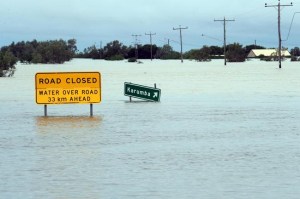
The above developments paint a grim picture on global warming. The world has witnessed natural disasters causing huge human and financial losses. The natural disasters have costed an economic loss of nearly 13 to 30 billion dollars in the past two years in Australia alone. Yet, people and Governments want a ‘concrete proof’ that man-made greenhouse gases causes global warming and triggers natural disasters. Well, we can carry on such conversation indefinitely till we reach a point of no return. “Wisdom comes from experience; but experience comes from foolishness”.

A safe and clean water supply is becoming a scarce commodity in many parts of the world. With growing   population and rapid industrialization, the demand for water has increased dramatically. This in turns pushes the demand for energy and fossil fuels resulting in further increase in global warming. According to WHO (World Health organization) specifications, a clean and safe water should be free from pathogenic organism such as bacteria and virus, and also the TDS (Total dissolved solids) levels should be below 500ppm (parts per million). Unfortunately such quality water is not readily available from surface or ground water. The water stored in catchment area for supply of drinking water to cities requires certain chemical and biological treatments before it can meet WHO specification.

In many smaller cities especially in developing countries such treated drinking water is not available. NASA’s Gravity Recovery and Climate Experiment Satellite or GRACE orbiting earth in tandem, two satellites are able to measure the water storage on ground and below across the world. The NASA data shows that most of area in Northern India will be facing a severe shortage of water in the near future because farmers are pumping ground water   at an alarming rate. The ground water is getting depleted faster than it is being replenished. The water table has gone deeper and deeper and many of the pumps they used five to ten years ago cannot pump water anymore because the water levels have gone so deep. States like Punjab, supposed to be ‘wheat bowl of India’ are facing water shortage. Farmers who have used 100 feet bore well are now digging their bore well up to 900 feet. To make the situation worse, many of coal-fired power plants are licensed to meet the increasing power demand in India. Both quantity and quality of water has a direct impact on energy demand and global warming. The rainwater which replenished the ground aquifers are unable to match the water sucked by these pumps. About 114 million people living in Rajasthan, Punjab, and Haryana including the capital city of Delhi are facing water shortage.

The likely alternative for these states is to desalinate the seawater from the west coast of India and pump them all the way to Delhi, which are thousand of kilometers from the coast. The increasing economic growth of India has increased the demand for power, often based on coal. Power industry is one of the largest users of water. Plants located on coastal are able to use seawater for their ‘once through’ cooling system and for boilers. But the plants located inland have to use only surface water like rivers. They cannot use ‘once through’ system, but use a closed circuit cooling systems where they have to store large pool of hard water.

It is a vicious cycle. Water shortage increase the demand for power and power shortage increases the demand for water. Desalination is the only alternative but it is a very energy intensive and a costly solution. Changing climate, global warming, deforestation, and water shortage are ominous signs of Nature’s fury against human greediness.

When countries like Australia set up their largest desalination facilities, the country experiences the heaviest rains in decades with flash flooding in many parts, making politicians wonder whether their water management decisions are right. Unfortunately Science cannot solve our greediness only human beings can learn lessons from Nature and take right decisions.


Environment Pollution Authority EPA of US Government regulated the gas emission standards for power plants for oxides of Nitrogen and Sulfur in the past but not for GreenHouse gas emissions into the atmosphere. However when President Obama took over power, EPA passed ‘Clean Air Act’ to regulate the emission standards of all gases including GHG for new stationary power plants. This act projected to prevent over 230,000 early deaths in US alone by 2020 due to Carbon dioxide. According to this act,

1.  Starting in January 2011, large industrial facilities that must already obtain Clean Air Act permits for non-GHGs must also include GHG requirements in these permits if these increase are newly constructed and have the potential to emit 75,000 tons per year of carbon dioxide equivalent (CO2e) or more or modify and increase GHG emissions by that amount.

2.  Starting in July 2011, in addition to facilities described above, all new facilities emitting GHGs in excess of 100,000 tons of per year CO2e and facilities making changes that would increase GHG emissions by at least 75,000 tpy CO2e, and that also exceed 100/250 tons per year of GHGs on a mass basis, will be required to obtain construction permits that address GHG emissions (regardless of whether they emit enough non-GHG pollutants to require a permit for those emissions.)

3.  Operating permits will be needed by all sources that emit at least 100,000 tons of GHG per year on a CO2e basis beginning in July 2011.

4. Sources less than 50,000 tons of GHGs per year on a CO2e basis will not be required to obtain permits for GHGs before 2016. (Sources: clean technica)

According to Stanford scientist Mark Jacobson, there is a definite link between the Carbon dioxide and increasing deaths. While the argument continues between believers of global warming and skeptics, it clear that Carbon pollution kills people without any discrimination. Any gaseous emission into the atmosphere will eventually spread across the borders of each country and becomes a global issue.

EPA in each country in the world should pass similar legislation to curb GHG emission at least to protect their people, if not to curtail global warming. What is most surprising is some scientists still want more ‘scientific data’ to accept whether GHG causes global warming or not. One need not be a rocket scientist to conclude that chemical pollution is slowly poisoning the air, water and earth. Hundreds of chemicals that we used in the past were abandoned due to their harmful effects. For example, Asbestos,DDT,Chlorine for disinfecting drinking water, coal tar dyes, Nicotine, Refrigerants like Fluorocarbon etc to name a few. We can choose to ignore the warnings of Nature and carry on the business as usual in the name of science. But we cannot ignore people claiming their legitimate rights to live and breathe a quality air to lead a normal life. It is a human right issue. It is not an issue that can be debated only by scientific community and decided.

WHO should classify ‘Quality air’ as a fundamental human right with great urgency. Governments around the world can pass ‘Clean air act’ similar to US. They may not levy carbon tax or offer new incentives to promote green energy, but regulate the indiscriminate emission of GHG into the atmosphere, which passively kills millions of people around the world. This is nothing but ‘weapons of mass destruction’ in a passive way, but on a grander scale. When ‘passive smoking’ is a serious health issue, Carbon emission too is a  serious health issue. It is the duty of industries to incorporate carbon pollution prevention measures by scientific innovations.

We live in a carbon constrained world where carbon emission is considered as the biggest challenge of the twenty-first century. We unearthed fossil fuel which Nature buried for millions of years and burnt them for our advantage to generate power and to run our cars. Scientist pointed out that the unabated emission of greenhouse will cause the globe to warm with dire consequences. However this came as an ‘inconvenient truth’ to industries and Governments around the world. The economic consequences of stopping fossil fuels weighted more than the global warming. Governments were in a precarious situation and unable to take a concrete policy decision. Popular Governments were not willing to risk their power by taking ethical decisions and opted for popular decision to keep up their growth. Then the financial crisis became an issue, which has nothing to do with greenhouse emission or global warming. Yet, the economic and industrial growth stumbled in many developed countries and unemployment skyrocketed. Governments are caught in a situation where they need to take a balanced view between an ethical decision and economic decisison.The overwhelming evidence of global warming and their consequences are slowly felt by countries around the world by natural disasters of various sizes and intensities.

Some scientist suggested that there is nothing wrong using fossil fuels; we can continue with greenhouse emission without risking the economic growth by  capturing  the carbon emission and burying  them underground. Carbon sequestration and clean coal technologies became popular and more funds were allocated to them than renewable energy development.Countires like India and China are not in a hurry to discontinue fossil fuels but continue to make massive investments on coal-fired power plants. They neither tried to capture carbon nor bury them, but continue to emit carbon claiming that it is their turn of economic growth and right to emit carbon emission. The chief of UN panel on climate change headed by an Indian has no sayin the matter.Politicians push scientists into the background when the truth is inconvenient to them.

How feasible in the carbon sequestration technology and what is the cost? Even if we can come up with a successful technology of capturing carbon and burying them underground, there will be a cost involved. This cost will invariably be passed on to the consumer which  will  eventually increase the cost of energy. Constraining carbon emission without incurring a cost can only be a dream. Capturing carbon emission is nothing new; Carbon dioxide is absorbed by solvents like MEA (Monoethanolamine) in many chemical industries. The absorbed carbon dioxide can be stripped free of solvent and the solvent can be recycled. This carbon dioxide can be treated with Ammonia to get Urea, a Fertilizer. But the source of Hydrogen can come only from renewable energy sources. That is why ‘Renewable Hydrogen ‘is the key to solve global warming problem. We can produce Urea from “captured Carbon” and ‘Renewable Hydrogen’ so that we can cut a real quantity of greenhouse emission. Carbon recycling is a sustainable solution than Carbon capturing and burying. Countries like India who depend upon import of Urea for their agriculture production should immediately make Carbon recycling into Urea production mandatory. It is a win situation for everybody in the world.

Globe is warming at an unprecedented rate since industrial revolution due to the effect of greenhouse gases in the atmosphere; according to a panel of scientists in IPCC (Intergovernmental Panel on Climate Change).Thousands of scientists from 30 countries formed IPCC under United Nation to study the problem of global warming and reported to the world. IPCC published a detailed report and it gave an apocalyptic scenario about global warming. They warned that the carbon dioxide level in the atmospheres has increased from 316ppm in 1959 (13% higher than preindustrial level) to current level of 380ppm in 2005, which is 35% above preindustrial level. This dramatic increase in the level of CO2 is due to the human activities. The major contributing gases are Carbon dioxide, Methane, Oxides of Nitrogen, CFC (Chlorofluorocarbons) and Ozone present in the atmosphere. Bulk of the emissions is from power plants and automobiles using fossil fuels. Other process industries like cement plants are also major contributors of greenhouse gases. The enhanced effect of global warming is due to the absorption of invisible infrared radiation coming from the warm surface of the earth. On an average, sun’s light reaches the earth at the rate of 343W/m2 and about 30% of this value is reflected and about 70% is absorbed. The amount of invisible infrared radiation absorbed depends on the concentration of greenhouse gases present in the atmosphere.

According to IPCC their findings on global warming are unequivocal, and if the world does not act now, then, we will be facing dire consequences in the near future. Doubling CO2 emission will increase the global temperature from 2-4.5C. But many skeptics say the IPCC report is apocryphal and they have their own theories to support their skepticism. Many climate models proposed by various international institutions projects an average temperature rise  of 3.4C above  year 2000 level if we do nothing and carry on the “business as usual”. The consequences of global warming are far-reaching. An increase of 3C rise in temperature will result in sea level rise up to 4 to 6 mts in the next few thousand years.

About 10% of the world population lives in less than 10 mts above sea level and majority of population lives within 10km of sea level. We have already witnessed few islands in pacific (example, Bougainvillea, Sulawesi) inundated with seawater. Maldives and Bangladesh are good examples.

They predict shortage of fresh water in many parts of the world and severe draught and flooding in other parts of the world. We have already witnessed these incidents in Northern Queensland in Australia and in Europe, and prolonged draught in Texas, bushfires in Australia and in Russia. Majority of Indian subcontinent is suffering from lack of drinking water. Unscrupulous exploitation of ground water for agriculture purpose has made the situation worse. Many plants, animals and species will face greater risk of extinction. An increasing acidity in seawater due to excess absorption of carbon dioxide will affect aquatic organisms such as shell, coral and shellfish. We are already witnessing bleaching of corals at Great Barrier Reef in Australia. Global warming will displace millions of people due to draught and flooding and consequently leave millions of children malnourished. Water borne diseases and infectious diseases will affect many people. Tropical diseases such as dengue and malaria will be widespread.

These consequences are real, if the world does not act on greenhouse emissions. One need not be a rocket scientist to understand that human behavior and activity has caused irreversible damage to the plant earth for several decades. We unearthed fossil fuels and converted them into plastics and dumped them in every water ways, parks and beaches. The exponential growth in population and industries has driven many animals, tropical forests into extinction. Each and every one of us who are 50 years and above would have witnessed the unfolding consequences of environmental degradation in our life time. What kind of plant earth we will be leaving behind for our future generations?

Every religion on earth has predicted the future of humanity and the last days and hours with deadly consequences for their actions. All native people whether they are Indians from Americas, Aborigines of Australia or Shamans of Indonesia or Natives of Alaska, have time and again raised their voice against indiscriminate destruction of land, water and air in the name of science and industrial growth. But no Government listened to their voice and we are here still struggling with unemployment and poverty.

Mayan civilization is a well-known civilization in ancient world and their seven prophesies are matters of great debate in the recent past. Their prophecy is ominously similar to what IPCC panel predicts except the “end of the world in Dec 2012”. I quote third, fourth and fifth prophesy out of seven Mayan prophecies here, which are relevant to global warming:

“The third prophecy states that there will be change in temperature, producing climatic, geological and social changes in magnitude without patterns and at astonishing speed. One of them will be generated by man in his lack of conscience to care for and protect natural resources of the planet and other generated by sun, which will increase its activity due to increasing vibrations.”

“The fourth prophecy says that anti-ecological conduct of man and greater activity by sun will cause melting of ice in the poles. It will allow the earth to clean itself and green itself again, producing changes in the physical composition of the continents of the planet. The Mayans left a register in the Desdre codices that for every 117 spins of Venus, the Sun suffers new alterations and huge spots or solar eruption appears”.

“The fifth prophecy says that all systems based on fear, on which the civilization based on, will suffer simultaneously with the planet and man will make a transformation to give way to new harmonic reality. The system will fail and man will face himself and in this need to recognize society and continue down the path of evolution that will bring him to understand creation. Only one common spiritual world for all humanity that will end all limits established among many ways to look at God will emerge”.

Perhaps, Jesus too expressed his displeasure with human behavior according to the Gospel of Thomas:

 Jesus said, “Perhaps people think that I have come to cast peace upon the world. They do not know that I have come to cast conflicts upon the earth: fire, sword, war.  For there will be five in a house: there’ll be three against two and two against three, father against son and son against father, and they will stand alone.”

Carbon is the backbone of an organic life on earth. Every life from the smallest microorganism to human beings is made up of carbon. A cycle  called ‘carbon cycle’ that decomposes carbon into carbon dioxide which is used to synthesis Carbohydrates by the  process known as  ‘photosynthesis’ in presence of water and sunlight, as described in the following equation:

6CO2+ 6H2O   + sunlight →  C6H12O6 + 6O2

The oxygen generated during the above process and carbohydrates sustains life of animals and microorganism on earth. These lives consume oxygen and carbohydrates and releases Carbon dioxide by respiration into the atmosphere. The released carbon dioxide breaks down carbohydrates and other organic matters and regenerates carbon dioxide for reuse by animals and other lives. Not all organic matters are decomposed and part of it is stored as carbon biomass in the roots of plants and other organic matters and buried under earth. After millions of years these organic matters turns into fossil fuels under pressure and higher temperature. Carbon is distributed on earth, in water and in atmosphere. Due to increase in population and industrial growth over several decades the carbon dioxide increased gradually in soil, water and atmosphere. Carbon dioxide is also released by natural events like volcanic eruptions.

But the level of carbon dioxide in the atmosphere increased rapidly after industrialisation, when industries unearthed buried fossil fuels and burnt. In fact we are burning carbon at a faster rate than it is regenerated. It is purely man-made and it increases the presence of carbon dioxide both in atmosphere as well as in oceans. The rapid increase of green house emission started 240 years ago when industrial revolution started. The consequences of this unabated greenhouse gases due to combustion has caused ‘global warming’ with many consequences.

As I have mentioned in my previous articles, power generation and transportation are the two major industries that emit bulk of the greenhouse emission. Both industries use age-old technologies of combustion. The world has been complacent about fossil fuels and grossly indifferent to industrial pollution for decades. Global warming is looming as the biggest threat of the twenty-first century, yet we are not acting. Politicians deny global warming and they want to carry on the business as usual, at the peril of the future generations.

Powerful countries like US, China and India are reluctant to pass a unanimous resolution to set target for carbon emission, while smaller nations remain as powerless onlookers. These powerful nations can drag the rest of the world with them to face the wrath of the Mother Nature with disastrous consequences for their inaction.

It is quite obvious that world have no choice but switch to cleaner energy sources and leave the fossil fuels buried deep under the earth. A new paradigm shift in the way we generate energy and use them is the key for the survival of mankind. We need to develop Hydrogen as an alternative fuel source and Government should encourage innovations in such technologies, while they simultaneously price carbon. In the absence of a concrete legislation and mechanism to penalize polluters, industries will continue to use fossil fuels. A simple cost benefit analysis will show that taxing on polluters and simultaneously introducing renewable technologies will benefit the world in the long run.


We know from the famous equation  of Albert Einstein , that a tiny amount of mass is a vast storehouse of energy. But even the molecular Hydrogen as a result of water decomposition, is a promising energy source of the future. However, the amount of energy we use to split water into Hydrogen and Oxygen is higher compared to the amount of energy that Hydrogen can generate using Fuel celll. But we can mitigate this problem by using Renewable   energy such as PV solar, Solar (thermal), wind energy, geothermal energy, and Ocean thermal energy conversion. The cost of renewable energy is still expensive for two reasons;

  1. We are used to cheap energy from fossil fuels for decades, and we have already recovered most of these investments.

2. A complete switch over to renewable energy technologies will require massive new investment. Unlike the investments we made on fossil fuel infrastructures over several decades, we have to invest on renewable Energy development on a massive scale, and we have to deploy them in a shorter span of time, simultaneously all over the world. Currently there is no such infrastructure in renewable energy industry in existence.

Meanwhile the unabated emission of carbon dioxide by fossil fuels is causing global warming. There are many skeptics on the science on global warming. Such skepticism does not stem from the fact that they have a concrete proof but, ‘such skepticism’ serves their vested interest. Politicians who are in power do not want any increase in the cost of energy, which becomes unpopular among people may eventually, throw them out of power. They say they want to serve people with low cost energy but, neither politicians nor the common man understands the consequences of such measures.

It will be our future generations who will face the brunt of this skepticism, by facing fuel shortage or unaffordable cost of fuel, erratic climate change, and frequent natural catastrophies.It is time for the world to act decisively and swiftly and move towards renewable energy, by massive investment and creation of new skills and jobs on a very large scale.

The companies who have massively invested in fossil power plants, and the governments who depend on the support of such companies and who want to keep the energy cost low, because of its popularity, are the major list of scientists opposing main stream scientific assessment of global warming. The hidden cost of environmental challenges and its consequences is much higher than the savings, due to cheap fossil fuels. It requires a paradigm shift and a sense of social justice, in the minds of Governments and companies. It is not all that difficult to switch over to cleaner technologies. In fact most of the technologies are already available and it requires only a ‘will, bold decision and leadership’ by Governments.

Any clean energy solution should be sustainable in the long run. Hydrogen can meet not only the sustainability but even the transition from fossil fuel to Hydrogen will be smooth. To start with all existing fossil fuel infrastructures can be modified towards Hydrogen generation, and fuel cell based Electricity generation  infrastructures. Of course this will require large investment but compared to a complete shift to renewable energy, it will require only a relatively smaller investment. For example, all fuel stations can be converted into Hydrogen stations by simply installing steam reformers, including LNG based fuel stations. All gasoline based automobiles can be either fitted with Hydrogen IC engines, or converted to fuel cells cars similar to Honda FXL models. If the Governments all over the world can agree for such conversion and a complete shift to Hydrogen economy then, it can become a reality in the next decade. We have to focus on ‘Renewable Hydrogen’, which can come from seawater, a waste source of Hydrogen using renewable energy sources, and Biohydrogen  using from waste organic matters. The future generation will not only have a cleaner and affordable fuel but, a more sustainable future!

Is this your new site? Log in to activate admin features and dismiss this message
Log In