Skip navigation

Tag Archives: environment

FrCEWT | Investor Brief
Carbon Recycling Technology (CRT)

From Energy Crisis to Energy Sovereignty

EXECUTIVE SUMMARY

The global energy system is undergoing structural disruption driven by geopolitical instability and climate constraints.
This is not a temporary crisis — it is the breakdown of an outdated energy architecture.

For over a century, energy systems have operated as open loops:
Extract → Burn → Generate → Emit → Pollute

This model is no longer viable.

Carbon Recycling Technology (CRT), developed by Clean Energy and Water Technologies (CEWT), introduces a closed-loop energy architecture where carbon is continuously recycled rather than emitted.

CRT transforms captured CO₂ into renewable methane using green hydrogen, enabling dispatchable, zero-emission power generation while maintaining energy density and infrastructure compatibility.

This represents a paradigm shift from fuel substitution to system redesign.


THE OPPORTUNITY

• Global energy markets are facing volatility due to supply disruptions and geopolitical risk
• Industrial sectors require 24/7 power, heat, and molecular fuels
• Hydrogen alone faces storage, transport, and cost limitations
• Existing infrastructure is built around hydrocarbons

CRT addresses all four simultaneously.

It enables:
• Baseload renewable power
• Industrial heat continuity
• Molecular energy storage
• Compatibility with existing gas infrastructure


CORE TECHNOLOGY

CRT integrates:
• CO₂ capture
• Renewable hydrogen production
• Methanation (CO₂ + 4H₂ → CH₄ + 2H₂O)
• Gas turbine power generation

Carbon becomes a recyclable carrier.
Hydrogen becomes the energy input.
Methane becomes the storage medium.

The result is a perpetual carbon-energy loop.


INVESTMENT CASE

1. System-Level Innovation
CRT is not a single technology — it is an integrated energy architecture addressing power, heat, and fuel simultaneously.

2. Infrastructure Advantage
Leverages existing gas pipelines, storage, and turbines — reducing transition costs.

3. Energy Sovereignty
Enables nations to produce fuel domestically from CO₂ and renewable electricity.

4. Market Alignment
Aligned with global decarbonisation policies, carbon markets, and energy security priorities.

5. Scalability
Applicable across power generation, steel, chemicals, and desalination sectors.


STRATEGIC POSITIONING

CRT sits at the intersection of:
• Renewable energy
• Carbon management
• Synthetic fuels
• Industrial decarbonisation

It bridges the gap between intermittent renewables and continuous industrial demand.


WHY NOW

• Fossil fuel volatility is rising
• Hydrogen economics remain uncertain
• Carbon pricing is tightening globally
• Grid stability challenges are increasing

The current disruption is accelerating adoption of closed-loop systems.


CONCLUSION

The energy transition is not simply about replacing fuels.

It is about redesigning the system.

CRT enables that transition by closing the carbon loop — transforming a liability into a reusable asset.

This is not incremental improvement.

This is foundational change.


CONTACT
Clean Energy and Water Technologies Pty Ltd (CEWT)
Australia

om Energy Crisis to Energy Sovereignty
From Energy Crisis to Energy Sovereignty
EXECUTIVE SUMMARY

The global energy system is undergoing structural disruption driven by geopolitical instability and climate constraints.
This is not a temporary crisis — it is the breakdown of an outdated energy architecture.

For over a century, energy systems have operated as open loops:
Extract → Burn → Generate → Emit → Pollute

This model is no longer viable.

Carbon Recycling Technology (CRT), developed by Clean Energy and Water Technologies (CEWT), introduces a closed-loop energy architecture where carbon is continuously recycled rather than emitted.

CRT transforms captured CO₂ into renewable methane using green hydrogen, enabling dispatchable, zero-emission power generation while maintaining energy density and infrastructure compatibility.

This represents a paradigm shift from fuel substitution to system redesign.


THE OPPORTUNITY

• Global energy markets are facing volatility due to supply disruptions and geopolitical risk
• Industrial sectors require 24/7 power, heat, and molecular fuels
• Hydrogen alone faces storage, transport, and cost limitations
• Existing infrastructure is built around hydrocarbons

CRT addresses all four simultaneously.

It enables:
• Baseload renewable power
• Industrial heat continuity
• Molecular energy storage
• Compatibility with existing gas infrastructure


CORE TECHNOLOGY

CRT integrates:
• CO₂ capture
• Renewable hydrogen production
• Methanation (CO₂ + 4H₂ → CH₄ + 2H₂O)
• Gas turbine power generation

Carbon becomes a recyclable carrier.
Hydrogen becomes the energy input.
Methane becomes the storage medium.

The result is a perpetual carbon-energy loop.


INVESTMENT CASE

1. System-Level Innovation
CRT is not a single technology — it is an integrated energy architecture addressing power, heat, and fuel simultaneously.

2. Infrastructure Advantage
Leverages existing gas pipelines, storage, and turbines — reducing transition costs.

3. Energy Sovereignty
Enables nations to produce fuel domestically from CO₂ and renewable electricity.

4. Market Alignment
Aligned with global decarbonisation policies, carbon markets, and energy security priorities.

5. Scalability
Applicable across power generation, steel, chemicals, and desalination sectors.


STRATEGIC POSITIONING

CRT sits at the intersection of:
• Renewable energy
• Carbon management
• Synthetic fuels
• Industrial decarbonisation

It bridges the gap between intermittent renewables and continuous industrial demand.


WHY NOW

• Fossil fuel volatility is rising
• Hydrogen economics remain uncertain
• Carbon pricing is tightening globally
• Grid stability challenges are increasing

The current disruption is accelerating adoption of closed-loop systems.


CONCLUSION

The energy transition is not simply about replacing fuels.

It is about redesigning the system.

CRT enables that transition by closing the carbon loop — transforming a liability into a reusable asset.

This is not incremental improvement.

This is foundational change.


CONTACT
Clean Energy and Water Technologies Pty Ltd (CEWT)
Australia

CEWT | Investor Brief
Carbon Recycling Technology (CRT)

From Energy Crisis to Energy Sovereignty
EXECUTIVE SUMMARY

The global energy system is undergoing structural disruption driven by geopolitical instability and climate constraints.
This is not a temporary crisis — it is the breakdown of an outdated energy architecture.

For over a century, energy systems have operated as open loops:
Extract → Burn → Generate → Emit → Pollute

This model is no longer viable.

Carbon Recycling Technology (CRT), developed by Clean Energy and Water Technologies (CEWT), introduces a closed-loop energy architecture where carbon is continuously recycled rather than emitted.

CRT transforms captured CO₂ into renewable methane using green hydrogen, enabling dispatchable, zero-emission power generation while maintaining energy density and infrastructure compatibility.

This represents a paradigm shift from fuel substitution to system redesign.


THE OPPORTUNITY

• Global energy markets are facing volatility due to supply disruptions and geopolitical risk
• Industrial sectors require 24/7 power, heat, and molecular fuels
• Hydrogen alone faces storage, transport, and cost limitations
• Existing infrastructure is built around hydrocarbons

CRT addresses all four simultaneously.

It enables:
• Baseload renewable power
• Industrial heat continuity
• Molecular energy storage
• Compatibility with existing gas infrastructure


CORE TECHNOLOGY

CRT integrates:
• CO₂ capture
• Renewable hydrogen production
• Methanation (CO₂ + 4H₂ → CH₄ + 2H₂O)
• Gas turbine power generation

Carbon becomes a recyclable carrier.
Hydrogen becomes the energy input.
Methane becomes the storage medium.

The result is a perpetual carbon-energy loop.


INVESTMENT CASE

1. System-Level Innovation
CRT is not a single technology — it is an integrated energy architecture addressing power, heat, and fuel simultaneously.

2. Infrastructure Advantage
Leverages existing gas pipelines, storage, and turbines — reducing transition costs.

3. Energy Sovereignty
Enables nations to produce fuel domestically from CO₂ and renewable electricity.

4. Market Alignment
Aligned with global decarbonisation policies, carbon markets, and energy security priorities.

5. Scalability
Applicable across power generation, steel, chemicals, and desalination sectors.


STRATEGIC POSITIONING

CRT sits at the intersection of:
• Renewable energy
• Carbon management
• Synthetic fuels
• Industrial decarbonisation

It bridges the gap between intermittent renewables and continuous industrial demand.


WHY NOW

• Fossil fuel volatility is rising
• Hydrogen economics remain uncertain
• Carbon pricing is tightening globally
• Grid stability challenges are increasing

The current disruption is accelerating the adoption of closed-loop systems.


CONCLUSION

The energy transition is not simply about replacing fuels.

It is about redesigning the system.

CRT enables that transition by closing the carbon loop — transforming a liability into a reusable asset.

This is not an incremental improvement.

This is foundational change.


CONTACT
Clean Energy and Water Technologies Pty Ltd (CEWT)
Australia

This is not an oil crisis.

It’s something deeper — and far more structural.

It’s an energy system failure.


For decades, energy systems were built on a simple assumption:

Demand is predictable. Supply is controllable.

That world no longer exists.


Today, three forces are colliding:

AI is turning electricity into continuous demand

🌬️ Renewables are inherently intermittent

🔋 Storage is still short-duration

Individually, each works.

Together, they create instability.


We are now facing a mismatch that the system was never designed for:

  • Demand is becoming time-dependent and continuous
  • Supply is becoming variable and weather-driven

And we are trying to bridge that gap with incremental fixes.

More renewables.

More batteries.

More transmission.


But here’s the uncomfortable truth:

You cannot solve a structural problem with incremental solutions.


This is why the conversation around energy is starting to shift — quietly, but fundamentally.

From technology → to system architecture


At Clean Energy and Water Technologies (CEWT), we’ve been working on this problem from a different angle.

Not just how to generate clean energy.

But how to reshape energy so it behaves like the system needs it to.


Because the real challenge is not producing energy.

It is aligning energy with time.


This is where Carbon Recycling Technology (CRT) comes in.

  • Renewable electricity is converted into hydrogen
  • Hydrogen combines with captured CO₂
  • The result is renewable methane (RNG) — a storable, dispatchable energy carrier

And when used, the CO₂ is captured and recycled again.


Carbon is no longer a liability.

It becomes a carrier.


This changes the equation:

Instead of forcing demand to follow supply,

Supply is reshaped to follow demand.


And that is the missing layer in today’s energy transition.


We are not just transitioning energy.

We are redesigning the system that carries it.


AI, industry, and global electrification are accelerating this reality.

The question is no longer whether change is needed.

It is whether we continue to optimise the old system —

or build the one that actually works.


There is no shortcut.

Closing the carbon loop is the only real path to defossilisation.


#EnergyTransition #AI #EnergySystems #Hydrogen #Decarbonisation #CRT #CEWT

This is not an oil crisis.

It’s something deeper — and far more structural.

It’s an energy system failure.


For decades, energy systems were built on a simple assumption:

Demand is predictable. Supply is controllable.

That world no longer exists.


Today, three forces are colliding:

AI is turning electricity into continuous demand

🌬️ Renewables are inherently intermittent

🔋 Storage is still short-duration

Individually, each works.

Together, they create instability.


We are now facing a mismatch that the system was never designed for:

  • Demand is becoming time-dependent and continuous
  • Supply is becoming variable and weather-driven

And we are trying to bridge that gap with incremental fixes.

More renewables.

More batteries.

More transmission.


But here’s the uncomfortable truth:

You cannot solve a structural problem with incremental solutions.


This is why the conversation around energy is starting to shift — quietly, but fundamentally.

From technology → to system architecture


At Clean Energy and Water Technologies (CEWT), we’ve been working on this problem from a different angle.

Not just how to generate clean energy.

But how to reshape energy so it behaves like the system needs it to.


Because the real challenge is not producing energy.

It is aligning energy with time.


This is where Carbon Recycling Technology (CRT) comes in.

  • Renewable electricity is converted into hydrogen
  • Hydrogen combines with captured CO₂
  • The result is renewable methane (RNG) — a storable, dispatchable energy carrier

And when used, the CO₂ is captured and recycled again.


Carbon is no longer a liability.

It becomes a carrier.


This changes the equation:

Instead of forcing demand to follow supply,

Supply is reshaped to follow demand.


And that is the missing layer in today’s energy transition.


We are not just transitioning energy.

We are redesigning the system that carries it.


AI, industry, and global electrification are accelerating this reality.

The question is no longer whether change is needed.

It is whether we continue to optimise the old system —

or build the one that actually works.


There is no shortcut.

Closing the carbon loop is the only real path to defossilisation.


#EnergyTransition #AI #EnergySystems #Hydrogen #Decarbonisation #CRT #CEWT

Clean Energy and Water Technologies Pty Ltd (CEWT)

ABN 61 691 320 028 | ACN 691 320 028

Technology Note

Why Carbon Recycling Technology (CRT) Is Structurally Superior for Green Iron Production

Date: March 2026

Prepared for: Government agencies, investors, industrial partners


Overview

Carbon Recycling Technology (CRT) enables zero-emission iron production by combining hydrogen-rich syngas reduction with a closed carbon loop.

Unlike hydrogen-only pathways that require large new infrastructure and massive electrolysis capacity, CRT preserves the proven gas-based reduction chemistry used in Direct Reduced Iron (DRI) systems while eliminating net carbon emissions.

This approach allows the transition to green iron production using existing industrial infrastructure with significantly lower energy and hydrogen requirements.


1. Uses Proven Gas-Based Iron Reduction Chemistry

CRT reduces iron ore using hydrogen-rich syngas (CO + H₂) generated through steam reforming.

This is the same fundamental chemistry used in natural-gas-based DRI processes such as those deployed globally by Midrex.

Advantages

  • Proven shaft-furnace technology
  • Established reduction kinetics
  • Mature industrial operating experience
  • Reduced technical risk

CRT therefore builds on existing metallurgical practice rather than introducing an entirely new process.


2. Achieves Zero Emissions Through Carbon Recycling

In conventional natural-gas DRI:

Natural Gas → Reduction → CO₂ released to atmosphere

In CRT:

Natural Gas / RNG → Reduction → CO₂ captured → recycled → Renewable Natural Gas (RNG)

The carbon atom, therefore, circulates continuously within the system, acting as a recyclable carrier rather than being emitted.

This closed molecular loop allows CRT to achieve net-zero emissions without eliminating carbon from the process chemistry.


3. Dramatically Lower Hydrogen Requirement

Hydrogen-only ironmaking requires hydrogen to supply both:

  • the reducing gas, and
  • the energy source for the process

This results in very large electrolysis capacity requirements.

CRT instead uses hydrogen-rich syngas, with only a small renewable hydrogen trim required to maintain the carbon recycling loop.

Benefits

  • significantly smaller electrolysers
  • lower renewable electricity demand
  • reduced hydrogen storage requirements
  • improved economic feasibility

4. Compatible With Existing Industrial Infrastructure

Hydrogen-only steelmaking requires major changes to industrial systems, including:

  • new hydrogen production infrastructure
  • new fuel supply networks
  • modified furnaces and process systems

CRT maintains compatibility with existing infrastructure, including:

  • gas reforming systems
  • DRI shaft furnaces
  • gas handling and distribution networks
  • high-temperature industrial heat systems

This allows decarbonisation to proceed faster and at lower capital cost.


Structural Advantage of CRT

Traditional decarbonisation approaches attempt to remove carbon from industrial energy systems.

CRT instead recycles carbon as a molecular energy carrier, while renewable hydrogen provides the incremental energy required to maintain the loop.

This architecture preserves the thermodynamic advantages of carbon-based fuels while eliminating net emissions.


Conclusion

Carbon Recycling Technology provides a practical pathway for green iron production by combining:

  • proven gas-based reduction chemistry
  • closed-loop carbon recycling
  • minimal hydrogen requirements
  • compatibility with existing infrastructure

This system architecture enables heavy industry to transition toward zero-emission production while maintaining operational reliability and economic viability.

Carbon Recycling Technology

Recently I filed a preliminary patent application on ‘decarbonisation’.
It is a holistic process that uses only seawater and sun to generate a base load power with zero emission using the principle of ‘circular economy’. Somebody asked me to explain this technology in a lay man’s language. It is similar to an example what I explained as follows:
Let me explain in a lay mans’s language. Imagine you fill your car with 50 lit  petrol and go on a trip. The petrol is a Hydrocarbon (chemical term).Suppose I fit a small equipment on the exhaust pipe of your car which will collect the exhaust gases in a liquid form and collect it. When you finish your trip you can remove that equipment which collected your exhaust in a liquid form and hand over to a small processing unit on the road side. The processing unit will convert that exhaust  liquid into Petrol once agin. You can fill your car with this new petrol and also fit your car with new exhaust collector and return back to your destination. It means there is a zero emission from your car. You need not convert your car into electric or do any modification at all. You don’t have to fill your car with new petrol. It is called CRT (carbon recycling technology). It means you don’t need any petrol at all except for the initial filling. Even that can be eliminated by extracting Carbon from sea water and synthesising a Carbon negative Petrol. No pollution at all because of zero emissions. It simply uses the same Carbon atom again and again by substituting the ‘fossil hydrogen’ with’ renewable hydrogen’ with absolutely no emissions. It fulfils all the requirement of a ‘circular economy’ and a Carbon -free atmosphere. What is unique about this technology is it derives Carbon from seawater (where CO2 has already been absorbed from industrial emissions) and converting into Carbon negative synthetic fuel (unlike Carbon neutral synthetic fuels which are made from CO2 emissions that encourages continuous usage of fossil fuels) with cleaner properties. An Oxy combustion will make it a unique fuel of the future. Our current focus is to generate a base load power(24 x7) without any energy storage at all. It is the only technology in the world that generates a base load power (24 x 7) and synthetic fuels such as aviation fuel, marine fuel, petrol, diesel and CNG using only Sun/wind and Seawater.

Generating electricity using fossil fuel is a well-established technology, that has been practiced over several decades all over the world, despite its low efficiency. But this technology inherited certain disadvantages even before it was commercialized such as post combustion emissions, large amount of waste heat, and water intensity. Millions of people died of Carbon pollution over decades. Large scale usage of water both inland and on shore power stations created shortage of drinking water in many parts of the world resulting in desalination technologies creating its own environmental issues. Large scale mining of coal and unsustainable exploitation of oil and gas both on shore and off shore caused enormous environmental pollution. However, such emissions were completely ignored while the world celebrated the discovery of electro-magnetism, steam engine and petrochemicals. Millions of people were employed, and industries grew worldwide. Energy became synonymous with security of a nation. Population grew exponentially. However, we have reached a point in the history of mankind and all great discoveries once acclaimed as human achievements have started a new painful chapter of warming globe and changing climate for new generations to deal with. It is a great challenge of our time, but new generation can take this challenge and convert them into opportunities. The past lessons can show them a new clean and sustainable pathway while dealing with ever increasing population growth.

The challenge for the new generation is to curtail and eliminate Carbon pollution completely while meeting the energy demand in a time bound manner because we are running out of time. Currently renewable energy generation is too low to meet these challenges within the time frame to avert disastrous consequences scientists predict. Renewable Hydrogen is a potential substitute for fossil fuel to eliminate Carbon pollution but that will not solve our current problem soon because renewable energy generation is too small and too slow while our energy demand is huge. Battery technology is only a storage technology and without a base load power generation all other forms of technologies will not meet our current challenges. I am not discounting the potential of renewable energy and its critical role in the future energy mix but that alone will not solve the current crisis. Hydrogen is a weak and unstable atom and it requires a backbone such as Carbon. That is why Hydrogen do not exist in a free state in Nature, but it exists in the form of water or natural gas. Therefore, it is only logical to convert renewable hydrogen into renewable natural gas so that it can be used as a fuel as we have been using for decades. It does not require to create a special type of infrastructure such as required for Hydrogen or any storage technologies.

Our focus should be to achieve Zero Carbon emission in the shortest time scale possible while generating a base load power of 24 x7 using a renewable energy source. It looks like a daunting task but, it is not too big a challenge to overcome. In fact, the technologies are already available, and we are almost there to achieve the above, but governments should understand the challenge and its gravity and extend all the support it requires. Government around the world should implement the following with great urgency to achieve the above objectives.

1.Tax Carbon with immediate effect and minimum tax should be $500/ Mt of CO2 emitted. It should be centrally monitored by government agencies with appropriate technology implementations.

  1. Encourage Oxy combustion technologies for coal, oil and gas-based power plants with incentives to eliminate emissions pollution and reduce the cost of Carbon capture.
  2. Encourage large scale deployment of super critical Carbon dioxide power generation technologies with liberal grants and low interest loans for research and development of super critical CO2 technologies using Brayton cycle using fossil fuels with Zero Carbon emission.

4.Encourage large scale deployment of SNG plants using CO2 and renewable Hydrogen.

By using the above steps all fossil fuel-based power plants existing and operating can be converted and continue to generate base load power 24 x7 with Zero Carbon Emission within a time frame. Simultaneously it will generate large scale renewable hydrogen and renewable synthetic natural gas which can generate base load power with Zero Carbon emission. Such Zero emission power plants can then power all electric and fuel cell cars and eliminate Carbon pollution completely from our roads. The above implementation will create millions of jobs worldwide!

The greatest advantage of these technologies is to recycle Carbon indefinitely while generating power using renewable natural gas with Zero Carbon emission and fresh fossil fuel usage will be gradually eliminated from our planet earth.


“Over two-thirds of today’s proven reserves of fossil fuels need to still be in the ground in 2050 in order to prevent catastrophic levels of climate change” – a warning by scientists.

There is a great deal of debate on climate change due to man-made Carbon emissions and how to control it without any further escalation. The first obvious option will be to completely stop the usage of fossil fuel with immediate effect. But it is practically not feasible unless there is an alternative Non-Carbon fuel readily available to substitute fossil fuels. The second option will be to capture carbon emission and bury them under ground by CCS (Carbon capture and sequestration) method. But this concept is still not proven commercially and there are still many uncertainties with this technology, the cost involved and environmental implications etc.The third option will be not to use fresh fossil fuel  for combustion or capture and bury the Carbon emissions but convert the  Carbon emissions into a synthetic hydrocarbon fuel such as synthetic natural gas (SNG) and recycle them. By this way the level of existing Carbon emission can be maintained at current levels without any further escalation. At least the Carbon emission levels can be reduced substantially and maintained at lower levels to mitigate climate changes. It is technically feasible to implement the third option but it has to be implemented with great urgency.

One way of converting Carbon emission is to capture and purify them using conventional methods and then react with Hydrogen to produce synthetic natural gas (SNG)

CO2 + 4 H2 ———> CH4 + 2 H2O

The same process will be used by NASA to eliminate carbon built-up in the flights by crew members during their long voyage into the space and also to survive in places like Mars where the atmosphere is predominantly carbon dioxide. But we need Hydrogen  which is renewable so that the above process can be sustained in the future .Currently the cost of Hydrogen production using renewal energy sources are expensive due to high initial investment and the large energy consumption.

We have now developed a new process to generate syngas using simple coal, which is predominantly Hydrogen to be used as a Carbon sink to convert Carbon emissions into synthetic natural gas (SNG). The same Hydrogen rich syngas can be directly used to generate power using gas turbine in a simple or combined cycle mode. The Carbon emission from the gas turbine can be converted into SNG (synthetic natural gas) using surplus Hydrogen-rich  syngas. The SNG thus produced can be distributed for CHP (combined heat and power) applications so that the Carbon emission can be controlled or distributed. By implementing the above process one should be able to maintain Carbon at specific level in the atmosphere. Existing coal-fired power plants can retrofit this technology so that they will be able to cut their Carbon emissions substantially; they can also produce SNG as a by-product using their Carbon emissions and achieve zero Carbon emission at their site while generating revenue by sale of SNG.

Coal is the cheapest and widely used fossil fuel for power generation all over the world. Therefore it will be a win situation for everyone to use coal and also to cut Carbon emissions that can address the problems of climate change. Meanwhile research is going on to generate renewable Hydrogen cheaply directly from water using various technologies. But we believe we are still far away from achieving this goal and we require immediate solution to address our climate change problems.

Recently BASF made a press release : http://www.basf.com/group/press release/P-13-351‎ claiming a break-through technology to generate Hydrogen from natural gas without any CO2 emissions.

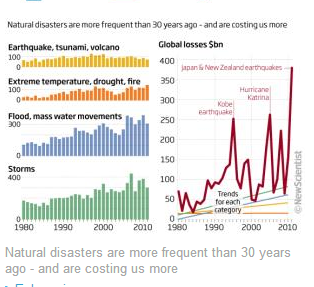
The climate is changing with increasing global warming caused by man-made Carbon emission. The economic impact of global warming can no longer be ignored by Governments around the world because it is impacting their budget bottom lines. Weather is becoming unpredictable. Even if Meteorological department predicts a disaster 24 hrs in advance, there is nothing Governments can do to prevent human and economic losses within a short span of time but evacuate people to safety leaving behind all their properties. Governments are forced to allocate funds for disaster management every year caused by severe draughts, unprecedented snow falls, and coastal erosion by rising sea levels, flash flooding, inundation and power black outs. We often hear people saying,” we were completely taken by surprise by this event and we have never seen anything like this in the last 50 years” after every naturals disasters explaining the nature and scale of disasters. Nature is forcing Governments to allocate more funds for disaster managements and such allocations have reached unprecedented levels. The cost of natural disasters around the world in 2011 was estimated at $ 400 billion and in 2012 it was estimated at $160 billion. The only way to fund these disasters is to tax Carbon pollution which causes global warming. Countries should take long-term decisions that will save their current and future generations to come.  They should understand how Carbon is emitted and what the best way to curb such emissions is. It is a global issue and its requires a collective solution.  There is no use of pricing Carbon when economic recession can jeopardize the pricing mechanism? Global warming is a moral and social issue and not just an economic issue.

Developed countries have emitted bulk of the Carbon since industrial revolution while developing countries such as India and China were emitting less carbon in spite of their vast population due to their lowest per capita consumption. But that trend has now changed with rapid industrialization and economic growth of India and China and other developing economies. Australia is still a leading emitter of Carbon in the world in spite of their low population because of their high energy consumption, availability of cheap and high quality Coal and increasing mining, industrial and agricultural activities. That is why Australia is one of the first few countries who introduced Carbon tax while rest of the countries is still debating about it. Now it is clear that Carbon emission is directly proportional to industrial, economic and population growth of a country and it can be easily quantified based on the growth rate of each country. It is time countries agree to cut their Carbon emissions to sustainable levels with a realistic Carbon pricing mechanism and sign a world-wide treaty through UN.

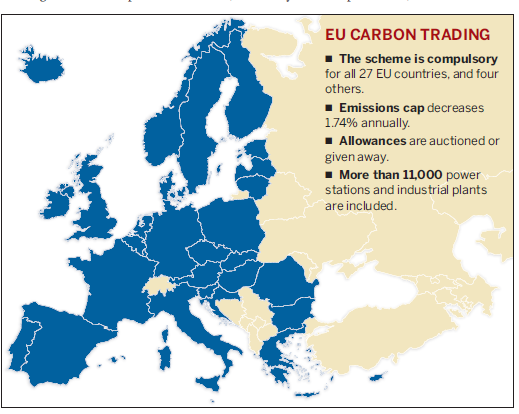
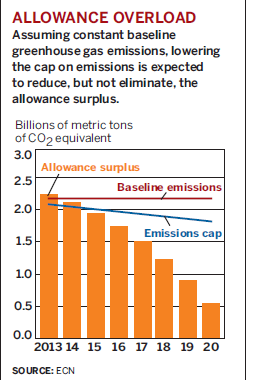
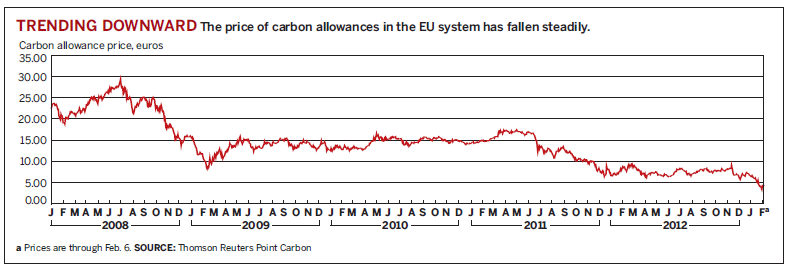
“THE EUROPEAN UNION carbon emissions trading scheme—the biggest in the world and the heart of Europe’s climate- change program—is in dire straits. The scheme’s carbon price has collapsed. The primary reason: The economic recession has suppressed manufacturing, thereby reducing emissions and creating a huge over- supply of carbon emissions allowances. Carbon trading is a market approach to reducing greenhouse gas emissions in which each facility involved is given an emissions cap for the year, and each year that cap is reduced. A firm must record and report its facilities’ emissions and must obtain allowances for its total emissions. An allowance permits a facility to emit 1 metric ton of carbon dioxide or its carbon equal; some allowances are given for free by the government, others can be bought at auction or from other firms. If a facility exceeds its cap, the company operating it has options: It can cut emissions, buy allowances from other companies, or get allowance offsets by reducing emissions at another pollution source. The cost of an allowance is referred to as the car-bon price and is driven by market conditions such as supply and demand. If the low-carbon price continues, the region’s ability to meet long-term reduction targets for greenhouse gas emissions will be severely hampered because the trading scheme will fail to provide money for clean-tech programs and incentive for manfacturers to adopt cleaner technologies. The trading scheme is a key component of the EU’s climate-change strategy because about 40% of all greenhouse gases emit-ted in the region fall under EU’s control. The mandatory scheme applies to 11,000 industrial installations, including power plants and major chemical facilities, across all 27 member states, as well as in Croatia, Iceland, Liechtenstein, and Norway. The aviation sector has been included in the scheme, but its active participation has been deferred to allow for an international agreement on aviation emissions, which is expected to be concluded in the fall. The goal of the European Commission, the EU’s administrative body and the architect of the emissions trading scheme, is to reduce all greenhouse gas emissions by 20% from 1990 levels by 2020. To contribute toward this goal, the trading scheme has targeted a 21% cut in the emissions of participating sectors by 2020 from a 2005 baseline. In recent weeks, however, the EU carbon price dropped to a new low of $5.20 for each metric ton allowance of CO2, down from a high of $23 in 2011. This is despite an annual reduction of the EU emissions cap of 1.74% through 2020 and the introduction on Jan. 1 of a new phase of the scheme requiring companies to purchase allowances. AT ITS CURRENT carbon price, the EU emission scheme’s role in encouraging chemical firms to ditch fossil fuels and adopt greener technologies “is meaningless,” says André Veneman, director of sustainability at AkzoNobel. Many of the industry’s investments in low-carbon technologies that are marginally financially viable also will likely be delayed, he says. Without a strong carbon price, the underlying push to clean-tech in the EU will come only from the price of oil, Veneman adds. Veneman and other experts say that a carbon price of between $68 and $135 is required if industry as a whole is to be forced to shift onto a new low-carbon footing. Yvo de Boer, special global adviser for climate change and sustainability for KPMG—an audit, tax, and advisory firm—and form EUROPEAN SCHEME IS IN FREE FALL Record-low CARBON PRICE threatens to derail transition away from fossil fuels and ability to meet climate-change targets.” Source: EUROPEAN SCHEME IS IN FREE FALL Record-low CARBON PRICE threatens to derail transition away from fossil fuels and ability to meet climate-change targets ALEX SCOTT, C&EN LONDO

The burden of Carbon tax should be borne by both power generators as well as consumers. Even if the Carbon tax is imposed on emitters it will eventually be passed on to consumers. Either way the cost of energy will increase steeply or there is no way to avoid such escalation if we want to keep up our power consumption levels or our current life style. In other words people will have to pay penalty for polluting the air either by generating or consuming power that causes Carbon pollution. All developed countries that have polluted the atmosphere with Carbon emission should be taxed retrospectively from the time of industrial revolution so that emerging countries need not bear the full cost of global warming. Such a fund should be used for developing renewable and clean energy technologies or to purchase Carbon allowances. Current mechanism of Carbon pricing does not penalize countries who caused the global warming in the first place for hundreds of years but penalizes only countries who now accelerate the rate of Carbon emission. Such an approach is a gross injustice on the emerging economies and not at all pragmatic. Most of the developed countries are currently facing economic recession resulting in plummeted Carbon price. This will only encourage existing Carbon emitters to emit Carbon cheaply and penalize Renewable energy and clean energy technologies with higher tariffs and drive them to extinction. In spite of Carbon level in the atmosphere exceeding 400 ppm according to the latest report, the world is helpless to cut the Carbon emission anytime sooner making our planet vulnerable to catastrophic natural disasters. Countries that are reluctant to pay Carbon tax will pay for Natural disasters which may be many times costlier than Carbon tax. Countries like US, European Union, Japan, Australia the largest power consumers and countries like Saudi Arabia, Russia, Venezuela, Iran, Iraq, Libya the largest oil producers should bear the cost of Carbon pollution that caused the globe to warm sine industrial revolution. Such a fund should be used in developing innovative Renewable energy and clean energy technologies of the future. More than anything else the rich and powerful countries should declare global warming as a moral issue of the twenty-first century and take some bold and hard economic decisions to save the planet earth..Allowance overloadCarbon pricing downward trendcost of Natural disatersEU carbon trading


Seawater desalination is a technology that provides drinking water for millions of people around the world. With increasing industrialization and water usage and lack of recycling or reuse, the demand for fresh water is increasing at the fastest rate. Industries such as power plants use bulk of water for cooling purpose and chemical industries use water for their processing. Agriculture is also a major user of water and   countries like India exploit ground water for this purpose. To supplement fresh water, Governments and industries in many parts of the world are now turning to desalinated seawater as a potential source of fresh water. However, desalination of seawater to generate fresh water is an expensive option, due to its large energy usage. However, due to frequent failure of monsoon rains and uncertainties and changing weather pattern due to global warming, seawater desalination is becoming a potential source of fresh water, despite its cost and environmental issues.

Seawater desalination technology has not undergone any major changes during the past three decades. Reverse osmosis is currently the most sought after technology for desalination due to increasing efficiencies of the membranes and energy-saving devices. In spite of all these improvements the biggest problem with desalination technologies is still the rate of recovery of fresh water. The best recovery in SWRO plants is about 50% of the input water. Higher recoveries create other problems such as scaling, higher energy requirements and O&M issues and many suppliers would like to restrict the recoveries to 35%, especially when they have to guarantee the life of membranes and the plant.

Seawater is nothing but fresh water with large quantities of dissolved salts. The concentration of total dissolved salts in seawater is about 35,000mgs/lit. Chemical industries such as Caustic soda and Soda ash plants use salt as the basic raw material. Salt is the backbone of chemical industries and number of downstream chemicals are manufactured from salt. Seawater is the major source of salt and most of these chemical industries make their own salt using solar evaporation of seawater using traditional methods with salt pans. Large area of land is required for this purpose and solar evaporation is a slow process and it takes months together to convert seawater into salt. It is also labor intensive under harsh conditions.

The author of this article has developed an innovative technology to generate fresh water as well as salt brine suitable for Caustic soda and Soda ash production. By using this novel process, one is able to recover almost 70% fresh water against only 40% fresh water recovered using conventional SWRO process, and also recover about 7- 9% saturated brine simultaneously. Chemical industries currently producing salt using solar evaporation are unable to meet their demand or expand their production due to lack of salt. The price of salt is steadily increasing due to supply demand gap and also due to uncertainties in weather pattern due to global warming. This result in increased cost of production and many small and medium producers of these chemicals are unable to compete with large industries. Moreover, countries like Australia who have vast arid land can produce large quantities of salt   with mechanized process  competitively; Australia is currently exporting salt to countries like Japan, while countries like India and China are unable to compete in the international market with their age-old salt pans using  manual labor. In solar evaporation the water is simply evaporated.

Currently these chemical industries use the solar salt which has a number of impurities, and it requires an elaborate purification process. Moreover the salt can be used as a raw material only in the form of saturated brine without any impurities. Any impurity is detrimental to the Electrolytic process where the salt brine is converted into Caustic soda and Soda ash. Chemical industries use deionized water to dissolve solar salt to make saturated brine and then purify them using number of chemicals before it can be used as a raw material for the production of Caustic soda or Soda ash. The cost of such purified brine is many times costlier than the raw salt. This in turn increase the cost of chemicals produced.

In this new process, seawater is pumped into the system where it is separated into 70% fresh water meeting WHO specifications for drinking purpose, and 7-10% saturated pure brine suitable for production of caustic soda and Soda ash. These chemical industries also use large quantities of process water for various purposes and they can use the above 70% water in their process. Only 15-20% of unutilized seawater is discharged back into the sea in this process, compared to 65% toxic discharge from convention desalination plants. This new technology is efficient and environmentally friendly and generates value added brine as a by-product. It is a win situation for the industries and the environment. The technology has been recently patented and is available for licensing on a non-exclusive or exclusive basis. The advantage of this technology is any Caustic soda or Soda ash plant located near the seashore can produce their salt brine directly from seawater without stock piling solar salt for months together or transporting over a long distance or importing from overseas.

Government and industries can join together to set up such plants where Governments can buy water for distribution and industries can use salt brine as raw material for their chemical production. Setting up a desalination plants only for supplying drinking water to the public is not a smart way to cut the cost of drinking water. For example, the Victorian Government in Australia has set up a large desalination plant to supply drinking water. This plant was set up by a foreign company on BOOT (build, own and operate basis) and water is sold to the Government on ‘take or pay’ basis. Currently the water storage level at catchment area is nearly 80% of its capacity and the Government is unlikely to use desalinated water for some years to come. However, the Government is legally bound by a contract to buy water or pay the contracted value, even if Government does not need water. Such contracts can be avoided in the future by Governments by joining with industries who require salt brine 24×7  throughout the year, thus mitigating the risk involved by  expensive legal contracts.


Is this your new site? Log in to activate admin features and dismiss this message
Log In