Skip navigation

Tag Archives: Electricity generation

The first few hydrogen atom electron orbitals ...

The first few hydrogen atom electron orbitals shown as cross-sections with color-coded probability density (Photo credit: Wikipedia)

Hydrogen is well-known as a potential source of clean energy of the future. But it is not available in a free form; its generation from   water using Electrolysis requires more energy than, a free Hydrogen can generate.  It requires about 5kws power to generate 1 m3 Hydrogen gas, which means, it requires about 56 Kw power to generate 1 Kg Hydrogen using water electrolysis. But 1Kg Hydrogen can generate only about 15-20 Kw Electricity using a Fuel cell. This anomalous situation makes Hydrogen generation using water electrolysis uneconomical for clean power generation. That is why most of the Hydrogen is now generated by steam reforming natural gas. Another reason for using natural gas is, to cut the cost of Hydrogen and also, to make a smooth transition from fossil economy to Hydrogen economy using existing infrastructures. Power generation and transportation using Hydrogen and Fuel cell has been commercially tested, proven and ready for deployment. However, we still have to deal with emission of greenhouse gas during steam reformation of natural gas due to the presence of carbon atom in natural gas.

Meanwhile, one American company recently announced a break-through technology that will generate free thermal energy from atomic Hydrogen using a patented process. The inventor of the process claims, when atomic Hydrogen is allowed to react with a specific Catalyst, Hydrogen atom undergoes a transition to a new atom called “Hydrino”, releasing energy while the electron in the atom shifts to a lower orbit close to proton. It was believed so far that the electron in Hydrogen atom is at its lowest level (ground level) and the closest to proton. This is the first time somebody claims that there is a lower state than the ground state  in Hydrogen atom and the amount of energy released in this transition to ‘Hydrino”,  is  in between by an uncatalyzed Hydrogen atom by combustion and nuclear energy. Unlike nuclear energy, this energy is non-radioactive. But the energy released by this process is more than 200 times than energy released by Hydrogen atom by normal combustion. The reaction does not create any pollution or radio-active materials as by-products. The process has been tested, verified and certified by scientists in few  laboratories and universities.

The above process offers great hope to generate a clean, non-polluting energy at the lowest cost. The ‘dihydrino and Hydrogen is separated and Hydrogen is recycled back to continue the process while’dihydrino’ has other potential commercial applications. The inventor has named this power as “Black power” as he hypotheses that such phenomena explain the presence of “dark matter” in Galaxies. According to quantum mechanics, the energy level of a normal Hydrogen atom is at its ground level as its minimum level (N=1), but its energy level increases at higher states such as N=2, 3, 4.When the energy level jumps from higher (excited state) to a lower level, it emits energy in the form of photon of light (Quanta).The spectrum of such emission matches the ultraviolet light of the sun. Since sub-quantum atoms are non-radioactive, the inventor claims that he is duplicating the above process of Nature by a catalytic thermal process in the state of Plasma using a specific Catalyst.

If such a large thermal energy is released by formation of ‘Hydrino’atom in the above process, then such energy can be used to generate Hydrogen by conventional water electrolysis at a fraction of the cost.

Then, Hydrogen economy can become a commercial reality and the above technology has a potential not only to generate power at fraction of a cost of the fossil fuel but also to generate a clean and non-polluting power. The inventor has also hypothesised a “grand new unified theory” of atom as the basis for the above invention. Mainstream scientists have always have been reluctant to support such “free energy” theories but, when someone can prove the process of generating an excess energy (more than 200 times than the theoretical energy released by an exothermic chemical reaction) and it is non-radioactive then mainstream scientists may be sidelined by world community. It is always possible to prove something unique without any theory   and come out later with a theoretical explanation to satisfy the scientific community. Many discoveries in the past were by mere accidents and one should have an open mind to look into any new concepts without any bias, especially if the discovery can resolve serious problems of humanity at  times  of crisis.
 

Coal is the single largest fuel used for power generation all over the world, due to its abundant availability and established infrastructure and technology. However, greenhouse gas emission poses a significant challenge in continuing the usage of coal as prime fuel. Currently, Natural gas is favored as fuel for power generation and number of LNG (liquefied natural gas) plants have been set up in many parts of the world. Coal seam methane gas is another potential source that competes with natural gas. Basically, Methane is the major constituent of such gases in the form of Hydrogen  and they are suitable for both combustion as well as for gasification for power generation. Countries who are endowed with large deposits of coal such as Australia, South Africa, Indonesia have advantages in clean coal technologies and in reducing their greenhouse gas emissions. There is an opportunity for coal-fired power plants to continue their operations, if they can solve the greenhouse gas emission and other pollution problems associated with coal. Number of companies are now re-evaluating clean coal technologies such as IGCC and carbon capture and reuse.

As we have seen in previous articles, Hydrogen is the key in developing clean coal technology of the future. That is why, gasification technology such as IGCC (Integrated Gasification and Combined Cycle) is gaining importance over combustion technologies because that is the only way we can introduce a Hydrogen molecule in the combustion by way of ‘Syngas’. By introducing Hydrogen, we not only can improve the thermal efficiency but also use the heat of combustion to the most by combined cycle with reduced GHG emission. It also facilitates the usage of existing and known power generation technologies such as, steam turbine and gas turbine, as well as, new technologies such as Fuel cell and Hydrogen turbines.

Coal in the form of pumpable liquid (CWS –coal water slurry) is another key milestone in developing a clean coal technology. Countries like China and Indonesia have been using coal water slurry for power generation successfully. Finely powdered coal is mixed with water in the ratio of 60:40 along with dispersant such as Lignosulfonate as additives to make a finely dispersed, viscous liquid that resembles heavy petroleum oil, ready for combustion. It is easier to handle pumpable oil than a solid coal.

A novel products called ‘colloidal coal water’ (CCW) is a finely dispersed colloidal coal in water with additives such as surfactants and dispersants with specific formulating agents leading to certain rheological properties is a key development in clean coal technology. The coal water slurry now used does not have long-term stability and storage properties like colloidal coal water fuel. The work is under development and it is expected that such finely dispersed colloidal coal water mix resembling a liquid hydrocarbon may be named as ‘liquid coal’ for all practical purposes will become a low-cost fuel in the future power generation.

This ‘colloidal coal liquid’ can be easily gasified or used as liquid fuel for combustion equipment such as boilers and also serve as precursor for a number of chemical product synthesis as downstream products. The emitted Carbon dioxide can be captured cryogenically and separated in a pure form for potential application such as ‘Natural Refrigerant’ and to synthesize number of chemical products. Clean coal can become a commercial reality provided we re-evaluate the coal preparation, gasification methods and to contain emitted carbon into a useful product of commerce.

Ammonia is a well-known industrial chemical that is manufactured worldwide as a precursor for the production of Urea. The chemistry and technology of Ammonia synthesis is well-known and well established. It was a land mark achievement to fix atmospheric Nitrogen into the soil in the form of Urea as a fertilizer. It has 17.6% Hydrogen and 82.4% Nitrogen making it an ideal fuel for combustion when compared to Gasoline in terms of greenhouse gas emission because Ammonia no carbon. Handling free Hydrogen has always been a concern due to its explosive nature and lightness. Transportation of Hydrogen in the form of Ammonia is relatively cheaper and safer. A non-regulated Ammonia nursing tank at 265 psi pressure holds 3025kg Ammonia, containing 534kg Hydrogen, because a 5900 gallon Hydrogen tube trailer at 3200 psi pressure, contain only 350kgs of Hydrogen. Low pressure Ammonia tank with less than 25% volume contain more than 53% Hydrogen than a high pressure tube trailer. Ammonia has a lower volumetric energy density compared to other fuels.However, after subtracting energy required to elicit hydrogen from each fuel, hydrogen emerges with highest energy density compared to other fuels, and it is the only fuel which is carbon free. These qualities make Ammonia, a potential  substitute for Gasoline.

Ammonia need not be used as direct combustible fuel in internal combustion engines but it can be used as Hydrogen carrier safely and economically. The Hydrogen resulting from the decomposition of Ammonia can be used as fuel in a Fuel cell car as well as in a combustion engine. It can also be used to generate small on site power using a Fuel cell or IC engine. For example, 534kg Hydrogen can generate Electricity up to 10 MW and up to 6Mw thermal energy using a Fuel cell.

Currently ammonia is manufactured using fossil fuel source such as natural gas or naphtha to generate Hydrogen in the form of Syngas.But this can be effectively substituted with renewable source of Hydrogen such as Electrolysis of water using renewable solar thermal power or wind energy. Alternatively a biogas can be steam reformed to generate Hydrogen similar to natural gas. The generated Hydrogen can be compressed and stored.

Nitrogen forms 79% of atmospheric air and it can be obtained by air liquefaction and separation by distillation or by simple membrane separation method to separate air into Nitrogen and Oxygen. The resulting Nitrogen can be compressed and stored for Ammonia sysnthsis.Production of Ammonia using Bosch Haber process is well-known. Ammonia can be transported in pipelines, in tankers by road, rail or ship to various destinations.

Ammonia can be readily be used as fuel using a spark ignited combustion engine with little changes because Ammonia is classified as non-combustible fuel. Alternatively, it can be decomposed in a catalytic bed reactor and separated into Hydrogen and Nitrogen using PSA (pressure swing adsorption) system. The resulting Hydrogen can be stored to run a Fuel cell car like Honda FCX. Ammonia, as a Hydrogen carrier can substitute gasoline as an alternative fuel for transportation and power generation. All necessary technologies and systems are commercially available to make it a commercial reality.


We  acknowledge that solar energy is a potential renewable energy source of the future. The total energy need of the world is projected in the next 40 years to be 30 TW (terra watts) and only solar energy has a potential to meet the above demand. However, harnessing sun’s energy to its fullest potential is still a long way to go. Concentrated solar power (CSP) offers a greater hope to fill this gap. The main reason is the cost  advantage of CSP compared to PV solar and energy storage technologies and their costs.

The cost of PV solar has steadily decreased in the past few years. Though the cost of solar cell has come down to $0.75 per watt, the overall cost of the PV system is still around $ 3.00 per watt. This is due to the cost of encapsulation; interconnect wiring, mounting of panels, inverters and battery bank. The overall cost of the system will not come down drastically beyond a point. This makes PV solar still more expensive compared to conventional power generation using fossil fuels. People can understand the value of renewable energy and impending dangers of global warming due to greenhouse gases, but the final cost of energy will decide the future of energy sources.

In PV solar the sun’s light energy is directly converted into Electricity, but storing such energy using batteries have certain limitations. PV solar is suitable for small-scale operations but it may not be cost-effective for large-scale base load power generation. The best option will be to harness the sun’s thermal energy and store them and use them to generate power using the conventional and established methods such as steam or gas turbines. Once we generate thermal energy of required capacity then we have number of technologies to harness them into  useful forms. As we mentioned earlier, the thermal energy can trigger a chemical reaction such as formation of Ammonia by reaction between Hydrogen and Nitrogen under pressure, which will release a large amount of thermal energy by exothermic reaction. Such heat can be used to generate steam to run a stem turbine to generate power. The resulting ammonia can be split with concentrated solar power (CSP) into Hydrogen and Nitrogen and the above process can be repeated.

The same system can also be used to split commercial Ammonia into Hydrogen and Nitrogen. The resulting Hydrogen can be separated and stored under pressure. This Hydrogen can be used to fuel Fuel cell cars such as Honda FXC or to generate small-scale power for homes and offices.

By using CSP, there is potential of cost savings as much as 70% compared to PV solar system for the same capacity power generation on a larger scale. Focusing sun’s energy using large diameter parabolic troughs and concentrators, one can generate high temperatures.  Dishes can typically vary in size and configuration from a small diameter of perhaps 1 meter to much larger structures of a dozen or more meters in diameter.  Point focus dish concentrators are mounted on tracking systems that track the sun in two axes, directly pointing at the sun, and the receiver is attached to the dish at the focal point so that as the dish moves, the receiver moves with it.  These point focus systems can generate high temperatures exceeding 800ºC and even 1,800ºC.

The temperature required to run a steam turbine does not exceed 290C and it is quite possible to store thermal energy using mixture of molten salts with high Eutectic points and use them to generate steam. Such large-scale energy storage using lead-acid batteries and power generation using PV solar may not be economical. But it will be economical and technically feasible to harness solar thermal energy using CSP for large-scale base load power generation. It is estimated that the cost of such CSP will compete with traditional power generation using coal or oil in the near future.CSP has potential to generate cost-effective clean power as well as a fuel for transportation.

Majority of current power generation technologies are based on thermodynamic principles of heat and work. Heat is generated by  chemical reactions such as combustion of coal, oil or gas with air or pure oxygen. This heat of combustion is then converted into work by a reciprocating engine or steam turbine of gas turbine. The mechanical energy is converted into electricity in power generation and as a motive force in transportation. The fundamental principles remain the same irrespective of the efficiencies and sophistication we incorporated as we progressed. The efficiency of these systems hardly exceeds 30-40 of the heat input, while the remaining 60-70 heat is wasted. We were also able to use this waste heat and improved the efficiency of the system by way of CHP (combined heat and power) up to 80-85%.But this is possible only in situations where one can use both power and heat simultaneously. In a centralized power plant such large heat simply dissipated as a waste heat through cooling towers and in the flue gas. This is a huge loss of heat because a substantial part of heat of combustion is simply vented into the atmosphere in the form of greenhouse gases. If ‘greenhouse gas’ and ‘Global warming’ were not issues of concern to the world, probably we would have continued our business as usual.

Generation of heat by combustion of hydrocarbon is one example of a chemical reaction. In many chemical reactions, heat is either released or absorbed depending upon the type of reaction, whether it is exothermic or endothermic. Sometimes these chemical reactions are reversible. It may release heat while the reaction moves forward and it may absorb heat while it moves backward in the reverse direction. By selecting such reaction one can make use of such energy transformations to our advantages. One need not release the heat and then release the product of reaction into the air like burning fossil fuels.

Ammonia is one such reaction. When Hydrogen and Nitrogen is reacted in presence of a catalyst under high temperature and pressure the reaction goes forward releasing a large amount of energy as practiced in industries using Heber’s process. The heat released by this reaction can be converted into steam and we can generate power using steam cycle. The resulting Ammonia can further be heated in presence of a catalyst by external heat due to endothermic nature of the reaction and split into Hydrogen and Nitrogen.  However, such heat can be supplied only from external sources. One University in Australia is trying use the above principle by using solar thermal energy as a source of external heat. The advantage of this system is power can be generated without burning any fossil fuel or emitting any greenhouse gas. One can use a renewable energy sources such as solar thermal and also use Ammonia as a storage medium.

Ammonia is a potential source of energy to substitute fossil fuels. However, such Ammonia is now synthesized using Hydrocarbon such as oil and gas. The source of Hydrogen is from synthesis gas resulting from steam reformation of a Hydrocarbon. Hydrogen can also be derived from water using electrolysis using renewable energy source. In both the above cases, renewable energy is the key, without which no Hydrogen can be produced without a Hydrocarbon or an external heat is supplied for splitting Ammonia.

Ammonia can also be split into Hydrogen and Nitrogen using external heat.  The resulting Hydrogen can be used to generate power using a Fuel cell or run a Fuel cell car. Nitrogen also has many industrial applications.Thereoefore ammonia is a potential chemical that can substitute fossil fuels in the new emerging renewable economy.

World is busy developing alternative to Fossil fuel to cut anthropic Greenhouse gas  to avoid global warming. In fact all forms of alternative energy sources except nuclear energy are ‘solar energy’ from the sun, in one form or another. Sun has supplied energy from the time earth was born. It has conducted   ‘photosynthesis’ by supplying light energy and converting atmospheric carbon dioxide and water into glucose for plants, animals and human beings. The excess carbon from the ‘Carbon cycle’ has become fossil fuels under the earth over a time. The fossil fuel is the result of sun’s energy or solar energy. We unearthed fossil fuels and burnt them to extract energy to run our power plants or run our cars. In fact fossil fuel is also a form of  ‘Biofuel’ and technically there is no difference between them except fossil fuel formation takes millions of years.Fossil fuel is nothing but a source of Hydrogen with carbon backbone.

All forms of alternative energy sources we are currently trying to develop such as PV solar, solar concentrators, solar thermal, geothermal energy, wind energy and bioenergy etc, originate from solar energy. The word alternative energy is a misnomer because all these energy are fundamentally solar energy in one form or another.

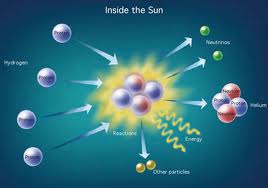
Solar energy is a radiation of Nuclear fusion  of Hydrogen taking place in the sun. Two Isotopes of Hydrogen called Deuterium (with one proton and one neutron) combine to form a Helium 3 atom and Neutron with release of large energy. Deuterium is non-radioactive and can be extracted from seawater. But this process could not be duplicated commercially for Electricity generation. It is the safest and cleanest form of energy.

In other words, all forms of energy including solar energy come from Hydrogen. That is why Hydrogen has become a potential fuel source in the future. However, developing a commercial technology for the production and usage of hydrogen at a rate cheaper than fossil fuels with zero greenhouse emission has been elusive so far. Generation of Hydrogen from water by Photo electrolysis using a direct sunlight using a Photo catalyst is a promising technology. But duplicating Nature to generate large amount of energy using tiny amount of Hydrogen atom seems to be a distance dream. Nature knows the best. We human beings can use small energy generation technologies such as solar and wind to meet our small energy needs. “There is enough to meets everybody’s need but not everybody’s greed”,Gandhi said.

Exponential growth of population and industries has forced us to look for large power generation and fuel usage at the cost of serious environmental degradation and future generations. Only smarter and cleaner technologies will help sustain the future. Politicians and policy makers  should understand various technologies and their implications than advocating short-sighted and popular energy policies.

We live in a technological world where fuel and power play a critical role in shaping our lives and building our nations. The growth of a nation is measured in terms of fuel and power usage; yet there are many challenges and uncertainties in fuel supply and power generation technologies in recent past due to environmental implications. Fossil fuels accelerated our industrial growth and the civilization . But diminishing supply of oil and gas, global warming, nuclear disasters, social upheavals in the Arabian countries, financial problems, and high cost of renewable energy have created an uncertainty in the energy supply of the future. The future cost of energy is likely to increase many folds yet nobody knows for certain what will be the costs of energy for the next decade or what will be the fuel for our cars.  Renewable energy sources like solar and wind seem to be getting popular among people but lack of concrete Government plans and financial incentives for renewable, are sending mixed signals for investors. Recently number of solar industries in Germany are facing bankruptcy due to withdrawal of Government subsidies. Wind energy in India has got a setback due to withdrawal of Government financial support. Renewable industries are at their infant stages of  growth both technologically and financially. These industries will face a natural death in the absence of Government supports and incentives.

Individuals, small businesses and industries are unable to plan their future due to above uncertinities.In a globalised world such problem have to be tackled jointly and collectively. But that too looks unlikely due to ideological, political and social differences between countries. In the absence of any clear path forward, a common man is left with no alternative but find solutions for himself. Individuals can form small groups to produce their own fuel and generate their own power. There has never been a right moment in our history for such ventures. It can be easily done by people from rural areas especially in farming communities. They can set an example and rest of the country can follow. This will also help preventing mass migration from rural areas to cities, especially in China and India. They neglect their farms and migrate to cities to work in electronic industries for a better life.

The farming communities can form  groups and generate their own ‘Biogas’ or ‘Bioethanol’  from a common facility to fuel their cars and power their homes without any Government incentives and political interefernces.Making ‘Bioethanol’ from cane sugar molasses, beet sugar, corn, tapioca or sorghum on a small or medium scale is a  straight forward method. Fermentation and distillation is a well-known technology. It is controlled by Government excise departments for revenue purpose but Government can certainly allow farms or people to make their own ‘Bioethanol’ for their cars. Farms can generate their own Biogas’ from manure, agriculture wastes,  food waste, and waste water treatment facilities and generate their own power and supply biogas for heating and cooking for their communities.

Governments should allow people to make their own choices and decisions instead of controlling everything especially when they are unable to solve a problem. Countries like India should encourage farming communities in groups to set up their own ‘Bioethanol’ and ‘Biogas’ plants and allow import of  flex-fuel cars for Ethanol blends of various proportions. Alcohol has been a a’taboo’in many countries for several years but with current uncertainties with supply of  fuel and power, Government  can certainly remove such ‘taboo’ by highlighting the value of ‘Bioethanol as a source of fuel.Goevernments  can forgo their excise revenue by allowing people to make their own fuel. Alternatively they should offer incentives and subsidies for renewable energy developments. They cannot refuse both and still hope to continue in power because people will sooner or later  throw them out of power. After all Government are elected by people to address their problems.

 Photovoltaic (PV) power is becoming popular worldwide as an alternative to grid power for various reasons. It gives an energy independence and freedom, it helps reduce greenhouse gas emission and combat global warming, it helps people taking advantage of various Government subsidies and incentives, and it also generates some revenue by selling surplus power back to the grid. At the end of the period you own the system and claim depreciation and some tax benefits. All these compelling factors may motivate people to opt for PV solar power. But you should also do some math and make a cost benefit analysis to choose a right system for you.

When there is a good sunshine day after day and throughout the year, PV solar is good proposition and can be really rewarding. Unfortunately that is not the reality. There may be many cloudy, rainy and fogging days in a year and your PV solar capacity may be overestimated or underestimated. You know the real data only after one or two years of life experience. It is a long-term financial and ethical decision one has to make and the decision should be absolutely right. You can make such a decision by carefully examining all the factors, not just by looking at the first cost but looking at operating and maintenance costs and all the costs and benefits associated with them.

Storage batteries are inevitable in PV solar systems, especially for grid independent systems. Even with grid connected PV solar system the design and installation of a correct battery bank, controllers and rectifier are important issues. In this article we will discuss about grid independent system because many developing countries in Africa and Asia do not have 24×7 uninterrupted grid power supplies. Many people living in islands have to manage their own power by using diesel generators. This is the stark reality.

Let us assume that you design a system assuming a daily average power consumption of 25,000 kwhrs/day, which is suitable even for a medium size family in US. We made an optimum design study between two  systems; first  containing PV solar,battery,controller for grid independent power supply; and second  system with PV solar, battery, water Electrolyzer,Hydrogen storage  and PEM Fuel cell and a rectifier for grid independent system,  based on the same power consumption of 25,000kwhrs/day. You can clearly see the difference between the two systems by the following data.This financial analysis was made assuming there is no Government subsidies and incentives.

Grid independent system with battery storage for 25,000kwhrs/day power:

Total NPV (net present value):$ 342,926

Levelized cost of energy: $2.94/kwhrs

Operating cost/yr: $22,764

Grid independent system with Hydrogen storage for 25,000kwhrs/day power:

Total NPV (net present value): $ 169,325

Levelized cost of energy : $ 1.452/kwhrs

Operating cost/yr: 8,330

The number of batteries required in the first case is 17 numbers. In the second case, number of batteries required is only 2.Obviously,  the levelized cost of power using  PV Hydrogen (storage) is less than 50% of the power generated using PV battery (storage) for the same energy consumption of 25,000kwhrs/day. The operating cost is only one-third for PV Hydrogen system compared to battery system. Batteries are indispensable in any renewable energy system but reducing their  numbers to the lowest level is important, when the life of the system varies from 25 years to 40 years. The numbers and the cost of batteries and their maintenance cost  will make all the difference.


Photovoltaic  solar industry has started expanding in recent years in US and Europe and the rest of the world also started following. Still solar energy is considered expensive in many parts of the world for various reasons. In most of these countries, energy is predominantly managed by Governments with age-old technologies and transmission systems. Coal is still the major fuel used for power generation and distribution and their infrastructures are old and inefficient. Transmission losses, power pilfering, subsidized power tariffs and even free power for farmers, are some of the issues that compounds the problems. Energy and water are considered more of social issues rather than business issues. For example in India, frequent power failures are common  and sometimes people do not have power even up to 8 to 12 hours  a day, especially  in country sides. Standby diesel generators are integral part of an industry or business. The heavily subsidized power supply by Government from coal-fired power plants is  underrated. The average power tariff in India is still less than $0.07/kwhr.But the reality is they will be using diesel generated power for equal several hours in a day  and the cost of diesel power varies from  $0.24 up to $0.36/kwhrs, almost in par with solar power. The average power cost will amount to $0.18 to $0.20 /kwhrs.

Any slight increase  in oil price will have a dramatic effect in energy cost in India and their balance of payment situation.Governments are in a precarious situation and they have to make a balancing act between subsidizing the energy cost and winning the elections. They often subsidize the power resulting in heavy revenue losses for Government run electricity boards. Most of the electricity boards in India are in red. People are used to low power tariffs for several decades and any increase in the tariff will make the Government unpopular. Greenhouse effect and global warming are secondary issues. With an average economic growth rate at 7% year after year, their energy requirements have gone up substantially. They may need several hundred thousands of MW power in the next 5 to 10 years. They have opened up energy sector to private only in recent years.

Renewable energy industry is relatively new and there are very few large commercial-scale solar and wind power plants in India. Majority of residents and businesses cannot afford high cost of PV solar installation. Even if they install, there is no ‘power- in tariff’ mechanism by Government where consumers can export surplus energy at a higher tariff to the grid. With current power failures lasting 8-12 hours/day, such mechanisms will have no value. The situation is the same in many Asian countries.

The solar panel costs are high due to lack of local production of silicon wafers, batteries and inverters and most of them are still imported. State electricity boards do not have funds to buy power at higher tariffs. Import duties and taxes on imported components are still high making renewable industries uncompetitive against cheap coal-fired,  subsidized power cost of $0.07/kwhrs .India requires massive investment on renewable energy industries. But most of the power projects which are under planning stage or under implementation are based on either coal or oil or LNG.There is no sign that India will soon become a major player in renewable energy.

In PV solar projects, the cost of storage batteries are higher than the solar panel during the life cycle of 25 years. If the life of a battery is 8 years then you will need 3 batteries during the life cycle. For example, if you use 100 watts solar panel with a life span of 20 years, the initial cost of solar panel may be $300 which will generate an average power of 140 watt.hrs /day. If you plan to store 5 days energy using a battery, you will enquire 5x 140= 700 watt.hrs battery, costing about $175.If you have to replace batteries 3 times during the life span of 20 years then the cost of battery is 3×175= $525.You have to add operation and maintenance cost, in addition to it. Therefore, your investment on batteries is 1.75 times more than solar panels. This cost will substantially add up to your energy cost.

In most of the Asian countries where they cannot export surplus power to the grid, they have to rely only on batteries. This high cost of stored energy is not remunerative because they cannot export this surplus to the grid at a higher tariff. This situation is not likely to change at least in the short-term.

Renewable energy industry has slowly but steadily started expanding in many parts of the world in spite of  high cost of investment and high  cost of energy. Countries like US, Germany and China are now investing on large-scale solar and wind technologies, opening new avenues for investments and employment opportunities. Many of these technologies will undergo several changes over a time before it can completely substitute fossil fuels. How long this process will take will depend upon number of factors; but the single biggest driving force will be ‘the issue global warming and its consequences” and also on uncertainties over oil reserves in the world. Nothing dramatic will happen in the near future except that the concept of alternative source of energy will expand rapidly. It is also an opportunity to discover new forms of fuels, power generation and distribution methods.

The concept of solar energy is now well-recognized as an alternative source of energy because, it is abundantly available, it is clean, generates no pollution and it is silent. The major raw materials such as Silica  and Gallium Arsenide  are  also available but some of the rare earth materials used in PV industries and batteries  are available only in certain parts of the world.  China is endowed with many such rare earth resources. For example, Lithium has limited resources and now bulk of it is produced from natural brines similar to the one at Atacama deserts in South America. It is also available in the form of minerals and ores which many countries are now trying to exploit commercially.

The storage of energy from  solar and wind is  done using deep cycle batteries, most of which are Lead-acid batteries. Bulk of the used Lead acid batteries are recycled but the demand for such batteries keeps increasing. As I mentioned in my previous articles, the sheer weight of these batteries, space required to install them, capacity use, capacity constraints, regular need for  maintenance and life cycle are some of the issues that are critical for renewable industries. In deep cycle batteries, discharging stored energy below certain levels dramatically reduces the life span. Hot climate conditions have certain impacts on maintaining such batteries.Life of a battery is critical because when you calculate the cost of energy over the life cycle of 25 years,the several replacements of battaries and their cost will have a dramatic effect on the cost of energy.

Batteries are indispensable tools in energy industries but their usage can be minimized  to a great extent by using Hydrogen as a storage medium. Let us analyze a simple example of a PV solar system for power generation. We made a computer simulation on three  different  scenario for a PV solar system for a small residence with power consumption at 15,500kwhrs/day. First simulation was based on PV solar, direct grid connect, without  storage batteries but connected directly to the grid, assuming the grid power tariff  is at $0.10/kwhrs and sale to grid tariff at $ 0.30/kwhrs.The second simulation was based on grid independent system  using battery  storage for 8 hrs autonomy. The third simulation is also grid independent, but solar power is connected to an Electrolyzer to generate Hydrogen and store it in a tank. We used a small capacity battery, less than twenty percent  of the capacity used in the earlier case and a Hydrogen storage with Fuel cell along with an inverter. The stored Hydrogen was used to generate power to meet the requirement of the residence, instead of supplying power directly from the battery. The cost of energy using direct grid connect was the lowest $$0.33/kwhrs, while Grid independent with battery storage ,the cost of power was $1,20/kwhrs.In third  scenario with Hydrogen and Fuel cell the cost of power was $ 1.90/kwhrs, but there was surplus Hydrogen in the storage tank. With Hydrogen as a storage medium, the cost of power is high due to initial investment but it is maintenance free and ideal for remote locations.

The Hydrogen and Fuel cell solution though expensive, has a several advantages. The power generated by PV solar is stored in the form of Hydrogen instead of storing in batteries. A single battery is used to keep up a steady current to Electrolyzer but bulk of the energy is stored in the form of Hydrogen. Another advantage with this system is that stored Hydrogen can also be used as a fuel for residential heating as well as to fuel your car.