Fossil fuels such as coal, oil and gas have helped transformed our power and transport industries for decades till now. But recent geo-political situations, depleting fossil sources and Carbon pollution, global warming and climate change have raised serious questions about the future of fossil fuels. However, countries who have massively invested in fossil fuel infrastructure and who have been heavily relying on supply of fossil fuels have started realizing an inescapable truth that they are running out of time to find an alternative to fossil fuels. Recently Hydrogen has been suggested as an alternative source of energy and many countries are gearing up to promote Hydrogen on a massive scale. The countries who have been traditionally using fossil fuels are now focussing on generating hydrogen from fossil fuels as an easier option. But the basic problem with this approach is they still depend on fossil fuels which means they still contribute to Carbon emission and climate change. They can conveniently dispute or deny the fact that man-made Carbon emissions cause global warming in order to score political points among the ‘gullible public’. Democracy is all about numbers and as along as these number stack up the political parties will take advantage of the system and try to push their agenda. But all these efforts are only short term and they still cannot escape the truth that man made Carbon emission is transforming our world for the worst and the future looks bleak.
However, there is a silver lining in the dark clouds of global warming and climate change in the form of renewable Hydrogen. It is now possible to generate Hydrogen using renewable energy sources such as Hydro, solar, wind, geothermal and OTEC (ocean thermal energy conversion systems) that can used not only decarbonize our present economy and also has the capacity to transform future energy and to a cleaner and more sustainable environment. It is now possible to achieve a circular economy in energy sector which means the CO2 emission from existing and operating power plants using fossil fuels can be reversed using renewable Hydrogen so that one can continue to generate power but with Zero Carbon emission. This is a huge transformation.
However, the usage of fossil fuels will continue in other industries such as petrochemicals, polymers and additives, and other synthetic materials. But one can take advantage of using renewable Hydrogen even in such industries using Green Chemistry initiatives so that they can become more sustainable.
However Renewable Hydrogen is a currently very expensive though it is generated from abundantly available natural resources such as sun, wind and water because PV solar panels are made from high purity silicon material again made from simple sand. We cannot afford to take natural resources lightly because they are precious commodities. With limited usage of renewable energy at current levels the cost of PV solar panels is still very expensive but likely to come down as we deploy more and more solar panels in the future. We should also be careful how we use renewable Hydrogen. Our first and foremost usage of renewable Hydrogen should be to decarbonize the fossil economy and achieve a circular economy. It means we must convert CO2 emissions into renewable natural gas (RNG) suing renewable Hydrogen so that the Carbon can be recycled indefinitely with Zero Carbon emission while power plants using fossil fuels can continue to generate a base load power. By this way we will be able to address two issue namely meeting the rising energy demand at a cheaper price while eliminating global warming and climate change. All other use of renewable hydrogen such as Hydrogen vehicles for transportation using fuel cell etc will be secondary because they are not our priority. If we can generate a base load power (24 x7) using renewable Hydrogen with zero Carbon emission, then that should be our focus whether we believe it climate science or not. This will also help us conserve fossil fuels that may be rarely used to meet certain critical needs while substantially reducing the carbon emission.
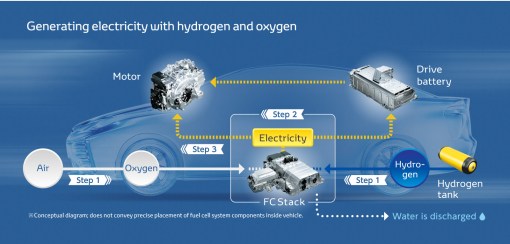
Renewable hydrogen will require massive deployment of renewable energy projects all over the world. One can generate renewable energy and use it directly for domestic or commercial use. But they are intermittent and require large scale energy storage. Moreover, all HT transmission lines are old and designed for transmitting base load power. Such an approach will not help decarbonizing fossil economy currently widely used. That is why renewable Hydrogen will have to play a key role in the future energy mix. Renewable hydrogen can be used as a fuel for transport industries using fuel cell and Japan is leading the way in this field. But such an application has along way to go and it requires massive investment and creation of infrastructure by way of filling stations. Countries like Japan do not have vast land area for solar industries, and they are likely to use cheap nuclear power and sea water to generate large scale hydrogen infrastructure. By this way they can supply power to both hydrogen as well as electric (battery) vehicles. Alternatively, they are looking to import liquified hydrogen (LH2) from countries like Australia who are ready to use cheap brown coal to generate Hydrogen by gasification despite CO2 emissions. Currently Australian government is not very keen about cutting CO2 emissions, but they are keen to encourage LH2 from cheap coal. They have already approved a pilot plant in the state of Victoria and only future can tell whether such a decision is prudent or not. Japanese companies may prefer to invest in Australia to generate and export clean liquid hydrogen leaving behind all emissions including CO2 in Australia. They may generate LH2 from natural gas and export it to Japan, but it may not be acceptable by Japanese companies because it has a potential to poison the Platinum catalyst used in their Fuel cell cars. In fact, Australia has an enormous potential to generate renewable hydrogen and then use it locally as well as to export. This will be more sustainable in the long run.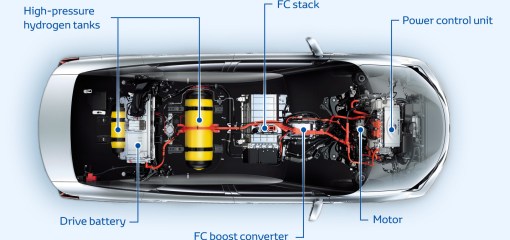


 Carbon emission caused by human beings has become a major issue for our environment and future economy due to changing climate. But there are still few countries who are skeptical about the science of climate change and reluctant to act and refuse to be a part of United Nation’s action on climate change. These countries are either fossil fuel producers such as coal, oil and gas or large economies who have been traditionally depending on usage of fossil fuel for their economy and security. The transition from Carbon economy to non-Carbon economy may not be easier for them is the absence of an alternative technology that can guarantee not only complete elimination of CO2 emission but also efficiency and sustainability. There is a strong political motivation too behind such dithering and they create a fear of slowing economy and large-scale unemployment among the people in the absence of a viable alternative energy source. Therefore, United Nation has an important role to play at this critical juncture of transition to non-carbon economy and save the planet earth from imminent danger of environmental and economic collapse. UN can also stop mass extinction of species and migration of refugees for a better life.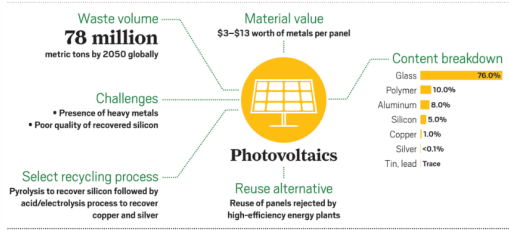
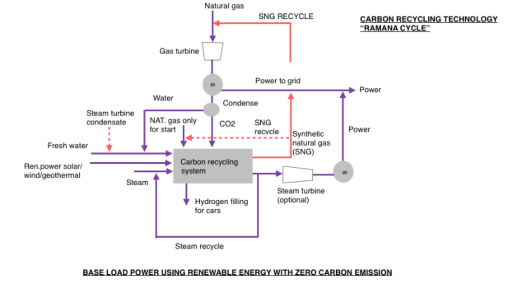
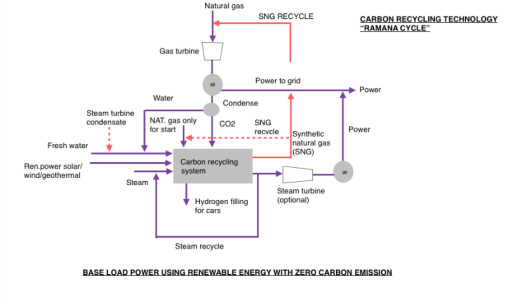 It is now possible to convert your CO2 emissions from gas fired power plants into synthetic fuel thanks to cheap solar energy! Once you convert into synthetic fuel then you can recycle it so that your industries can power for good. It is a great way of storing your solar energy into a readily deployable fuel source. By generating heat and power from the synthetic fuel the industries can reap enormous economic benefits while achieving Zero Carbon emission. It is a win situation for people, environment and the governments around the world.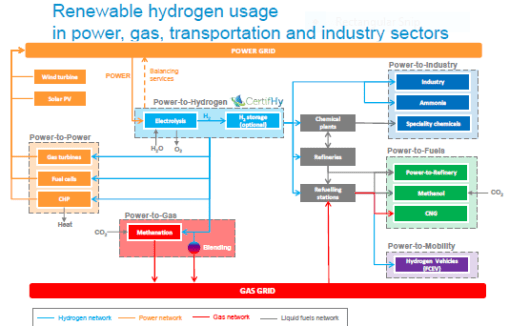


 ahilan@cewt.tech

 Clean Energy and Water Technologies Pty Ltd