Skip navigation

Tag Archives: Fossil fuel

Majority of current power generation technologies are based on thermodynamic principles of heat and work. Heat is generated by  chemical reactions such as combustion of coal, oil or gas with air or pure oxygen. This heat of combustion is then converted into work by a reciprocating engine or steam turbine of gas turbine. The mechanical energy is converted into electricity in power generation and as a motive force in transportation. The fundamental principles remain the same irrespective of the efficiencies and sophistication we incorporated as we progressed. The efficiency of these systems hardly exceeds 30-40 of the heat input, while the remaining 60-70 heat is wasted. We were also able to use this waste heat and improved the efficiency of the system by way of CHP (combined heat and power) up to 80-85%.But this is possible only in situations where one can use both power and heat simultaneously. In a centralized power plant such large heat simply dissipated as a waste heat through cooling towers and in the flue gas. This is a huge loss of heat because a substantial part of heat of combustion is simply vented into the atmosphere in the form of greenhouse gases. If ‘greenhouse gas’ and ‘Global warming’ were not issues of concern to the world, probably we would have continued our business as usual.

Generation of heat by combustion of hydrocarbon is one example of a chemical reaction. In many chemical reactions, heat is either released or absorbed depending upon the type of reaction, whether it is exothermic or endothermic. Sometimes these chemical reactions are reversible. It may release heat while the reaction moves forward and it may absorb heat while it moves backward in the reverse direction. By selecting such reaction one can make use of such energy transformations to our advantages. One need not release the heat and then release the product of reaction into the air like burning fossil fuels.

Ammonia is one such reaction. When Hydrogen and Nitrogen is reacted in presence of a catalyst under high temperature and pressure the reaction goes forward releasing a large amount of energy as practiced in industries using Heber’s process. The heat released by this reaction can be converted into steam and we can generate power using steam cycle. The resulting Ammonia can further be heated in presence of a catalyst by external heat due to endothermic nature of the reaction and split into Hydrogen and Nitrogen.  However, such heat can be supplied only from external sources. One University in Australia is trying use the above principle by using solar thermal energy as a source of external heat. The advantage of this system is power can be generated without burning any fossil fuel or emitting any greenhouse gas. One can use a renewable energy sources such as solar thermal and also use Ammonia as a storage medium.

Ammonia is a potential source of energy to substitute fossil fuels. However, such Ammonia is now synthesized using Hydrocarbon such as oil and gas. The source of Hydrogen is from synthesis gas resulting from steam reformation of a Hydrocarbon. Hydrogen can also be derived from water using electrolysis using renewable energy source. In both the above cases, renewable energy is the key, without which no Hydrogen can be produced without a Hydrocarbon or an external heat is supplied for splitting Ammonia.

Ammonia can also be split into Hydrogen and Nitrogen using external heat.  The resulting Hydrogen can be used to generate power using a Fuel cell or run a Fuel cell car. Nitrogen also has many industrial applications.Thereoefore ammonia is a potential chemical that can substitute fossil fuels in the new emerging renewable economy.
We live in a carbon constrained world where carbon emission is considered as the biggest challenge of the twenty-first century. We unearthed fossil fuel which Nature buried for millions of years and burnt them for our advantage to generate power and to run our cars. Scientist pointed out that the unabated emission of greenhouse will cause the globe to warm with dire consequences. However this came as an ‘inconvenient truth’ to industries and Governments around the world. The economic consequences of stopping fossil fuels weighted more than the global warming. Governments were in a precarious situation and unable to take a concrete policy decision. Popular Governments were not willing to risk their power by taking ethical decisions and opted for popular decision to keep up their growth. Then the financial crisis became an issue, which has nothing to do with greenhouse emission or global warming. Yet, the economic and industrial growth stumbled in many developed countries and unemployment skyrocketed. Governments are caught in a situation where they need to take a balanced view between an ethical decision and economic decisison.The overwhelming evidence of global warming and their consequences are slowly felt by countries around the world by natural disasters of various sizes and intensities.

Some scientist suggested that there is nothing wrong using fossil fuels; we can continue with greenhouse emission without risking the economic growth by  capturing  the carbon emission and burying  them underground. Carbon sequestration and clean coal technologies became popular and more funds were allocated to them than renewable energy development.Countires like India and China are not in a hurry to discontinue fossil fuels but continue to make massive investments on coal-fired power plants. They neither tried to capture carbon nor bury them, but continue to emit carbon claiming that it is their turn of economic growth and right to emit carbon emission. The chief of UN panel on climate change headed by an Indian has no sayin the matter.Politicians push scientists into the background when the truth is inconvenient to them.

How feasible in the carbon sequestration technology and what is the cost? Even if we can come up with a successful technology of capturing carbon and burying them underground, there will be a cost involved. This cost will invariably be passed on to the consumer which  will  eventually increase the cost of energy. Constraining carbon emission without incurring a cost can only be a dream. Capturing carbon emission is nothing new; Carbon dioxide is absorbed by solvents like MEA (Monoethanolamine) in many chemical industries. The absorbed carbon dioxide can be stripped free of solvent and the solvent can be recycled. This carbon dioxide can be treated with Ammonia to get Urea, a Fertilizer. But the source of Hydrogen can come only from renewable energy sources. That is why ‘Renewable Hydrogen ‘is the key to solve global warming problem. We can produce Urea from “captured Carbon” and ‘Renewable Hydrogen’ so that we can cut a real quantity of greenhouse emission. Carbon recycling is a sustainable solution than Carbon capturing and burying. Countries like India who depend upon import of Urea for their agriculture production should immediately make Carbon recycling into Urea production mandatory. It is a win situation for everybody in the world.

World is busy developing alternative to Fossil fuel to cut anthropic Greenhouse gas  to avoid global warming. In fact all forms of alternative energy sources except nuclear energy are ‘solar energy’ from the sun, in one form or another. Sun has supplied energy from the time earth was born. It has conducted   ‘photosynthesis’ by supplying light energy and converting atmospheric carbon dioxide and water into glucose for plants, animals and human beings. The excess carbon from the ‘Carbon cycle’ has become fossil fuels under the earth over a time. The fossil fuel is the result of sun’s energy or solar energy. We unearthed fossil fuels and burnt them to extract energy to run our power plants or run our cars. In fact fossil fuel is also a form of  ‘Biofuel’ and technically there is no difference between them except fossil fuel formation takes millions of years.Fossil fuel is nothing but a source of Hydrogen with carbon backbone.

All forms of alternative energy sources we are currently trying to develop such as PV solar, solar concentrators, solar thermal, geothermal energy, wind energy and bioenergy etc, originate from solar energy. The word alternative energy is a misnomer because all these energy are fundamentally solar energy in one form or another.

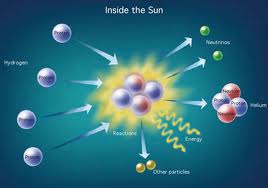
Solar energy is a radiation of Nuclear fusion  of Hydrogen taking place in the sun. Two Isotopes of Hydrogen called Deuterium (with one proton and one neutron) combine to form a Helium 3 atom and Neutron with release of large energy. Deuterium is non-radioactive and can be extracted from seawater. But this process could not be duplicated commercially for Electricity generation. It is the safest and cleanest form of energy.

In other words, all forms of energy including solar energy come from Hydrogen. That is why Hydrogen has become a potential fuel source in the future. However, developing a commercial technology for the production and usage of hydrogen at a rate cheaper than fossil fuels with zero greenhouse emission has been elusive so far. Generation of Hydrogen from water by Photo electrolysis using a direct sunlight using a Photo catalyst is a promising technology. But duplicating Nature to generate large amount of energy using tiny amount of Hydrogen atom seems to be a distance dream. Nature knows the best. We human beings can use small energy generation technologies such as solar and wind to meet our small energy needs. “There is enough to meets everybody’s need but not everybody’s greed”,Gandhi said.

Exponential growth of population and industries has forced us to look for large power generation and fuel usage at the cost of serious environmental degradation and future generations. Only smarter and cleaner technologies will help sustain the future. Politicians and policy makers  should understand various technologies and their implications than advocating short-sighted and popular energy policies.

We live in a technological world where fuel and power play a critical role in shaping our lives and building our nations. The growth of a nation is measured in terms of fuel and power usage; yet there are many challenges and uncertainties in fuel supply and power generation technologies in recent past due to environmental implications. Fossil fuels accelerated our industrial growth and the civilization . But diminishing supply of oil and gas, global warming, nuclear disasters, social upheavals in the Arabian countries, financial problems, and high cost of renewable energy have created an uncertainty in the energy supply of the future. The future cost of energy is likely to increase many folds yet nobody knows for certain what will be the costs of energy for the next decade or what will be the fuel for our cars.  Renewable energy sources like solar and wind seem to be getting popular among people but lack of concrete Government plans and financial incentives for renewable, are sending mixed signals for investors. Recently number of solar industries in Germany are facing bankruptcy due to withdrawal of Government subsidies. Wind energy in India has got a setback due to withdrawal of Government financial support. Renewable industries are at their infant stages of  growth both technologically and financially. These industries will face a natural death in the absence of Government supports and incentives.

Individuals, small businesses and industries are unable to plan their future due to above uncertinities.In a globalised world such problem have to be tackled jointly and collectively. But that too looks unlikely due to ideological, political and social differences between countries. In the absence of any clear path forward, a common man is left with no alternative but find solutions for himself. Individuals can form small groups to produce their own fuel and generate their own power. There has never been a right moment in our history for such ventures. It can be easily done by people from rural areas especially in farming communities. They can set an example and rest of the country can follow. This will also help preventing mass migration from rural areas to cities, especially in China and India. They neglect their farms and migrate to cities to work in electronic industries for a better life.

The farming communities can form  groups and generate their own ‘Biogas’ or ‘Bioethanol’  from a common facility to fuel their cars and power their homes without any Government incentives and political interefernces.Making ‘Bioethanol’ from cane sugar molasses, beet sugar, corn, tapioca or sorghum on a small or medium scale is a  straight forward method. Fermentation and distillation is a well-known technology. It is controlled by Government excise departments for revenue purpose but Government can certainly allow farms or people to make their own ‘Bioethanol’ for their cars. Farms can generate their own Biogas’ from manure, agriculture wastes,  food waste, and waste water treatment facilities and generate their own power and supply biogas for heating and cooking for their communities.

Governments should allow people to make their own choices and decisions instead of controlling everything especially when they are unable to solve a problem. Countries like India should encourage farming communities in groups to set up their own ‘Bioethanol’ and ‘Biogas’ plants and allow import of  flex-fuel cars for Ethanol blends of various proportions. Alcohol has been a a’taboo’in many countries for several years but with current uncertainties with supply of  fuel and power, Government  can certainly remove such ‘taboo’ by highlighting the value of ‘Bioethanol as a source of fuel.Goevernments  can forgo their excise revenue by allowing people to make their own fuel. Alternatively they should offer incentives and subsidies for renewable energy developments. They cannot refuse both and still hope to continue in power because people will sooner or later  throw them out of power. After all Government are elected by people to address their problems.

It is clear substituting fossil fuels with Hydrogen is not only efficient but also sustainable in the long run. While efforts are on to produce Hydrogen at a cost in par with Gasoline or less using various methods, sustainability is equally important. We have necessary technology to convert piped natural gas to Hydrogen to generate electricity on site to power our homes and fuel our cars using Fuelcell.But this will not be a sustainable solution because we can no longer depend on piped natural gas because its availability is limited; and it is also a potent greenhouse gas. The biogas or land fill gas has the same composition as that of a natural gas except the Methane content is lower than piped natural gas. The natural gas is produced by Nature and comes out along with number of impurities such as Carbon dioxide, moisture and Hydrogen sulfide etc.The impure natural gas is cleaned and purified to increase the Methane content up to 90%, before it is compressed and supplied to the customers. The gas is further purified so that it can be liquefied into LNF (liquefied natural gas) to be transported to long distances or exported to overseas.

When the natural gas is liquefied, the volume of gas is reduced about 600 times to its original volume, so that the energy density is increased substantially, to cut the cost of transportation. The LNG can be readily vaporized and used at any remote location, where there is no natural gas pipelines are in existence or in operation. Similarly Hydrogen too can be liquefied into liquid Hydrogen. Our current focus is to cut the cost of Hydrogen to the level of Gasoline or even less. Biogas and bio-organic materials are potential sources of Hydrogen and also they are sustianable.Our current production of wastes from industries business and domestic have increased substantially creating sustainability isues.These wastes are also major sources of greenhouse gases and also sources of many airborne diseses.They also cause depletion of valuable resources without a credible recycling mechanisms. For example, number of valuable materials including Gold, silver, platinum, Lead, Cadmium, Mercury and Lithium are thrown into municipal solid waste (MSW) and sewage. Major domestic wastes include food, paper, plastics and wood materials. Industrial wastes include many toxic chemicals including Mercury, Arsenic, tanning chemicals, photographic chemicals, toxic solvents and gases. The domestic and industrial effluents contain valuable materials such as potassium, Phosphorous and Nitrates. We get these valuable resources from Nature, convert them into useful products and then throw them away as a waste. These valuable materials remain as elements without any change irrespective of type of usages.Recyling waste materials and treatment of waste water and effluent is a very big business. Waste to wealth is a hot topic.

The waste materials both organic and inorganic are too valuable to be wasted for two simple reasons. First of all it pollutes our land, water and air; secondly we need fresh resources and these resources are limited while our needs are expanding exponentially. It is not an option but an absolute necessity to recycle them to support sustainability. For example, most of the countries do not have Phosphorous, a vital ingredient for plant growth and food production. Bulk of the Phosphorus and Nitrates are not recovered from municipal waste water and sewage plants. We simply discharge them into sea at far away distance while the public is in dark and EPA shows a blind eye to such activities. Toxic Methane gases are leaking from many land fill sites and some of these sites were even sold to gullible customers as potential housing sites. Many new residents in these locations find later that their houses have been built on abandoned landfill sites. They knew only when the tap water becomes highly inflammable when lighting with a match stick. The levels of Methane were above the threshold limit and these houses were not fit for living. We have to treat wastes because we can recover valuable nutrients and also generate energy without using fresh fossil fuels. It is a win situation for everybody involved in the business of ‘waste to wealth’.

These wastes have a potential to guarantee cheap and sustainable Hydrogen for the future. Biogas is a known technology that is generated from various municipal solid wastes and effluents. But current methods of biogas generation are not efficient and further cleaning and purifications are necessary. The low-grade methane 40-55% is not suitable for many industrial applications except for domestic heating. The biogas generated by anaerobic digestion has to be scrubbed free of Carbon dioxide and Hydrogen sulfide to get more than 90% Methane gas so that it can be used for power generation and even for steam reforming to Hydrogen generation. Fuel cell used for on site power generation and Fuel cell cars need high purity Hydrogen. Such Hydrogen is not possible without cleaning and purifying ‘ biogas’ much. Hydrogen generation from Biogas or from Bioethanol is a potential source of Hydrogen in the future.

The sun is bright and warm and your roof top solar panels and solar heaters are working hard to generate power and hot water. But the rate of power generated is too small to use immediately. The hot water is not hot enough for your shower. Your 200 watt rooftop solar panel generates only 0.12 kwhrs after 5 hours of hard work. It does not meet your expectations. You expect 200 watts solar panel to generate about 1000 watt.hrs (1kwhr) in 5 hours. It is not happening. You don’t think renewable energy can meet your electricity demand.

There is a strong wind in the island and the wind turbines are rotating faster than usual but there are hardly any people living there. Wind turbine generates good power when the wind velocity is above certain level. But the electricity generated by the wind has no immediate takers.

There is a good rain this year and the dams are overflowing and the Hydro is generating surplus power but not many people are living near the catchment area. The power has to be transmitted hundred of kilometers to the nearby town through a sub-station. When the dams are dry there is hardly any power generation and power supply is rationed to the town.

When there is a demand for power Mother Nature does not offer the resources for power generation. When Mother Nature offers the resource we do not need power. This anomalous situation is the single largest obstacle that is undermining the potential of renewable energy. Of course, the high initial cost and half-hearted approach by Governments to offer subsidies or grants for renewable energy are other factors that add to the anomaly.

The only option to get over this situation is to store the energy 24×7 when it is generated and use them when we need them. It requires good storage technology, automation and information technology that can communicate with Natures energy resources and harness them, store them and deploy them judiciously and intelligently to meet our demands.

Current battery technology cannot be a long-term sustainable solution; it is expensive, requires constant maintenance and replacement, which adds to the expensive initial investment on renewable systems. The best option is to generate Hydrogen on-site when sunshine’s or wind blows and store them under pressure that can be used as and when we need electricity using Fuel cell. It is easier to handle gas than stored electricity in batteries. Batteries are very heavy, has a limited life cycle and poses health hazard and not suitable for large-scale power storage and not sustainable in the long run.

An Electrolyzer can generate Hydrogen from water on site when a sun or wind energy available and they can work from 10% to 100% capacity depending upon the availability of renewable resources. The surplus power from Hydro can be converted into Hydrogen and stored. With so much advancement in information and communication technology, harnessing nature’s energy, storing them and deploying them in a timely manner is not major issue. Hydrogen can bridge the gap between Nature resource availability and human demand. This is what science is all about. We developed science by learning from Nature or duplicating Nature and Renewable energy is nothing different.

There is a general opinion that Hydrogen is now very expensive compared to Gasoline and Diesel. It depends on how you generate Hydrogen. We have used Gasoline and Diesel for several decades and real cost of crude oil is much lower than what we are paying for Gasoline and diesel at the service stations. Crude oil is formed naturally and all the cost involved is for pumping, transportation and refining. The cost of energy spent on transportation and refining is also comparatively low. It is the geopolitical situation in the world, supply demand gap, Government taxes and levies, inventory levels, financial market and distributors play a key role in fixing the price of these fuels.

Hydrogen can be generated from tap water without involving fossil fuels at all. But Governments are spending on research and development of Hydrogen generation using fossil fuels such as natural gas and coal. It is understandable that these sources are suitable for bulk production of Hydrogen on an industrial scale. We will also be able to use existing fossil fuel infrastructure to the most extent. But the flip side of this approach is Hydrogen generated by this route is still not pure enough to meet Fuel cell requirements. This Hydrogen may be suitable for Hydrogen combustion engines. Why they are not suitable? For example, Hydrogen is generated from natural gas by steam reforming,Syngas is generated as an intermediary product which is a mixture of Hydrogen and Carbon monoxide; but also other impurities present in natural gas such Sulfur,Phosphorus and Mercaptans etc.Natural gas has to be purified to remove all these impurities before it can be subject to steam reformation. In spite of an elaborate purification methods adopted, Fuel cell suppliers are reluctant to guarantee the life of their Fuelcell.The Fuel cell uses expensive Platinum as a catalyst which can be readily poisoned by the presence of impurities in Hydrogen, produced from natural gas. This is one of the main reasons why Hydrogen becomes expensive by this route. Industries can pay high cost for this Hydrogen, but ordinary citizens cannot afford to pay.

Hydrogen can be generated directly from tap water by simply electrolyzing it using a Direct current such as solar and wind. If we use grid power, it requires about 68kwhrs of electricity, costing about $3.40 per Kg of Hydrogen. Assuming Hydrogen will cost about $5 per kg after compression and storage, it is still worth the cost. This Hydrogen will give a mileage of 73.4 miles/kg using Fuel cell car. This is equal to 3.67 Gallons of gasoline costing about $13.76, at the rate of $3.75 per gallon. It is very clear that hydrogen is cheaper than gasoline or diesel. At the current price,Gasoline  costs 275% more than Hydrogen gas.

By converting existing coal and oil based power plants into IGCC, Integrated Gasification and Combined Cycle plants, Government can cut the current emission levels of greenhouse gases, and at the same time supply electricity at the prevailing rates. We do not have to import oil or gas. Government should fund conversion of coal and oil-fired power plants into IGCC plants and create Hydrogen infrastructure, by producing more Hydrogen Fuel cell cars and Hydrogen service stations. By adopting this policy, US Government can bring down the prices of crude oil in the international market which will help cut the prices of all other petrochemical products like fertilizers, plastics, drugs and cosmetics. The crux of the issue is to divert petroleum products from fuel use to other uses. At the same time Governments can reduce their greenhouse emissions to the level demanded by scientists. By reducing the cost of solar panels to less than $.100 per watt, Renewable Hydrogen will become a commercial reality and that will be the end of fossil fuels.

Do you use a generator that runs on diesel or gas to power your business due to frequent power outage from the grid? Are you running an air-conditioner with the grid power? Then you must look for waste heat recovery system to improve your energy efficiency and save your fuel cost. You can also use roof top solar hot water to supplement waste heat recovery. The savings may be real and you may be able to recover your investment in a short period and also contribute for the reduction of greenhouse emissions.

The diesel or gas engine converts only most 30% of fuel input in the form of thermal energy into mechanical energy to run your generator, and the balance heat is wasted in the form of greenhouse gas. You can recover this heat and increase the efficiency of the system. This means for the same amount of diesel used, you will get much higher output in the form of heating or cooling or in the form of additional electricity.

The exhaust temperature from a gas engine is about 420C.You can also recover extra heat from jacket cooling. Let us assume that you have a natural gas-fired engine to generate 100kw electricity for the premises. The efficiency of such spark ignited reciprocating gas engines are typically about 30%, which means a natural gas input of 1.145 mm Btu/hr. Let us assume the cost of piped natural gas at $10 per mm Btu; the fuel cost will be about $ 11.45/hr.

The exhaust heat from the engine will be about 801,500 Btu/hr; with waste heat recovery efficiency at 75%, the heat recovery will be 601,125 Btu/hr.You can air-condition premises with an area of 35-40 square meters using this recovered waste heat. If you use grid power   at the rate of $0.10/kwhr, to run the air conditioning system for the above area, you will be spending about 30,000kwhrs of electricity per month, costing about $ 3000 per month. By installing an absorption chiller to air-condition your premises using engine exhaust heat, you will be saving about $36,000 per year towards air-conditioning. The air-conditioning system may cost about $130,000, and with the above savings you will be able to get a return on your investment in less than 3 years.

If you have a roof-top solar water heater then you can supplement it with your engine exhaust heat water so that the capacity of the air-conditioning can be increased. It is one of the best methods by which an energy efficiency of a fossil felled engine can be increased. If the capacity of the engine is much higher, there are other methods by which the efficiency can be increased.

For example, the hot water from the exhaust system can be used to generate some extra power using an ORC, organic Rankin cycle. It is similar to a steam turbine. An organic liquid with low boiling point will be evaporated into vapor by a low heat source such as hot water from engine exhaust, which runs a turbine, generating some extra power and condensing back into the liquid, and then the cycle continues. You will be able to generate an extra electricity of about 15-18% making the total electrical efficiency of the system  to 45-50%, which is similar to a Fuel cell system, but at a much lower cost.

Heat recovery system with an absorption chilling and using low heat source to generate extra power using ORC, are best methods to improve energy efficiency of an existing system with little investment. The purpose of such integration is to increase the energy efficiency of the existing system, so that you will be getting more output of energy from the same input of fuel.


Renewable Hydrogen is the key that can offer us energy independence in the twenty-first century. Fossil fuel usage will still continue for some more time because the world has already invested massively on fossil fuel infrastructures. The stacks are too high for them to switch over to renewable over night. It is the Mother Nature who provided us coal, oil and gas all these years using her manufacturing process under the earth over millions of years. But we human beings exceeded her tolerance limit by emitting greenhouse emission by our rapid growth in population and industrialisation.We failed to discover an alternate fuel in time and continued with an age-old technology with all its inefficiencies. Inefficiencies breed pollution. We were keen to use the heat of combustion by burning a fossil fuel to generate electricity or drive our cars, but paid no attention to the gases released during such combustion. We learnt Thermodynamics and the relationship between heat and work, but failed to understand the consequences of gases of combustion and its impact on our environment.

There are two issues involved in burning a fossil fuel to generate electricity. The heat of combustion is an exothermic reaction and we get a certain amount of heat. Then we convert this heat energy into electrical energy and the overall efficiency of such conversion is about thirty-five percent. Only thirty-five percent of the heat input energy becomes electrical energy and the remaining sixty-five percent heat along with gases of combustion are released into atmosphere. Of course part of this heat is recovered in a commercial plant, but the bulk of heat is released into the atmosphere as greenhouse gases. We failed to understand the potential of Hydrogen even though we used Hydrocarbon for several decades. We even discovered Urea, the fertilizer that caused ‘green revolution’ in agriculture, using the same Hydrogen present in the Hydrocarbon feedstock. It is time for us to make best use of a fossil fuel to its most potential when we burn each kilogram of fuel. We should burn coal not just with air but also with steam so that we can generate Hydrogen rich gas that can run a gas turbine in a combined cycle or run our cars on roads. Such a conversion will lead to a substantial increase in energy efficiency as well as in greenhouse gas emission reduction. Governments in industrialized countries should make it a mandatory to convert all their power plants to syngas generation as described above. They should also discourage new plants using fossil fuels with punitive power tariffs and encourage renewable energy projects with higher tariffs. Governments can also impose similar tariffs for transportation depending upon the fuel used such as fossil fuel or Hydrogen.

Governments should encourage renewable energy projects such as solar and wind   to generate Hydrogen from water as centralized power plants and distribute DC (direct current) by rural electrification. If the country side is electrified using this system then, agriculture, business and industries can thrive in rural areas. Direct current (DC) distribution net work can be installed in rural areas and encourage people to use energy-efficient appliances such as Direct current air-conditioners with energy star ratings and tariffs. Governments can bring about these changes by adopting a ‘carrot and stick ‘policy to encourage renewable and discourage fossil fuels.

Solar energy is the key from which all other forms of energy emanate such as wind, geothermal and ocean thermal energy conversion system.  It is of paramount importance to increase the efficiency of renewable systems and improve energy efficiencies of appliances we use. It is simpler to use LED bulbs using a Direct current generated by Renewable Hydrogen. It is once again the Mother Nature that can come to the rescue of human beings through solar, wind and water to generate clean energy for the twenty-first century.

Energy generation and distribution is no longer a business or revenue issue but a moral and ethical issue for Governments. It is only people who can bring about such sweeping changes by electing the right Government who can care for the environment. The future generation will judge us only based on what kind of environment we leave them behind.

We have discussed about the formation of fossil fuel as part of carbon cycle. It takes several million years before the carbon from the plants and animals turn into fossil fuels due to chemical reactions under higher pressure and temperature. The fossil fuels include solid coal, liquid oil and gaseous Hydrocarbons such as crude oil and natural gas. The natural gas forms the top layer due to its lightness. Natural gas is also the result of anaerobic reaction by microorganism in the absence of air converting organic matter under the earth into a gas. The gas during exploration comes with great pressure to be transported across several kilometers. We are actually duplicating this process to generate Biogas from our food and agriculture wastes and other organic matters. The end product is a mixture of methane and carbon dioxide. During oil and gas exploration we get methane and carbon dioxide and other gases such as Hydrogen sulfide depending upon the location of the oil field. That is why Sulfur  and other products such as Mercaptans are present in crude oil and natural gas. When these fossil fuels are burnt the gaseous combustion  products contain sulfur dioxide and oxide of nitrogen along with oxides of carbon.  Air is normally used for combustion which is a mixture of Nitrogen and oxygen in the ration of 71:21,therefore, the combustion products invariably consist of oxides of nitrogen.

We are so addicted to oil and we are even trying to convert  natural gas into oil, similar to gasoline using GTL (gas to oil) process. However all these combustion processes can be reacted with steam to form synthesis gas, a precursor for liquid Hydrocarbon. It is quite obvious that water in the form of steam is a key part in future energy mixes because that is how one can introduce a Hydrogen molecule in the reaction process. Hydrogen in the form of water is the key. Even if we can successfully steam reform natural gas to get Hydrogen we still have problems deal thing with traces of sulfur and Mercaptans, potential poison for  catalyst in PEM (Proton exchange membrane) Fuelcells.The idea  is to generate Hydrogen using a carbonaceous source such as fossil fuel for simple reasons. It is abundantly available but it emits greenhouse gases; but when you introduce Hydrogen into the mix then there is a good possibility of reducing greenhouse emission, even though we still use fossil fuels. Secondly, we are cautious to handle pure Hydrogen due to its explosive nature and the best available option is to mix Hydrogen with combustion products of fossil fuels. The result is the formation of Syngas.

Syngas is an important intermediary that will lead us to the Hydrogen economy of the futue.The syngas can be generated by various methods as long as we have an organic source and water (steam) source. In fact all food and agriculture waste can be converted into syngas either using a biological process or by gasification process. Both will lead to formation of  Methane or syngas.

Syngas is a mixture of hydrogen with carbon dioxide formed in the following sequences, starting with carbon ,air and  steam.

2C + O2——– 2 CO

2CO + 2H2O———2H2 +2 CO2

The carbon source can be any organic source such as coal, coke, wood etc.As you can see in the reaction, the quantity of carbon source is equally important to generate Hydrogen. One can say that Syngas is a match maker between fossil economy of the past and Hydrogen economy of the future. It is a very important chemical reaction that will change the future energy scene in the world.

That is why many counties like US and Australia and in Europe who have much coal deposits are now trying to generate Hydrogen from coal. Once coal is converted into a gas such as syngas then they are one step closer to separate Hydrogen from syngas.Number of companies and research  organizations  around the world are trying to develop  an efficient and economical method of generating Hydrogen from coal. They have to find suitable conditions to generate higher yield of Hydrogen from syngas and then find an efficient system to separate Hydrogen from carbon dioxide. As I have mentioned earlier, the purity of Hydrogen is important especially when we use coal as the basic material because it has number of impurities to be  removed  before converting into a syngas.

As we can see, all energy roads are now leading to Hydrogen as the final clean fuel of the future. When the demand for Hydrogen increase, the demand for water too will   increase because it is the direct source of Hydrogen. Energy and water are two side of the same coin as I have mentioned earlier in the past.

Is this your new site? Log in to activate admin features and dismiss this message
Log In