



Skip navigation

Tag Archives: environment

People in the chemical field will understand the concept of ‘irreversibility’. Certain chemical reactions can go only in one direction and but not in the reverse direction. But some reactions can go on either direction and we can manipulate such reactions to our advantages. This concept has been successfully used in designing many chemical reactions in the past and many innovative industrial and consumer products emerged out of it. But such irreversible reactions also have irreversible consequences because it can irreversibly damage the environment we live in. There is no way such damage can be reversed. That is why a new branch of science called ‘Green Chemistry’ is now emerging to address some of the damages caused by irreversible chemical reactions. It also helps to substitute many synthetic products with natural products. In the past many food colors were made out of coal-tar known as coal-tar dyes. These dyes are used even now in many commercial products. Most of such applications were merely based on commercial attractiveness rather than health issues. Many such products have deleterious health effects and few of them are carcinogenic. We learnt from past mistakes and moved on to new products with less health hazards. But the commercial world has grown into a power lobby who can even decide the fate of a country by influencing political leaders. Today our commercial and financial world has grown so powerful that they can even decides who can be the next president of a country rather than people and policies. They can even manipulate people’s opinion with powerful advertisements and propaganda tactics by flexing their financial muscles.

Combustion of fossil fuel is one such example of ‘irreversibility’ because once we combust coal, oil or  gas,  it will be decomposed into oxides of Carbon, oxide of  Nitrogen and also oxides of Sulfur and Phosphorous depending upon the source of fossil fuel  and purification methods used. These greenhouse gases once emitted into the atmosphere we cannot recover them back. Coal once combusted it is no longer a coal. This critical fact is going to decide our future world for generations to come. Can we bring back billions of tons of Carbon we already emitted into the atmosphere from the time of our industrial revolution? Politicians will pretend not to answer these question and financial and industries lobby will evade these question by highlighting the ‘advancement made by industrial revolutions’. People need electricity and they have neither time nor resources to find an alternative on their own. It is open and free for all. People can be skeptical about these issues because it is ‘inconvenient for them’ to change But can we sustain such a situation?

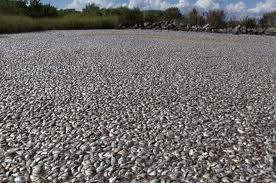
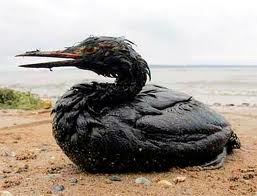
Irreversibility does not confine only to chemical reactions but also for the environment and sustainability because all are intricately interconnected.Minig industries have scared the earth, power plants polluted the air with greenhouse emission and chemical industries polluted water and these damages are irreversible. When minerals become metals, buried coal becomes power and water becomes toxic effluent then we leave behind an earth that will be uninhabitable for our future generations and all the living species in the world. Is it sustainable and can we call it progress and prosperity? Once we lose pristine Nature by our irreversible actions then that is a perfect recipe for a disaster and no science or technology can save human species from extinction. One need not be scientist to understand these simple facts of life. Each traditional land owners such as Aborigines of Australia or Indians of America and shamans of Indonesia have traditionally known and passed on their knowledge for generations. They too are slowly becoming extinct species in our scientific world because of our irreversible actions. Renewability is the key to sustainability because renewability does not cause irreversible damage to Nature.


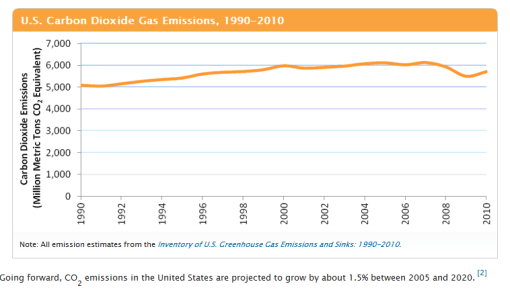
There is a raging debate going on around the world especially in US about the global warming and its causes, among scientists and the public alike. When IPCC released its findings on the connection between greenhouse gas emission and the global warming and its disastrous consequences, there was an overwhelming disbelief and skepticism in many people. In fact many scientists are skeptical even now   about these findings and many of them published their own theories and models to prove their skepticism with elaborate ‘scientific explanations’.   I am not going into details whether greenhouse gas emission induced by human beings causes the globe to warm or not, but certainly we have emitted billions of  tons of Carbon in the form of Carbon dioxide into the atmosphere since industrial revolution. Bulk of these emissions is from power plants fueled by Coal, oil and gas. Why power plants emit so much Carbon into the atmosphere and why Governments around the world allow it in the first place?  When the emission of Oxide of Nitrogen and Sulfur are restricted by EPA why they did not restrict Oxides of carbon? The reason is very simple. They did not have a technology to generate heat without combustion and they did not have a technology to generate power without heat. It was the dawn of industrial revolution and steam engines were introduced using coal as a fuel. The discovery of steam engines was so great and nobody was disturbed by the black smoke it emitted. They knew very well that the efficiency of a steam engine was low as shown by Carnot cycle, yet steam engine was a new discovery and Governments were willing to condone Carbon emission. Governments were happy with steam engine because it could transport millions of people and goods in bulk across the country and Carbon emission was not at all an issue. Moreover carbon emission did not cause any problem like emission of oxides of Sulfur because it was odorless, colorless and it was emitted above the ground level away from human beings. However the effect of Carbon is insidious. Similarly, power generation technology was developed by converting thermal energy into electrical energy with a maximum efficiency of 33%.This means only 33% of the thermal energy released by combustion of coal is converted into electricity. When the resulting electricity is transmitted across thousands of kilometers by high tension grids, further 5-10% power is lost in the transmission. When the high tension power is stepped down through sub stations to lower voltage such as 100/200/400V further 5% power is lost. The net power received by a consumer is only 28% of the heat value of the fuel in the form of electricity. The balance 67% of heat along with Greenhouse gases from the combustion of coal is simply vented out into the atmosphere. It is the most inefficient method to generate power. Any environmental pollution is the direct result of inefficiency of the technology. Governments and EPA around the world ignore this fact .Thank to President Obama who finally introduced the pollution control bill for power plants after 212 years of industrial revolution.  Still this bill did not go far enough to control Carbon emission in its current form. Instead of arguing whether globe is warming due to emission of Carbon by human beings or not, Scientists should focus on improving the science and technology of power generation. For example, the electrical efficiency of a Fuel cell is more than 55% compared to conventional power generation and emits reduced or no carbon. Recent research by MIT shows that such conversion of heat into electricity can be achieved up to 90% compared to current levels of 35%.Had we developed such a technology earlier, probably we will not be discussing about GHG and global warming now. MIT research group is now focusing on developing new type of PV and according to their press release: “Thermal to electric energy conversion with thermophotovoltaics relies on radiation emitted by a hot body, which limits the power per unit area to that of a blackbody. Micro gap thermophotovoltaics take advantage of evanescent waves to obtain higher throughput, with the power per unit area limited by the internal blackbody, which is n2 higher. We propose that even higher power per unit area can be achieved by taking advantage of thermal fluctuations in the near-surface electric fields. For this, we require a converter that couples to dipoles on the hot side, transferring excitation to promote carriers on the cold side which can be used to drive an electrical load. We analyze the simplest implementation of the scheme, in which excitation transfer occurs between matched quantum dots. Next, we examine thermal to electric conversion with a glossy dielectric (aluminum oxide) hot-side surface layer. We show that the throughput power per unit active area can exceed the n2 blackbody limit with this kind of converter. With the use of small quantum dots, the scheme becomes very efficient theoretically, but will require advances in technology to fabricate.” Ref:J.Appl.Phys. 106,094315c(2009); http://dx.doi.org/10.1063/1.3257402 Quantum-coupled single-electron thermal to electric conversion scheme”. Power generation and distribution using renewable energy sources and using Hydrogen as an alternative fuel is now emerging. Distributed energy systems may replace centralized power plants in the future due to frequent grid failures as we have seen recently in India. Most of the ‘black outs’ are caused  by grid failures due to cyclones, tornadoes and other weather related issues, and localized distribution system with combined heat and power offers a better alternative. For those who are skeptical about global warming caused by man-made greenhouse gases the question still remains, “What happened to billions of tons of Caron dioxide emitted into  the atmosphere by power plants and transportation  since industrial revolution?”.          

Seawater is an inexhaustible source of Hydrogen but the cost of generating Hydrogen from seawater is much higher compared to normal tap water. The quality of water should have a minimum electric conductivity at 0.1 micro Siemens/cm for electrolysis. Even our tap water is not up to this purity and it requires further purification. The electric conductivity of seawater is about 54,000 micro Siemens/cm.The conductivity increases due to the presence of dissolved salts. But seawater can be desalinated using the process of distillation or by the process called ‘reverse osmosis’. In both the above processes, desalination requires a large input of energy in the form of thermal or electrical. Currently the source of such energy comes from fossil fuels, which is one the biggest emitters of greenhouse gas emission. Many countries in the Middle East have shortage of fresh water and most of these countries depend on desalination of seawater for their fresh water requirements. The cost of desalinated water varies from $ 1.00 to $ 1.75/m3 depending upon the capacity, site and the cost of energy. The fresh water for potable purpose normally has a TDS (Total dissolved solids) of 500ppm (parts per million) or less and this can further be lowered to a required level using reverse osmosis.

Currently Hydrogen is generated as a by-product on an industrial scale by electrolysis of saturated sodium chloride brine during the production of Caustic soda. Chlorine is another by-product in the above process. Most of Caustic soda manufacturers use Hydrogen as a fuel or for the production of Hydrochloric acid. But there is an opportunity in caustic soda plants to use Hydrogen to generate more electricity using PEM (Proto exchange membrane) Fuel cell suitable for their electrolysis. This will aid these industries to cut their energy consumption, which is one of the highest in Chemical industries.

Alternatively, offshore wind turbines can be installed to generate power for seawater desalination and Hydrogen production. Offshore wind turbines generate 50% more energy than onshore wind turbines. An integrated process to generate fresh water, Hydrogen using wind turbine is an interesting renewable energy application. The stored Hydrogen can used to generate electricity in remote islands where diesel is used as a fuel. Most of the island in Pacific use diesel predominantly for boat as well as for power generators at exorbitant costs. The wind velocity in such islands is good to generate cheap and clean electricity. For example, the island of PNG has a severe power shortage and it is well located near Coral Sea, which has one of the highest wind velocities in Pacific Ocean. An average wind velocity of 7mts/sec and above is an ideal place for wind turbines. Since these islands are small with less population, wind generated Hydrogen is an ideal solution for their power problems. They can also desalinate seawater to supply drinking water using wind generated power. In fact they can also use Hydrogen as a fuel for their boats and generate power for their cold storage for fisheries. International financial institutions and local banks should come forward to fund such projects instead of funding diesel boats and generators. These islands have pristine water and abundant fish and their main income is only tourism.

Sun, Sand and wind is an ideal combination to generate renewable power all round the year and for tourism industry. It is an opportunity these islands cannot afford to miss. The author is personally involved in a wind based Hydrogen solution for a small island in pacific. The people of this island welcome such projects because it guarantees them an uninterrupted supply of clean power and drinking water. Otherwise they have to sell most of fish catches in a nearby city to buy diesel and drinking water just to survive!


Is this your new site? Log in to activate admin features and dismiss this message
Log In