Skip navigation

Category Archives: Carbon pollution

“Over two-thirds of today’s proven reserves of fossil fuels need to still be in the ground in 2050 in order to prevent catastrophic levels of climate change” – a warning by scientists.

There is a great deal of debate on climate change due to man-made Carbon emissions and how to control it without any further escalation. The first obvious option will be to completely stop the usage of fossil fuel with immediate effect. But it is practically not feasible unless there is an alternative Non-Carbon fuel readily available to substitute fossil fuels. The second option will be to capture carbon emission and bury them under ground by CCS (Carbon capture and sequestration) method. But this concept is still not proven commercially and there are still many uncertainties with this technology, the cost involved and environmental implications etc.The third option will be not to use fresh fossil fuel  for combustion or capture and bury the Carbon emissions but convert the  Carbon emissions into a synthetic hydrocarbon fuel such as synthetic natural gas (SNG) and recycle them. By this way the level of existing Carbon emission can be maintained at current levels without any further escalation. At least the Carbon emission levels can be reduced substantially and maintained at lower levels to mitigate climate changes. It is technically feasible to implement the third option but it has to be implemented with great urgency.

One way of converting Carbon emission is to capture and purify them using conventional methods and then react with Hydrogen to produce synthetic natural gas (SNG)

CO2 + 4 H2 ———> CH4 + 2 H2O

The same process will be used by NASA to eliminate carbon built-up in the flights by crew members during their long voyage into the space and also to survive in places like Mars where the atmosphere is predominantly carbon dioxide. But we need Hydrogen  which is renewable so that the above process can be sustained in the future .Currently the cost of Hydrogen production using renewal energy sources are expensive due to high initial investment and the large energy consumption.

We have now developed a new process to generate syngas using simple coal, which is predominantly Hydrogen to be used as a Carbon sink to convert Carbon emissions into synthetic natural gas (SNG). The same Hydrogen rich syngas can be directly used to generate power using gas turbine in a simple or combined cycle mode. The Carbon emission from the gas turbine can be converted into SNG (synthetic natural gas) using surplus Hydrogen-rich  syngas. The SNG thus produced can be distributed for CHP (combined heat and power) applications so that the Carbon emission can be controlled or distributed. By implementing the above process one should be able to maintain Carbon at specific level in the atmosphere. Existing coal-fired power plants can retrofit this technology so that they will be able to cut their Carbon emissions substantially; they can also produce SNG as a by-product using their Carbon emissions and achieve zero Carbon emission at their site while generating revenue by sale of SNG.

Coal is the cheapest and widely used fossil fuel for power generation all over the world. Therefore it will be a win situation for everyone to use coal and also to cut Carbon emissions that can address the problems of climate change. Meanwhile research is going on to generate renewable Hydrogen cheaply directly from water using various technologies. But we believe we are still far away from achieving this goal and we require immediate solution to address our climate change problems.

Recently BASF made a press release : http://www.basf.com/group/press release/P-13-351‎ claiming a break-through technology to generate Hydrogen from natural gas without any CO2 emissions.
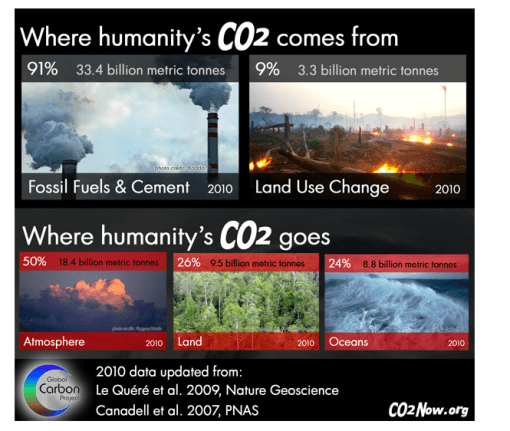
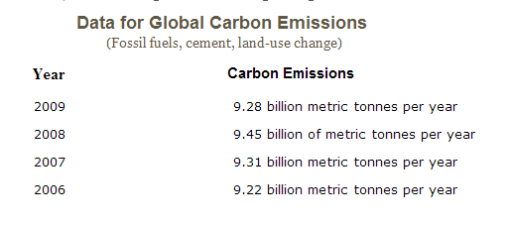
The Carbon emission in the atmosphere is steadily increasing.  The latest statistics indicates that it has reached a staggering 35.6 billion tons/yr, a 2.6% increase over the previous year, thanks to the growth of China. It is becoming clear that there is a relationship between the Carbon emission, global warming and erratic weather patterns around the world. According to ‘The Guardian’,

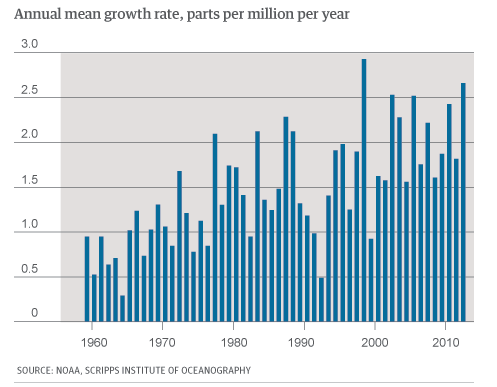
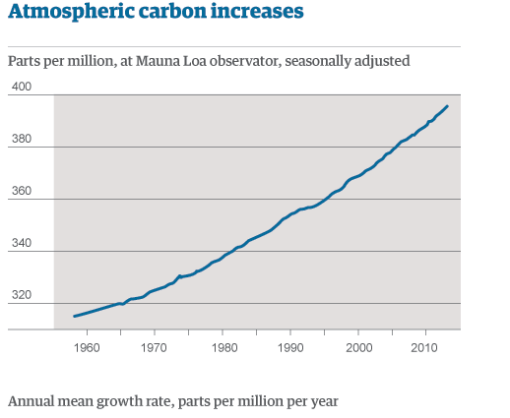
“The chances of the world holding temperature rise to 2C – the level of global warming considered “safe” by scientists – appear to be fading fast with US scientists reporting the second-greatest annual rise in CO2emissions in 2012. Carbon dioxide levels measured at Mauna Loa observatory in Hawaii jumped by 2.67 parts per million (ppm) in 2012 to 395ppm, said Pieter Tans, who leads the greenhouse gas measurement team for the US National Oceanic and Atmospheric Administration (NOAA). The record was an increase of 2.93ppm in 1998.

The jump comes as a study published in Science on Thursday looking at global surface temperatures for the past 1,500 years warned that “recent warming is unprecedented”, prompting UN climate chief, Christiana Figures, to say that “staggering global temps show urgent need to act. Rapid climate change must be countered with accelerated action.” Tans told the Associated Press the major factor was an increase in fossil fuel use. “It’s just a testament to human influence being dominant”, he said. “The prospects of keeping climate change below that [two-degree goal] are fading away.

Preliminary data for February 2013 show CO2 levels last month standing at their highest ever recorded at Manua Loa, a remote volcano in the Pacific. Last month they reached a record 396.80ppm with a jump of 3.26ppm parts per million between February 2012 and 2013. Carbon dioxide levels fluctuate seasonally, with the highest levels usually observed in April. Last year the highest level at Mauna Loa was measured at 396.18ppm. What is disturbing scientists is the acceleration of CO2concentrations in the atmosphere, which are occurring in spite of attempts by governments to restrain fossil fuel emissions. According to the observatory, the average annual rate of increase for the past 10 years has been 2.07ppm – more than double the increase in the 1960s. The average increase in CO2 levels between 1959 to the present was 1.49ppm per year.

The Mauna Loa measurements coincide with a new peer-reviewed study of the pledges made by countries to reduce CO2 emissions. The Dutch government’s scientific advisers show that rich countries will have to reduce emissions by 50% percent below 1990 levels by 2020 if there is to be even a medium chance of limiting warming to 2C, thus preventing some of climate  change‘s worst impacts.”The challenge we already knew was great is even more difficult”, said Kelly Levin, a researcher with the World Resources Institute in Washington. “But even with an increased level of reductions necessary, it shows that a 2° goal is still attainable – if we act ambitiously and immediately.” Extreme weather, which is predicted by climate scientists to occur more frequently as the atmosphere warms and CO2 levels rise, has already been seen widely in 2013. China and India have experienced their coldest winter in decades and Australia has seen a four-month long heat wave with 123 weather records broken during what scientists are calling it ‘angry summer’. “We are in [getting] into new climatic territory. And when you get records being broken at that scale, you can start to see a shifting from one climate system to another. So the climate has in one sense actually changed and we are now entering a new series of climatic conditions that we just haven’t seen before”, said Tim Flannery, head of the Australian government’s climate change commission, this week. Earlier this week the Met Office warned that the “extreme” patterns of flood and drought experienced by Britain in 2012 were likely to become more frequent. One in every five days in 2012 saw flooding but one in four days were in drought”.

The biggest question now is how to put this Carbon genie back into the bottle? renewable energy may be an answer to curtail future Carbon emissions but what about the existing coal-fired power plants that constitutes 60% of the existing power generation in the world? There is no easy solution. But the “Law of conservation of mass” gives us a clue.The Carbon we dig from the earth in the form of coal, combusted into the atmosphere as Carbon dioxide may be captured and recycled back into the system in the form of a fuel.By this way, we may not need fresh coal to be mined.To achive this feat,we need Hydrogen from a renewable source.The renewable Hydrogen can be combined with Carbon dioxide captured from the coal-fired power plants to generate synthetic natural gas (SNG).The SNG generated by this method can be used for future power generation, substituting Coal and future carbon emission can be recycled in the form of SNG. This approach will open up a range of possibilities and potentially cut the carbon emission to zero.Annual CO2 growthAtmospheic Carbon increaseCO2 emissionsGlobal Carbon emissionHydrosol cycleHydrosol thremocycle

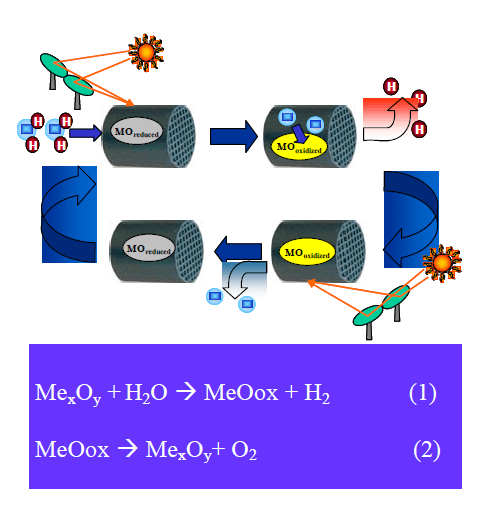
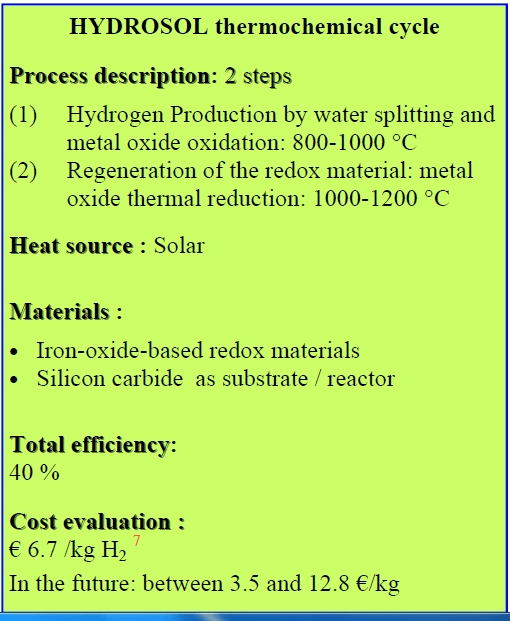
Many companies round the world including DOE (Department of energy,Govt of USA) are trying to develop an economically viable method to generate Hydrogen with an estimated cost of poduction at  $ 2.50 /kg of Hydrogen. One potential method is to generate Hydrogen by splitting water using a thermo-chemical process using concentrated solar therml energy developed by European Union called “Hydrosol cycle”. The method by which Hydrogen is generated should be free from any Carbon emision. To clean up  1 Kg Carbon dioxide one will require at least 0.2kg Hydrogen. For example, a 100Mw coal fired power plant emitting about 2256 Mt CO2/day will require about 451 Mt of Hydrogen/day, costing about $1,127,500 per day.It will cost roughly $500/Mt of C02 to  put the ‘ Carbon genie’  back into the bottle! One can imagein the cost of cleaning up  35.6 billion tons of Carbon dioxide  from the atmosphere.Only a Carbon free Hydrogen derived from water can save the world from a potential catastrophe.

There is a raging debate going on around the world especially in US about the global warming and its causes, among scientists and the public alike. When IPCC released its findings on the connection between greenhouse gas emission and the global warming and its disastrous consequences, there was an overwhelming disbelief and skepticism in many people. In fact many scientists are skeptical even now   about these findings and many of them published their own theories and models to prove their skepticism with elaborate ‘scientific explanations’.   I am not going into details whether greenhouse gas emission induced by human beings causes the globe to warm or not, but certainly we have emitted billions of  tons of Carbon in the form of Carbon dioxide into the atmosphere since industrial revolution. Bulk of these emissions is from power plants fueled by Coal, oil and gas. Why power plants emit so much Carbon into the atmosphere and why Governments around the world allow it in the first place?  When the emission of Oxide of Nitrogen and Sulfur are restricted by EPA why they did not restrict Oxides of carbon? The reason is very simple. They did not have a technology to generate heat without combustion and they did not have a technology to generate power without heat. It was the dawn of industrial revolution and steam engines were introduced using coal as a fuel. The discovery of steam engines was so great and nobody was disturbed by the black smoke it emitted. They knew very well that the efficiency of a steam engine was low as shown by Carnot cycle, yet steam engine was a new discovery and Governments were willing to condone Carbon emission. Governments were happy with steam engine because it could transport millions of people and goods in bulk across the country and Carbon emission was not at all an issue. Moreover carbon emission did not cause any problem like emission of oxides of Sulfur because it was odorless, colorless and it was emitted above the ground level away from human beings. However the effect of Carbon is insidious. Similarly, power generation technology was developed by converting thermal energy into electrical energy with a maximum efficiency of 33%.This means only 33% of the thermal energy released by combustion of coal is converted into electricity. When the resulting electricity is transmitted across thousands of kilometers by high tension grids, further 5-10% power is lost in the transmission. When the high tension power is stepped down through sub stations to lower voltage such as 100/200/400V further 5% power is lost. The net power received by a consumer is only 28% of the heat value of the fuel in the form of electricity. The balance 67% of heat along with Greenhouse gases from the combustion of coal is simply vented out into the atmosphere. It is the most inefficient method to generate power. Any environmental pollution is the direct result of inefficiency of the technology. Governments and EPA around the world ignore this fact .Thank to President Obama who finally introduced the pollution control bill for power plants after 212 years of industrial revolution.  Still this bill did not go far enough to control Carbon emission in its current form. Instead of arguing whether globe is warming due to emission of Carbon by human beings or not, Scientists should focus on improving the science and technology of power generation. For example, the electrical efficiency of a Fuel cell is more than 55% compared to conventional power generation and emits reduced or no carbon. Recent research by MIT shows that such conversion of heat into electricity can be achieved up to 90% compared to current levels of 35%.Had we developed such a technology earlier, probably we will not be discussing about GHG and global warming now. MIT research group is now focusing on developing new type of PV and according to their press release: “Thermal to electric energy conversion with thermophotovoltaics relies on radiation emitted by a hot body, which limits the power per unit area to that of a blackbody. Micro gap thermophotovoltaics take advantage of evanescent waves to obtain higher throughput, with the power per unit area limited by the internal blackbody, which is n2 higher. We propose that even higher power per unit area can be achieved by taking advantage of thermal fluctuations in the near-surface electric fields. For this, we require a converter that couples to dipoles on the hot side, transferring excitation to promote carriers on the cold side which can be used to drive an electrical load. We analyze the simplest implementation of the scheme, in which excitation transfer occurs between matched quantum dots. Next, we examine thermal to electric conversion with a glossy dielectric (aluminum oxide) hot-side surface layer. We show that the throughput power per unit active area can exceed the n2 blackbody limit with this kind of converter. With the use of small quantum dots, the scheme becomes very efficient theoretically, but will require advances in technology to fabricate.” Ref:J.Appl.Phys. 106,094315c(2009); http://dx.doi.org/10.1063/1.3257402 Quantum-coupled single-electron thermal to electric conversion scheme”. Power generation and distribution using renewable energy sources and using Hydrogen as an alternative fuel is now emerging. Distributed energy systems may replace centralized power plants in the future due to frequent grid failures as we have seen recently in India. Most of the ‘black outs’ are caused  by grid failures due to cyclones, tornadoes and other weather related issues, and localized distribution system with combined heat and power offers a better alternative. For those who are skeptical about global warming caused by man-made greenhouse gases the question still remains, “What happened to billions of tons of Caron dioxide emitted into  the atmosphere by power plants and transportation  since industrial revolution?”.          

Those who studied chemistry and conducted laboratory experiments in universities will be familiar with precautionary measures we take to avoid  accidents. Aprons, gloves, goggles and fume cub-boards with exhaust fans are some few examples of protective measures from flames, hot plates and fumes. The blue color of the flame represented the degree of hotness of the flame from Bunsen burner; the pungent smell pointed to the ‘Gas plant’ that generated ‘water gas’ for Bunsen burners. The familiar smells of chemicals would bring ‘nostalgic memories’ of college days. Each bottle of chemicals would display a sign of warning ‘Danger or Poison’. We could recognize and identify even traces of  gases or fumes or chemicals immediately. Those memories embedded deeply in our memories and I vividly remembered even after few decades I left university.

I could smell traces of Chlorine in the air even at a distance of 20 miles from a Chloroalkali plant in sixties, when air pollution controls were not stringent. People who lived around the factory probably were used to live with that smell for generations. Many families had not breathed  fresh air in their life time, because they have not breathed air without traces of chlorine.They lived all their lives in the same place because agriculture was their profession. Many people developed breathing problems during  their old ages and died of asthma and tuberclosis.The impact of these fumes cannot be felt in months and years but certainly can be felt after decades especially at old ages, when the body’s immune system deteriorates. Bhopal gas accident in India is a grim reminder of  such tragedy of chemical accidents and how they can contaminate air, water and earth and degrade human lives. But we learnt any lessons from those accidents?

During experimental thermonuclear explosion in the desert of Australia by then British army, people were directly exposed to nuclear radiation. Many of those  who saw this explosion developed some form of cancer or other later in their life .They were treated as heroes then. After several decades of this incident, many exposed to this experiment are now demanding compensation from current British government. But have we learnt any lessons from those incidents? Many politicians still advocate ‘Nuclear energy as a safe and clean energy’. Yes, until we meet with an another accident!

We human beings identified the presence of  chemicals in Nature and used them for our scientific developments. We identified fossil fuels as ‘Hydrocarbons’ and burn them to generate power and to run our cars. We emit toxic gases and fumes every second of our lives, when we switch our lights on or start our cars.Imagine the amount of gases and fumes we emit everyday all over the world by billions of people for several decades. It is a simple common sense that we are responsible for these emissions and we contaminate the air we breathe. Nature does not burn Hydrocarbons everyday or every month or every year. In fact Nature buried these Hydrocarbons deep down the earth like we bury our dead.

Can people who breathed Chlorine for decades and died of asthma or tuberculosis prove that they died due constant inhalation of Chlorine emitted by the Chloroalkali plant? The Court and Authorities will demand ‘hard evidence’ to prove that Chlorine emitted by Chloroalkli plants caused these diseases. We use science when it suits us and we become skeptics when it does not suit us. They know it is almost impossible to prove such cases in our legal system and they can get away scot-free. The same argument applies to our ‘Greenhouse gas emission’ and ‘Global warming’.

We contaminate  our air, water and earth with our population explosion, industrialization and our life styles. Yet, major industrialized countries are not willing to cut their emissions but want to carry on their ‘economic growth’. But these countries got it completely wrong. In chemical experiments, one can draw conclusions by ‘observations’ and ‘Inference’. Inference is a scientific tool and not a guess work. From overwhelming evidences of natural disasters occurring around the world one can ‘infer’ that human activities cause these disasters. Nature is now showing this by devastating ‘the business and economic’ interest of nations because that is the only way Governments can learn lessons. They don’t need ‘harder evidence’ than  monetary losses. According to recent reports:

“The monetary losses from 2011’s natural catastrophes reached a record $380 billion, surpassing the previous record of $220 billion set in 2005. The year’s three costliest natural catastrophes were the March earthquake and tsunami in Japan (costing $210 billion), the August-November floods in Thailand ($40 billion), and the February earthquake in New Zealand ($16 billion).

The report notes that Asia experienced 70 percent, or $265 billion, of the total monetary losses from natural disasters around the world—up from an average share of 38 percent between 1980 and 2010. This can be attributed to the earthquake and tsunami in Japan, as well as the devastating floods in Thailand: Thailand’s summer monsoons, probably influenced by a very intensive La Niña situation, created the costliest flooding to date, with $40 billion in losses.”

Is this your new site? Log in to activate admin features and dismiss this message
Log In